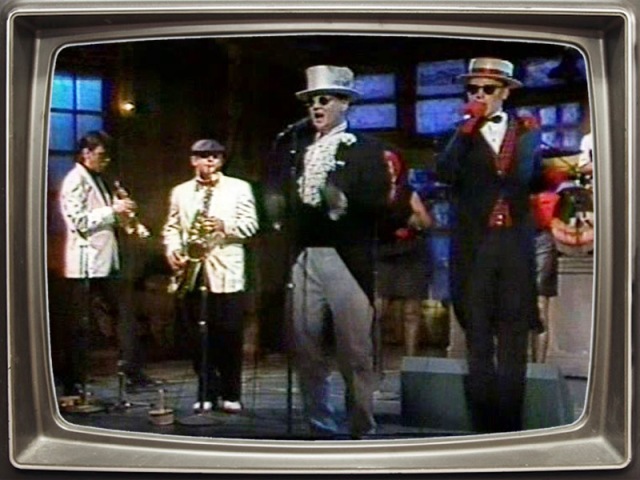
Double-Double Cali Style: The Madness 2012 West Coast Tour

(NOTE: The following is an edited and expanded update of a review I wrote for MIS in April 2012.)

Come and listen to my story โ€™bout a man named D.
A poor Madness fan, nary U.S. gigs to see.
And then one day, freakinโ€™ crazy dreams came true,
When up from the web came the Coachella news:
Madness in โ€™Murica, that is!
And fIREHOSE reunited too!?!

Well the first thing you know, Coachellaโ€™s sold out,
But the bandsโ€™ own gigs was what D. was psyched about.
He said, โ€œCaliforney is the place I oughtta be!โ€
So he booked a West Coast flight, for a music fantasy.
Thrills, that is!
Rental cars, In-N-Out!

The NUTTY BOY HILLBILLY!
(cue banjo breakdown duelling with Chrissy Boy)

Coachella 2012: What a historic convergence of fate it wrought upon me, even though I didnโ€™t attend it. Madness had played the California festival just four years previous, and the year after that I saw my belated first show at Madstock 2009 in London. Their return to Coachella in 2012 coincided with a surprise one-shot reunion of fIREHOSE, my favorite band from my halcyon university days. 

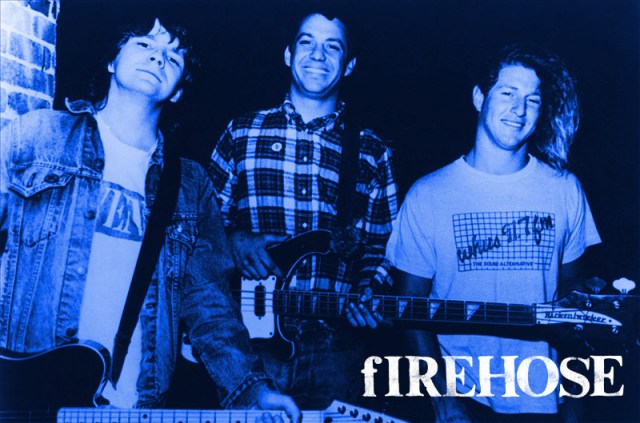
My two favorite bands I’ve ever seen live, both drawn into the gravitational orbit of Coachella, and against astronomical odds performing within a few days and a few hundred miles of each other. This was too much synchronicity to ignore. I immediately resolved to head out west with a ticket to Coachella. 

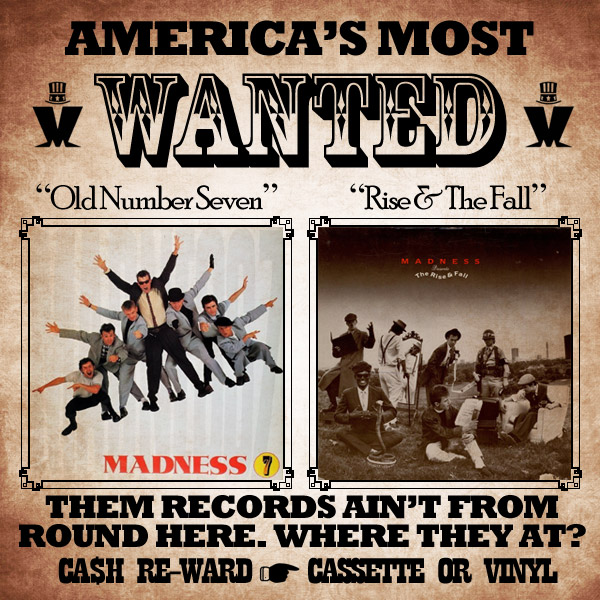
But soon an even better option appeared: both Madness and fIREHOSE were going to play a few headlining shows during the two weeks of the festival. For the best logistical alignment, I could start with fIREHOSE in Fresno on April 13, and end with Madness in San Diego on the 17th. These dates set the foundation for my Lardapalooza tour: my own bespoke dream festival named for my then-active Lard Biscuit website. To fill the in-between days, I could attend the Japan Film Festival in Los Angeles. Late in the game, Madness announced an L.A. date on April 16, which easily slotted into my itinerary. And Iโ€™d be eating my fill at Fatburger and In-N-Out, fine restaurants Iโ€™d cherished since my first California trip in 1997. How could it get any better than that? As I put in on my old-timey wrestling-style Lardapalooza poster, โ€œAll the awesomeness of Coachella… 90% less hippies and hackeysack!โ€

Lardapalooza 2012 was a matter of cosmic destiny, a pilgrimage of spiritual obligation. The only real holdup was my fear of driving in unfamiliar places, particularly with heavy urban traffic. This would be my first time renting a car, and Iโ€™d have to motor some 350 miles from Fresno to Los Angeles to San Diego. But I had to man up, bought a Garmin GPS with the windshield suction cup, and screwed my courage to the sticking point. I am proud to report that D. Trull answered the call and fulfilled this momentous mission.

After kicking off the celebration with fIREHOSE in Fresno, I boldly headed south in my Alamo rental toward back-to-back Madness gigs. It was very much a tale of two cities. Los Angeles is intense and metropolitan, San Diego is laid-back and breezy. Club Nokia was downtown, Humphreys was down by the bay. To get to the L.A. show and back I had to take a crowded city bus and a cab, but in San Diego the gig was right next door to my hotel. Even the In-N-Out Burger experiences in the two towns were respectively chaotic and relaxed. But wherever you go, that Double-Double Animal Style is gonna be pure heaven on a bun. And whenever you find M-A-D-N-eeeee-S-S-yes! You know what you got.

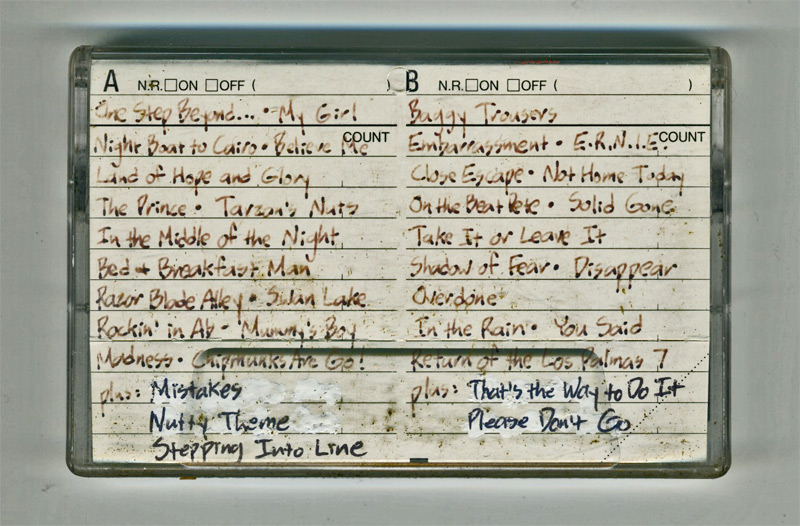
The set list was identical at both gigs, in line with the band’s regulation template: the customary openers, a few relatively obscure treats (“Take It or Leave It,โ€ “Shut Up”), the Dangermen standbys of “Taller” and “Ironshirt,” three Norton Folgate numbers debuting on U.S. soil (“NW5,” “Clerkenwell Polka” and “Forever Young”), the Showtime suite introduced by hip-hop extravaganzas from Chrissy Boy, and “Swan Lake” making a welcome preface to the encores. I’d also hoped for at least one of the then-new songs like “My Girl 2” or “Death of a Rude Boy,” the latter of which would have been a sure hit with the California ska crowd. But alas, Madness stuck to their recorded output instead of trusting us Yanks with any pre-release previews of Oui Oui Si Si Ja Ja Da Da.

Club Nokia (now known as The Novo) is a fantastic but weird little concert venue. Tucked away in the middle of the downtown L.A. Live complex next to Crypto.com Arena (then the Staples Center), it’s oddly on the third floor of a building principally housing swanky restaurants. The audience was segregated into a front and center pit area, where I wore the requisite wristband, then a barred-off further standing section near the bar, and a reserved seating balcony area. Before the show they had a great DJ setting an appropriate atmosphere with the likes of The Specials, The Jam, The Beat and Ian Dury, prompting rousing singalongs. A local feel-good ska band opened, and by the time Madness took the stage, Club Nokia was ready to explode.

Suggs and Chas strode out putting on an atypical tough-guy routine before “One Step Beyond,” scowling menacingly at the frenzied crowd and striking “You talkin’ to me?” gestures. That was so awesome. Then the music commenced and it was LOUD and powerful and demanded the respect of all in attendance. On a technical level Club Nokia was the best I’ve ever heard Madness sound live. And it was a visceral experience as well. Being that we were in the improbable situation of a Madness gig upstairs, the floor was perceptibly flexing under our pounding feet almost like a hardwood trampoline. Despite fleeting visions of the evening news reporting on the tragic floor collapse at a downtown concert, I bounced right along with the architecture.

Adding some degree of local color to the show was a strangely costumed interloper who danced across the stage repeatedly. A lanky, long-haired hippie in a turquoise spandex bodysuit and a fluffy white marching band major’s cap, looking like a human Q-Tip on acid. This oddball hugged and fondled the band and even crawled between Suggs’s legs at one point. I figured his “support” must have been planned, but Suggs made some testy comments about his antics, and Lee later called for security to haul him out. Only in L.A.

Thereโ€™s an excellent soundboard bootleg of the Club Nokia gig knocking around on the interwebs, one of my favorite live Madness recordings (and not just because I was there). Itโ€™s fun to hear the very American reactions to Suggs and Chasโ€™s routine stage patter. While the crowd finds Cathalโ€™s โ€œAll the ladies in the house say โ€˜Oh!โ€™โ€ bit hilarious, theyโ€™re not so amused when, after ten songs, Suggs declares, โ€œI think weโ€™ve got time for one more.โ€ The crowd murmurs and grumbles and one red-blooded American yells, โ€œThatโ€™s fuckinโ€™ bullshit!โ€ Priceless.

Suggs himself had some choice words for the spectators up in the balcony who somehow remained seated throughout the structurally threatening chaos being perpetrated before them. “Get up, you lazy bastards!” he admonished. And who could blame him? But donโ€™t get the impression Suggs was having a bad night, between the idle slackers and the dancing spandex Q-Tip. Before the encore break, he warmly thanked the audience and said, โ€œI should like to dedicate this show to the little kid whoโ€™s on his bald dadโ€™s shoulders there in the checked shirt, man. The whole thing was for you, my boy!โ€ I was just a short distance from the dad and son, and it was heartwarming to see the audienceโ€™s appreciation of that moment.

WARNING! This is a fake photo generated by un-artificial nonintelligence, circa 2012.

One night later we did it again in San Diego. Humphreys Concerts by the Bay is quite a different animal from Club Nokia, and I must say it was a soothing relief after escaping the glitz and hustle of La-La Land. I’d fallen in love with the photos of the outdoor amphitheater surrounded by a scenic marina and palm trees, so much so that I photoshopped the above image of Madness on the stage. The very thought of seeing the boys play in such an idyllic setting seemed like paradise.ย 

In the afternoon I hung out in the parking lot and watched roadies carrying in gear. I spotted Mike Barson and guest bassist Graham Bush coming and going, and later got to hear the band soundchecking โ€œTake It or Leave itโ€ and โ€œTaller.โ€ What a thrill it was to finally enter the venue that evening, though the reality proved to be colder and windier than what I had imagined. I was concerned about the seating arrangements, the crown being corralled into rows of white plastic folding chairs that didn’t quite seem a match for the rigors of a Madness performance.

There was no opening band at Humphreys, just a direct launch into the main event, which incidentally made for an early evening. Any thoughts of a sedate and seated crowd were abated right away, when the audience rose for “One Step Beyond” and remained upright and dancing in our orderly rows of chairs for the duration. Midway through, Suggs related an anecdote about the first time the Dave Clark Five played in America. The crowd ended up tearing all the seats out the the theatre, he noted suggestively. When it came time for the “Night Boat to Cairo” finale, a girl in the row behind me made a valiant effort knock aside the chairs for more dancing room, but the plastic pull-ties binding the seats together proved too implacable to overcome. So much for teenage rebellion.

Suggs also had fun remarking on the stage’s proximity outside the Humphreys hotel. In his pre-“NW5” band intro, he said, “In case you’ve wandered out your hotel room and have no idea what’s happening here, we are… Madness.” Indeed, hotels guests were able to view the show quite fully from their balconies, which would be either a very good blessing or a very unwelcome intrusion, depending on how clueless one might have while booking a room. Suggs had lots of fun heckling a portly gentlemen watching from his room, noting when the looky-loo was joined by a “smaller person” and warning her to be wary of any potential bedroom advances in store. It was a whole new realm of concert banter for Suggs, to be sure.

Deserving of special mention is a little local salute Madness added in each of the gigs. At the end of “Taller,” the brass section eased into the refrain from “California Girls.” It was a lovely moment and you could actually hear the urbane sophisticates of the Club Nokia crowd gush “Awwww…” At the Humphreys show, the horns changed it up to the chorus of “Hotel California,” which wasn’t quite as poignant as the Beach Boys but still nice. I wonder if they did “Viva Las Vegas” at the House of Blues, and “I Left My Heart in San Francisco” at the Warfield?

Truly, my Lardapalooza experience was an unforgettable one, and how very impressive it is to see Madness put out such a top-caliber performance two nights straight. It gives me a true appreciation for what talented professionals our beloved fellows are. The music may be lighthearted and nutty, but the skill and hard work required to bring this troubadour act from one town to the next is all serious business. At the time I remember hoping it wouldn’t be another seven years before the band graced the Colonies again, unaware it would take 12 years instead.

One postscript anecdote: I saw a number of ostentatiously British Madness fans at these two shows, big, burly but benign skinhead fellows in 2-tone checkered pants, bowler hats, Doc Martens and sleeveless shirts bearing slogans such as “Rude Boys England.” I swear I spotted some of these very same blokes at Madstock in 2009. Anyway, the day after the San Diego show, I’m at the airport when I see one of these Buster Bloodvessel lookalikes up ahead of me going through security. I laughed and thought how a massive foreign “hooligan” like that was going to warrant special attention from the TSA. Once we were in the terminal, I caught up to him and exchanged pleasant words about the show. 

Then when I boarded my flight, there he was on my plane! But on closer examination, it was actually yet another of the nearly identical big bald laddie brigade. I sat a few rows behind this fellow with a perfect view of his bowler hat bobbing along at 35,000 feet. I took great comfort in seeing that on my way back home. And to top it off, what song did I hear in the DFW concourse as I made my way to my connecting flight to Raleigh-Durham? “Our House.”

There’s magic in the air. There’s Madness everywhere.

Photo I snapped at the Los Angeles gig. Probably the only halfway cool-looking picture I ever took at any concert!

More Mad Memories

A Portrait of the Artists by a Young Man

There was a time when I was younger, and all the nights and days were long. And every day doing all kinds of creative shit, like a sunflower in the sun. In those happy halcyon days, I used to fancy myself a regular artiste. I kept sketchbooks full of pencil drawings, created my own superhero comic (never finished), and took art classes in high school and college. This was before writing emerged as my real talent and vocational path, and other than some hobbyist digital art I partake it, Iโ€™ve left the world of draftsmanship behind.

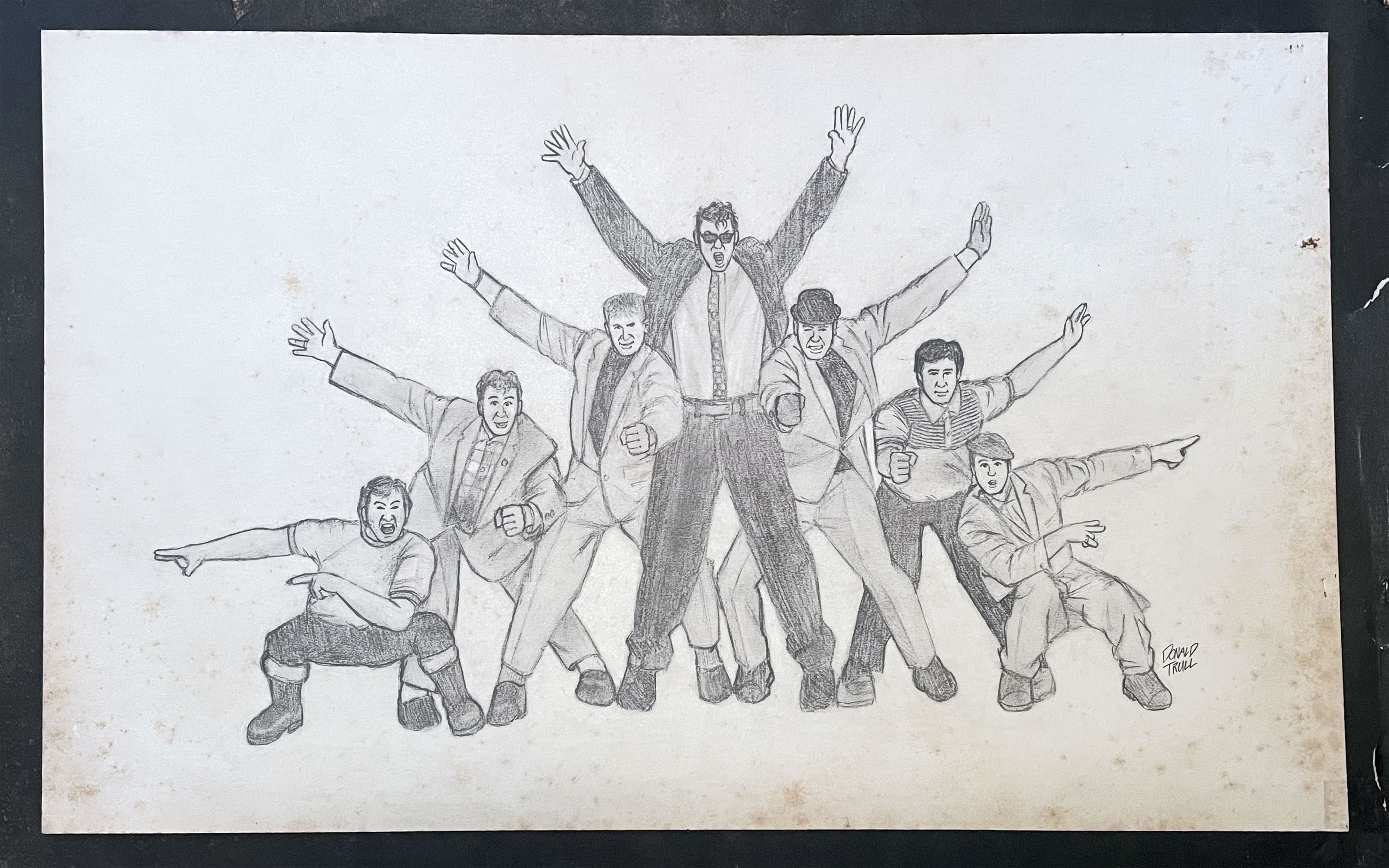
As I mentioned in my 2020 reminiscence on 7 and The Rise and Fall, I once drew the Madness pyramid pose from the cover of 7 in Mrs. Williamsโ€™ high school art class, circa 1984-85. I thought this pencil rendering was lost to the ages, but my mother recently unearthed my old art portfolio. It mostly contained studies from my college course, but I had stashed some high school drawings in there too. And behold, here was my good old Madness sketch โ€“ a bit ragged and mildewed around the edges, but still magnificent nearly 40 years later!

(Click for full resolution)

I can vividly remember drawing this. Mrs. Williams was a really slack and undemanding art teacher, whose lesson plain was basically assigning us a certain medium (pencils, pastels, charcoals, paint on canvas) and giving us weeks to render whatever subject we chose. No boring still lifes of apples and pears for us! Honestly, I think Mrs. Williams just wanted to keep us Sweathogs under control so she could sneak off and smoke a joint every now and then. I fondly recall my biggest high school crush was in my art class one year, and I sure wish Iโ€™d done a figure drawing capturing her beauty one time instead of some pop culture crapโ€ฆ but no way did I have the courage to dare.

Looking at this Madness drawing, you can see the stylized cartoonist form Iโ€™d developed as a teenager. My friends gave me grief for drawing eyes as one line and a dot, but I liked to simplify and aim for expression more than realism. I always felt more comfortable working in pencils without the unforgiving ink, relishing the trick of smudging pencil strokes to create varying tones of gray. There are some obvious goofs on display: Mike Barsonโ€™s head is too small, and Lee Thompsonโ€™s feet fell below the baseline of the rest of the group. Not sure if that happened because I started with Thommo or ended with him.

So yeah, itโ€™s a humble little piece of art history that Iโ€™m proud to share with the Stateside Madness community. Just for fun, hereโ€™s another artifact recovered from that old art portfolio: my self-portrait as a brooding 14-year-old around the same timeframe, complete with โ€™80s hair, aviator eyeglasses and Members Only jacket. Yeesh, Iโ€™d have to say I did a better job drawing Suggs and the boys, for sure!

More Mad Memories

A Momentary Lapse of Madness: 1986-1992

The breakup of Madness. A bleak, dispiriting time that all of us longtime fans had to suffer through in our own way. Of course 1986 wasnโ€™t really the end, but we had no way of knowing that. For us it felt as permanent as the end of The Beatles or Led Zeppelin or The Jam. Itโ€™s going to be a challenge to write an essay on the years without Madness without being completely boring, but hey, being boring hasnโ€™t stopped me so far. In my personal case, the breakup years coincided with a transitional growth period in my life that fortunately made the loss easier to cope with.

Certainly, no one who followed the band could say the breakup came as a shock. The writing was on the wall after the departure of Mike Barson. Iโ€™ve never written a blog post dedicated to 1985โ€™s Mad Not Mad because I just donโ€™t have much to say about it. I know a lot of fans love that album, and I respect that. But to me it was and still remains the low point of the Madness discography. I forced myself to play it with much dutiful enthusiasm, much like Homer Simpsonโ€™s hungry rationalizations over his runaway BBQ piglet: โ€œItโ€™s just a little synthesizery. Itโ€™s still good, itโ€™s still good!โ€

More precisely, Mad Not Mad is analogous to the final season of Monty Pythonโ€™s Flying Circus without John Cleese. Yes, there are moments of brilliance (see โ€œBurning the Boats,โ€ โ€œColdest Day,โ€ โ€œMichael Ellis,โ€ โ€œThe Most Awful Family in Britainโ€), but the overall endeavor is a giant hemorrhaging wound with one indispensable creative contributor gone missing. Things fall apart. The center cannot hold.

Rumors were buzzing about that Madness was going to call it quits. I clearly recall how I got the confirmation in the most gentle and considerate way I could have asked for. One morning in 11th grade homeroom, I got a visitation from Julie Hale, a preeminent figure in our schoolโ€™s punk rock community. She and I were by no means friends, just cordial acquaintances. But Julie Hale came to me that morning with her head held low, face hidden behind pink hair, hands clasped in fingerless gloves as she shared the grim news. โ€œItโ€™s true, Donald. Madness broke up. Iโ€™m so sorry.โ€ And Julie Haleโ€™s word on the alternative music scene was gospel, so this was a rumor no more. It was honestly touching that our gothic queen sought me out, in observance of my position as Tuscola High Schoolโ€™s #1 Madness fan, to serve as a solemn angel of mercy. The revelation sure could have gone worse delivered by others among my classmates: โ€œHa ha, stupid Madness broke up! You suck! In the middle of suck street!โ€ Thank you for that kindness, Julie.

Iโ€™m kinda foggy on how I reacted from that point, reading that โ€œ(Waiting for the) Ghost Trainโ€ was their farewell single and finally getting to hear the song on MTV some months later. But I wasnโ€™t devastated really. Looking back, I think I was inured by the tragic fate that befell my other favorite band of that era, the legendary California punk trio the Minutemen. I had discovered them in 1984, just a year after I got into Madness โ€“ but their mighty guitarist/vocalist D. Boon was killed in a car crash in late 1985. (Since then I have written creatively as D. Trull in tribute to him.) Within the space of a year, the two most significant bands of my high school years were both gone. In the case of Madness, though, all the members were still alive and well. And it was clear Suggs and the gang needed to find themselves new creative directions anyway. Exciting next chapters might lie ahead for them. So I was able to keep that breakup in perspective and carry on.

Contemporaneous with the end of Madness, in 1986 the surviving members of the Minutemen made a new start. Bassist Mike Watt and drummer George Hurley formed fIREHOSE, fronted by a young Minutemen fan from Ohio named Ed Crawford. fIREHOSE swiftly filled the void in my life left by Madnessโ€™s departure. In my 1987 freshman year at UNC, fIREHOSE came to play in Chapel Hill and cemented their spot as my new favorite band. Their live shows were electrifying, and I got to chat with the gregarious Watt at gigs and even helped him write set lists. I felt more personally invested in and connected to the dudes from San Pedro than Iโ€™d ever felt with the boys from Camden Town. Madness had been my high school soundtrack, but fIREHOSE was my college music, no question about it. It wasnโ€™t like I shunned Madness or quit listening to them. They just become a notch less important, a chapter of my past.

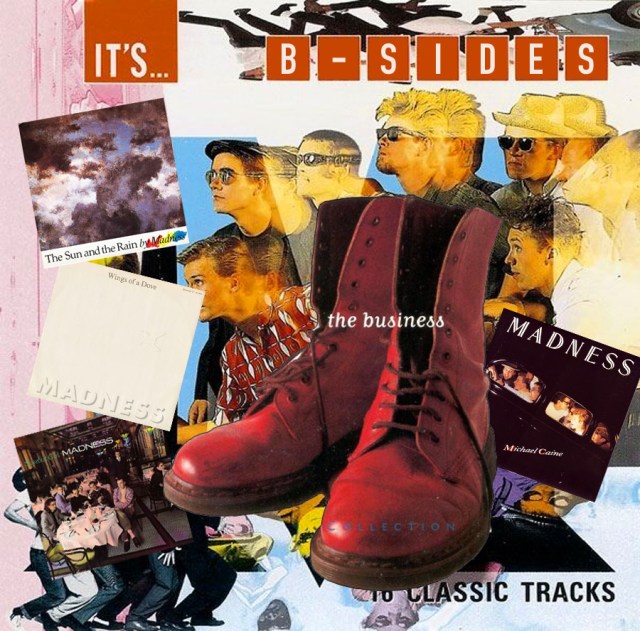
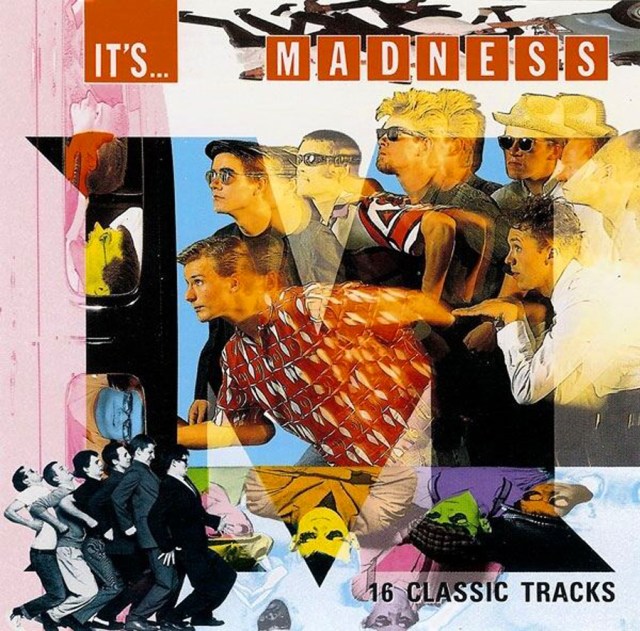
I got my first compact disc player in my freshman year, and that technological advance indirectly sustained my interest in Madness. Embarking on the obsessive (and expensive) scavenger hunt to repurchase my music collection on shiny silver discs, I found obscure acts like Madness were tough to procure in the new format. I believe the first Madness CD I got was an import of Utter Madness, or it may have been One Step Beyond. Whichever came first, I was sorely thirsty for them. It dazzled my ears to savor those nutty old tunes mastered in sparkling digital clarity. Toward the end of my college years I snagged the compilation Itโ€™s… Madness, as discussed at length in my post on B-sides. Hearing a whole slew of new-to-me Madness tracks reinvigorated my love for the band, now affirmed as more than a silly schoolboy phase I went through. Nope, that silly schoolboy phase never ended.

And all this time, I was entirely unaware of what the former members of Madness were getting up to. The Madness, Crunch!, Voice of the Beehive… all of their late โ€™80s projects were so low profile in the United States, they didnโ€™t register on my radar throughout college. Reading an interview with Watchmen artist Dave Gibbons in a comics fan magazine circa 1988, I saw these blocky illustrations of symmetrical cartoon faces captioned as his album artwork for โ€œThe Madness.โ€ Well, that was bullshit, I thought. Some upstart band had the nerve to call themselves The Madness now? It would be another couple of years until I learned that these interlopers were in fact Suggs, Cathal, Chris and Lee.

Alas, to everything there is a season, and a time to every purpose under heaven. I graduated from UNC in 1991, and as if turning on some cosmic calendar my musical constellations shifted once again. fIREHOSE was losing their pressure flow, so to speak, and they broke up a couple of years later. I would need a new artist to play the soundtrack of my twenties. Paul Weller, an old hero whose Style Council work Iโ€™d lost track of during my college years, roared back with a thrilling new solo career to assume that role.

And yet there was still another creative renaissance underway at this critical juncture. I got the message from a Worldwide CD mail order catalog that our beloved Julie Hale probably subscribed to as well, wherever she was. New import CD release: MADNESS AT MADSTOCK. Live recording from 1992 reunion at Londonโ€™s Finsbury Park.

Our long dark tea-time of the Mad was ended.

Haaaaallelujah… Lay-loo-yah…!

More Mad Memories

B-side Myself with โ€œThe Businessโ€

Iโ€™ve previously detailed my herculean labors to acquire the albums 7 and The Rise and Fall on imported vinyl, but tracking down the singles and B-sides was another magnitude of difficulty for us American fans. Mail-order catalogues and record shops seldom had anything on offer from Madness aside from the albums. I was only vaguely aware that the B-sides even existed.

Iโ€™d seen the occasional discography listing somewhere, peppered with exotic titles like Work, Rest and Play, โ€œNutty Theme,โ€ โ€œStepping into Line,โ€ and โ€œThatโ€™s the Way to Do It.โ€ No one ever talked about these phantom tracks in magazine interviews. Over here we had no idea what they might sound like. Or how good they were. In the best sour grapes tradition, I figured they must be inferior scraps and rejects, or else they wouldnโ€™t have been B-sides, right?

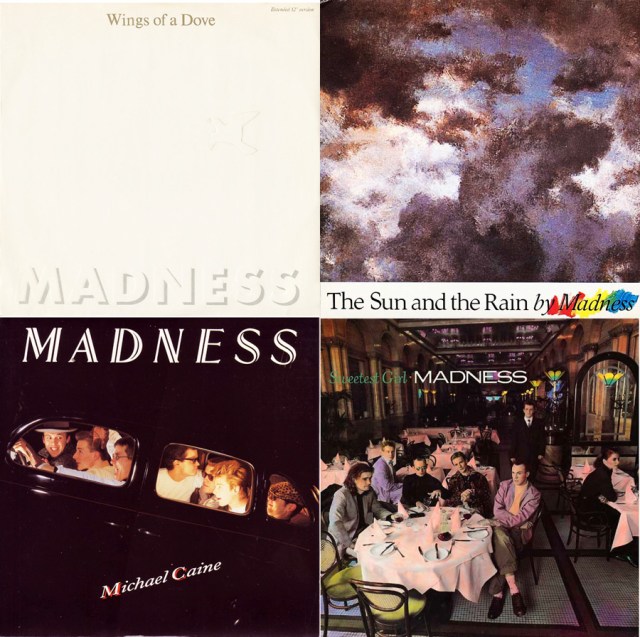
But the nagging curiosity lingered in my mind. In 1986, when my cousin Regina went on a trip to London, I asked her to bring me back a couple of Madness singles so I could finally hear some B-sides. With the bandโ€™s career running down, I must have reasoned it was time to start rounding up the last bits of Madness I would ever get. Regina returned with a whole treasure trove of 12โ€ singles snagged at the Oxford Street HMV.

  • โ€œWings of a Doveโ€
    b/w โ€œBehind the Eight Ballโ€ and โ€œOneโ€™s Second Thoughtlessnessโ€
  • โ€œThe Sun and the Rainโ€
    b/w โ€œFireball XL5โ€
  • โ€œMichael Caineโ€
    b/w โ€œIf You Think Thereโ€™s Somethingโ€
  • โ€œSweetest Girlโ€
    b/w โ€œJennie (A Portrait Of)โ€

She also brought me Furniture’s โ€œBrilliant Mind,โ€ a Stiff single in the UK charts at the time, because she thought it sounded like something I might like. Eh, it was okay, but almost entirely irrelevant next to real Madness B-sides! What an opulent collection of gemstones Cousin Regina had gathered for me, with the earthy musk of Lee Thompson sprayed all over them. โ€œFireball XL5โ€ is surely the cult favorite of the bunch, and rightly so. But I was even more partial to โ€œOneโ€™s Second Thoughtlessness,โ€ where Thommoโ€™s linguistic somersaults twist the concept of โ€œone secondโ€™s thoughtlessness,โ€ punctuated by his ominous gasps and whispers. (I recall gamely trying to convince my goth friends that this song had a vibe kinda like The Cure, circa โ€œThe Walkโ€ and โ€œLetโ€™s Go to Bed,โ€ but they werenโ€™t having it.) And โ€œJennieโ€ is a dazzling little pop nugget that totally should have been included on Mad Not Mad. You can tell Woody cowrote it, because the rhythm owns this song. So much good stuff.

As much as I cherished discovering this sampling of B-sides, youโ€™d think I would have made it my mission to track down every Madness single. But I didnโ€™t. Life got in the way as I left home and went to UNC in 1987. I didnโ€™t own a turntable and it was a big hassle to get friends to copy vinyl records to tape. Besides, after getting my first CD player during freshman year, digital was where it was at. And honestly, I came to regard Madness as the sound of my high school days gone by. I still loved them, but the band was now over and it was time to move on. I was more into fIREHOSE and Screaming Trees, bands that were active and regularly came to play in Chapel Hill. Madness was receding into the nostalgia category, and while youโ€™re a college student you donโ€™t have much need for nostalgia. 

Of course, relics of the good old days do inevitably turn up. One afternoon when I was browsing at Schoolkids Records in my junior year, a zippy tune about getting caught shoplifting struck my ears. Iโ€™d never heard it before, but I knew it must be Madness. I went up to the counter to ask what they were playing, and the clerk pointed to a CD with a colorful sleeve: Itโ€™s… Madness. A brand-new 1990 Virgin import compilation of eight singles interspersed with eight B-sides โ€œnever previously available on CD.โ€

  1. โ€œHouse of Funโ€
  2. โ€œDon’t Look Backโ€
  3. โ€œWings of a Doveโ€
  4. โ€œThe Young and the Oldโ€
  5. โ€œMy Girlโ€
  6. โ€œStepping into Lineโ€
  7. โ€œBaggy Trousersโ€
  8. โ€œThe Businessโ€
  9. โ€œEmbarrassmentโ€
  10. โ€œOneโ€™s Second Thoughtlessnessโ€
  11. โ€œGrey Dayโ€
  12. โ€œMemoriesโ€
  13. โ€œIt Must Be Loveโ€
  14. โ€œDeceives the Eyeโ€
  15. โ€œDriving in My Carโ€
  16. โ€œAnimal Farmโ€

Man, what a crazy surprise. โ€œOneโ€™s Second Thoughtlessnessโ€ was the only B-side I already knew, so this purchase scored me seven โ€œnewโ€ Madness songs in one fell swoop, all in sweet digital clarity. I have a strong memory of first hearing โ€œDeceives the Eyeโ€ in the store followed by โ€œStepping into Line,โ€ so Schoolkids must have been playing it on shuffle. Those turned out to be my favorite B-sides on the disc, along with โ€œThe Young and the Old.โ€ For the collectors out there, my copy is the original pressing that incorrectly lists track 10 as โ€œBehind the Eight Ball.โ€

Itโ€™s… Madness made a huge restorative impact on me. Madness on CD was still hard to come by in 1990, and probably about all I had at that point was One Step Beyond, Absolutely and Utter Madness, and maybe Keep Moving in the wrong order. Listening to Itโ€™s… Madness reminded me of how great Madness was, and of their mystery lost tunes I had yet to discover. Undoubtedly the Nutty Boys notched back up in my listening rotation, getting me primed for their incipient reunion.

I got the 1992 Madstock album from a mail order outfit called Worldwide CD, and not long after that I got a catalog from them with a typed listing for a 3-disc box set called The Business: The Definitive Singles Collection. All the B-sides collected on CD. My patience and/or procrastination had finally paid off.

I ordered that sucker and it had to be my biggest mind-blow Madness purchase since my seminal One Step Beyond/Absolutely 2-on-1 cassette. Even though I had acquired a fair number of B-sides before The Business, the sheer volume of unheard, career-spanning Madness corkers put me flat on my ass. The highlights being:

  • โ€œMistakesโ€
  • โ€œNutty Themeโ€
  • โ€œDonโ€™t Quote Me on Thatโ€
  • โ€œCrying Shameโ€
  • โ€œThatโ€™s the Way to Do It (Odd Job Man)โ€
  • โ€œA Town with No Nameโ€
  • โ€œNever Ask Twice (Airplane)โ€
  • โ€œShadow on the Houseโ€
  • โ€œWalking with Mr Wheezeโ€
  • โ€œGunsโ€
  • โ€œSarahโ€
  • โ€œAll I Knewโ€
  • โ€œInanity Over Christmasโ€
  • โ€œPlease Donโ€™t Goโ€
  • โ€œCall Meโ€
  • โ€œMaybe in Another Lifeโ€

Itโ€™s all eggs, bacon, beans and a friiiiied slice! Youโ€™ve got the early genius of the bandโ€™s first B-sides, any of which would be right at home on One Step Beyond, if the album wasnโ€™t already transcendently perfect. Youโ€™ve got atmospheric, film-credits-worthy instrumentals. Youโ€™ve got a take on American gun culture with enough meat to write a whole blog post on. Youโ€™ve got thoughtful post-Barson compositions reflecting the bandโ€™s restless state of mind, including the โ€œHereโ€™s to everybodyโ€ toast reinvented to magical effect in the newly minted โ€œIf I Go Mad.โ€

As much as I dearly loved The Business, this definitive compilation simultaneously made me angry as hell, for two reasons. First, and most significantly, because of the godawful interview clips.

I get it, the producers wanted to add a little something extra for the fans who own all the singles and have friends of the band offer their personal commentary. But jeez Louise, what an ugly disruption. I donโ€™t need to hear ruminations on Mike and Carl both being bullies every time I listen to these precious jewels. Most of the chats are terrible recordings with ear-splitting distortion, and some are even faded into the songs. WTF. Definitely not considerate for those of us without the full library of 45s. A few years later, when I learned how to edit audio files, I trimmed out all the interviews and compiled a 26-track set of just the B-sides, which is the only format in which I ever listen to The Business anymore. The very end of โ€œPlease Donโ€™t Goโ€ still has โ€œWhat is your name?โ€ croaking over the fading notes. As far as I know, there has never been a digital release of this track unsullied. It would be a blessing to see the recent I Do Like to Be B-Side the A-Side Record Store Day LPs arrive on CD.

The other thing the riled me up about The Business was defective discs. My set of CDs came down with some kind of bad disc rot within a year, sprouting spiderwebs of oxidation or delamination across the play surfaces. Playback became choppy and unlistenable. Replacing a costly import box set was no easy feat on my meager retail salary at that time, but of course I did. My second copy of The Business is still in fine shape today.

Of course, these are the quibbliest of quibbles in the Mad scheme of things. The major lesson this American fan learned โ€“ over the course of three installments โ€“ is that Madness did not put throwaway junk on their B-sides. Sure, there are a few pieces of dross on The Business like fan club flexi-disc ephemera and disc jockey jingles, but those are fun extras (one of which, โ€œInanity Over Christmas,โ€ is a full-fledged delight). The proper B-sides comprise enough great material for a whole double album, and to me this was the seventh Madness album before Wonderful happened. 

Every track is finely crafted with pride and respect for their record-buying public. Each one is different and creative and utterly worthwhile. Madness has never done the same job twice. Listen to me, take my advice. They double the work for a singleโ€™s price. The finished job will sound… real nice.


More of Trullโ€™s Mad Memories

Dance Craze and My Higher Education

The year 1986 was a tumultuous time of transition for all of us old-school Madness fans. And for myself even more so, since I was in my senior year of high school and facing big decisions about my future. It was a pivotal moment when I had more consequential matters to worry about than my favorite pop band breaking up. And yet somehow my pursuit of college admission got intermingled with my love of Madness, as I shall relate forthwith. 

During my junior year, I entered a short story in a scholarship competition called the North Carolina Writing Award. It was a lark and I expected nothing from it, but I ended up winning first place in the county. So I was invited to the state finals at Duke University, where I squared off against the other finalists in writing an extemporaneous essay in a big intimidating auditorium. I won second place in the state, which scored me major scholarship funds to put me through either UNC or Duke, and cemented my confidence in writing as the skill I wanted to build a career around. 

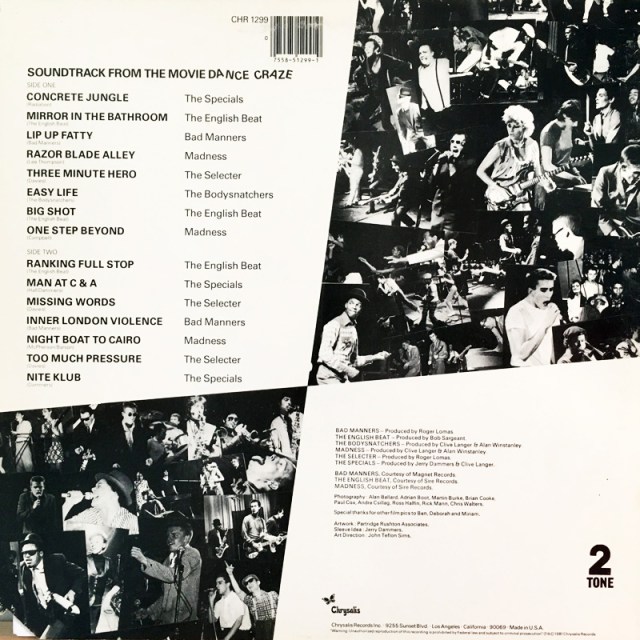
But thatโ€™s not why weโ€™re here. The incident of musical interest took place on the night before the Duke finals. It was my first visit to Durham, which now has been my home for some 25+ years. That evening my Mom and I stopped at a big mall called South Square, long since demolished, and I browsed a Record Bar music store. In this prize wonderland I found a rare and amazing discovery: the Dance Craze soundtrack. I had read about the elusive 1981 concert film, but here was the music on vinyl LP in my hands for the first time. At the checkout I remember telling the cashier I was super impressed with Record Barโ€™s selection. Iโ€™m sure I sounded like a pimply little dork, but I meant it. I thought this city of Durham must be a happeninโ€™ place. Maybe I did want to live there and go to Duke instead of Chapel Hill.

I spent that night in the hotel admiring the kick-ass album sleeve, glad of something to divert the stress of tomorrow morningโ€™s writerly showdown. The triumvirate I knew as the giants of 2 Tone โ€“ Madness, The Specials and The (English) Beat โ€“ all together on one live album. It was a crossover team-up event like the Avengers of ska. I also knew Bad Manners, but Iโ€™d never heard The Selecter or The Bodysnatchers. How cool, how exciting!

Dance Craze was a real watershed in my development as a music fan. Most fans think of Dance Craze foremost in terms of the movie, but for me the soundtrack is forever more memorable and important. Iโ€™ve only seen the movie in crappy VHS bootlegs and on YouTube, since legal entanglements have prevented official home video releases. On the last night of a 2017 visit to London, I had a ticket to see a screening of a high-quality print at a club in Islington, with Rhoda Dakar doing a live set afterward. But I came down with pink eye on the trip and decided to stay in. Later came to find out the projector had broken and there was no show that night.

But anyway, what was so significant about the Dance Craze soundtrack? Unbelievably, it was the first opportunity I really got to hear how Madness sounded live. Think of that. Just as the band was packing it in, I finally learned how flippinโ€™ amazing they were on stage, when it was too late for me to ever experience the nutty sound in person. (Or so it seemed.) But letโ€™s set that thought aside for the moment, so I can first give the rest of the artists on the Dance Craze soundtrack their due.

The Specials dominate the album, taking the opening and closing tracks, and rightfully so given their status as the progenitors of 2 Tone. Terry Hall sings lead on โ€œConcrete Jungle,โ€ which songwriter Roddy Radiation sang on the album. Iโ€™d have to say Roddy sings it best with that rockabilly swagger, but Terry ainโ€™t half bad. I first heard โ€œMan At C&Aโ€ on Dance Craze, since I didnโ€™t yet have More Specials at that point. I definitely prefer the live version without the Mickey Mouse voice. โ€œNite Klubโ€ makes for a storming finale, with a merry Terry offering a more generous appraisal of the klub scene than usual: โ€œAll the girls are very nice and all the boys are pissed!โ€ And his band introductions during the extended bridge have long been my mnemonic device for knowing my Specials members. โ€œOn drums, Brad! On bass guitar, Horace!โ€

The Beat is in fine form on their three tracks. My first album of theirs, the What Is Beat? compilation, contained bonus live versions of โ€œRanking Full Stopโ€ and โ€œMirror in the Bathroom,โ€ so I very much knew what to expect here. The bandโ€™s inclusion in Dance Craze left my younger self with the vague impression that The Beat had been on the legendary 2 Tone Tour, but of course they werenโ€™t.

I was familiar with Bad Manners thanks to their minor novelty hit, โ€œMy Girl Lollipop.โ€ The 1982 Forging Ahead is the only album Iโ€™ve ever had by Buster Bloodvessel and co., and only on a cassette I gave away long ago. It was interesting to find this โ€œlesserโ€ act elevated onto the same level as the big boys, and their โ€œInner London Violenceโ€ had a harder edge compared to their laddish goofball tunes I knew.

And then thereโ€™s the two girl-singer groups, The Selecter and The Bodysnatchers. Both of them blew me away. I pored over the little photos on the back of the album sleeve trying to figure out which one was Pauline Black and which one was Rhoda Dakar. For a while I guessed wrong and had them reversed. The Bodysnatchers made a huge impression in their one number, โ€œEasy Life,โ€ but it would be many years before I got access to any more of Rhodaโ€™s music. I was more taken with The Selecter, especially Paulineโ€™s shimmering vocals on โ€œMissing Wordsโ€ and the cute way she went โ€œhey!โ€ in the chorus of โ€œThree Minute Hero.โ€ After Dance Craze, I got my hands on Celebrate the Bullet and totally ate it up. I remember thinking it was like music from the future, despite the album being about six years old by then. My Stateside Madness cohort Poly Collins has proclaimed his longtime crush on Rhoda Dakar, but Iโ€™d have to say Iโ€™m a Pauline Black guy… even though Pauline shares the same name as my dear departed grandmother, which is kinda weird for oneโ€™s sexy pop idol.

And now back to the feature attraction of the Dance Craze soundtrack: Madness live. It seems hard to believe, but in those early years I had no exposure to what Madness really sounded like on stage. Like most U.S. fans, I lacked the means to attend their concerts, and TV appearances were nearly always mimed. Their live act, so renowned across the U.K., Europe and east Asia, had been systemically withheld from America. In 1984 Madness made a landmark live performance on Saturday Night Live, and as I detailed in my Whereโ€™s the Band? post, I found it lacking. I actually decided Madness must be a studio band not really suited for the stage, like Steely Dan or something. Boy howdy, did I have that wrong.

Listening to Dance Craze was the first time I ever got to hear a legitimate high-fidelity recording of Madness doing their thing wide-open. It was a revelation. Three top tracks from the One Step Beyond album that I so cherished, executed with dazzling energy and verve. Barson and Bedders dueling like fencing masters in the mind-blowing bridge of โ€œRazor Blade Alley.โ€ Chas screaming his head off in โ€œOne Step Beyondโ€ (โ€œSoul to soul, nation to nation! Madness is musical appreciation!โ€) as the band lays siege like an unstable nuclear reactor threatening to implode. Suggs making the most of โ€œNight Boat to Cairo,โ€ his one brief spotlight on the whole soundtrack, while Chris goes extra twangy, Woody goes extra bangy, and Thommo goes extra cranky. Every song a show-stopper.

When the Dance Craze soundtrack was first released on CD in 1990, it was a crushing disappointment to find the Madness tracks omitted because of legal issues. A first pressing with Madness included was immediately recalled, but a few copies that slipped out sold for astronomical prices on the collector market. When the three missing songs turned up on a 2009 anniversary deluxe CD of One Step Beyond, I tried to playlist them together with the rest of Dance Craze, but with the different sound mix and fade-outs, they would not blend seamlessly together. Ultimately this mess got resolved with the 2 Tone: The Albums box set in 2020, which includes the soundtrack in all its original unexpurgated glory at last.

I canโ€™t overstate how much that Dance Craze album taught me. But not just the illumination of Madnessโ€™s full talents. Not just the introduction to The Selecter and Rhoda Dakar. Not just the beauty and harmony of these six quirky British bands all woven together at a singular moment in pop culture history. More than that, Dance Craze was a harbinger of the key role that live music was going to assume in my life going forward.

Back in 1986, live music was basically an abstract concept for me. The only shows Iโ€™d ever been to were country music stars like Alabama and the Statler Brothers. Late in my senior year I ventured to take a first โ€œgrown-upโ€ night out with friends, going to see a local reggae band on an Asheville college campus. It was like touching a live electrical wire. I never knew music could have such visceral presence, hitting you in the chest and lighting up your whole nervous system. This was a whole new experience, and I liked it. A lot. I began to see that records and tapes were only like pictures of music, a second-hand accounting of music. As Mike Watt puts it, everything is either a gig or a flyer. Records are nothing but flyers to get people to the next gig. Live music is what matters.

I ended up choosing to attend UNC over Duke, thank goodness. My top extracurricular activity was seeing live music at Chapel Hill clubs and other area venues. Arguably that was more educational than all my English and sociology and poli-sci classes put together. In my freshman year alone, I got to see R.E.M., Echo and the Bunnymen, 10,000 Maniacs, Sting, U2, fIREHOSE, and many fine local bands like the Pressure Boys and Billy Warden and the Floatinโ€™ Children. My college years fell within the dark hiatus without Madness, but there was no shortage of live music for me to absorb and savor and learn from.

Looking back, I consider the Dance Craze soundtrack to have been my first college course in both Madness and music in general. As Chas Smash aptly noted, โ€œMadness is musical appreciation!โ€ Everything before that was grade school, me with my little cassette tapes and pop music magazines. Many years later, following the bandโ€™s triumphant return, I would embark on my graduate studies by seeing Madness live for the first time at Madstock 2009. I think I finally earned my masterโ€™s degree at the Kenwood House Madness XL orchestral concert in 2019. 

And this Stateside Madness blog youโ€™re reading right now? Itโ€™s my ongoing doctoral thesis.


More of Trullโ€™s Mad Memories

Mad Evangelist Mixtapes and Mixed Reactions

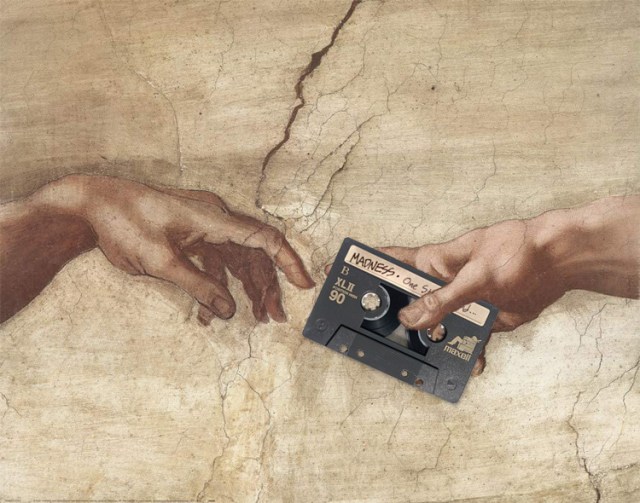
Growing up in the โ€™80s, we didnโ€™t have your fancy Spotify and Pandora and Deezer and whatnot, but we sure as hell knew how to share our music. And our social media platforms of choices were TDK, BASF and Maxell XLII-S. All yโ€™all Gen-Xers know what Iโ€™m talking about. Blank cassette tapes were the bomb diggity.

In junior high and high school we swapped homemade tapes around like auditory STDs. These copyright violations amongst friends were way more influential on our musical tastes (and long-term musical spending) than what was popular on the radio and MTV. Thinking back to what I listened to as a teenager, the majority originated with traded cassettes. Trendsetting proto-goth Tim made me tapes of The Cure, Echo and the Bunnymen, and early U2. From Robby I got INXS, from Chris I got Tears for Fears (before their big hits), from Regina I got R.E.M., from Amy I got The Beatles. My good friend Ruffin gave me cassettes of Talking Heads, The Police and The Waterboys, introduced me to jazz with Dizzy Gillespie and Miles Davis, and changed my life with tapes he brought back from a summer camp by a punk rock band called the Minutemen.

As much as I pride myself on being an independent-minded music connoisseur, the number of acts I discovered fully on my own is a fairly short list: Madness, The Specials, The English Beat, The Jam, Big Country, Modern English. Naturally these were the main artists I drew upon to inject my own influence into my friendsโ€™ collective music-swap canon. And Madness was the band I pushed the hardest, like a missionary spreading the nutty gospel. I racked up a respectable score of converts and contended with heretics through the course of my cassette crusade.

In my social circles we didnโ€™t do a lot of trade in actual mixtapes. We were literally album-oriented rockers, capitalizing on the 90-minute cassetteโ€™s capacity to put one album on Side A and another album โ€“ almost always by the same artist โ€“ on Side B. I had a sweet dual cassette deck specifically made for copying tapes at optimum quality, with the priceless โ€œhigh-speed dubbingโ€ mode so you could seriously crank โ€™em out without real-time listening. The standard practice was to fill any leftover space at the end of each side with a bonus track or two, preferably a related non-album release or B-side you might have on hand. 

Cherrypicking only the โ€œgood songsโ€ and building party playlists was not the way we rolled. I think it was mainly because we respected the album as an artistic unit. If you were a fan of a band, it was incumbent on you to have their full albums, โ€œbad songsโ€ and all. On top of which, curating a various-artists mixtape was regarded as a more intimate gesture, reserved for teenage courtship rituals. Dubbing off a tape of Boy and October was not so apt to be interpreted as โ€œhe/she likes you.โ€

I distributed many a copy of One Step Beyond plus Absolutely, emulating the Sire 2-on-1 cassette release that blew my mind. Ready-made for tape sharing, that double dose of seminal Madness laid out a convincing case that this band had more to offer than that one โ€œOur Houseโ€ song. Quite a few of my friends were impressed. As you might guess, the lead track on One Step Beyond went down the biggest, though I managed to stir interest in some deep cuts as well. โ€œTarzanโ€™s Nutsโ€ was always an attention-getter, probably owing to the testicular double entendre as much as anything. I proudly recall one day in gym class while we were running laps, I led a small troop calling cadence with โ€œChipmunks Are Go!โ€ I wonder what the P.E. coach thought about that crew of weirdos declaring themselves roaring chipmunks?

Of course, Madness didnโ€™t win universal adulation from my peers. Chris and Ruffin ridiculed โ€œIn the Middle of the Nightโ€ for its trifling and pervy subject matter. โ€œBetter watch out, โ€™cause he steals your un-der-wear! Oh no!โ€ they mockingly misquoted the tale of Nice Man George. I think โ€œBaggy Trousersโ€ didnโ€™t land right, either. Since we didnโ€™t share the frame of reference on British schooldays terminology, the bouncy tune came across more like kindergarten hijinks than juvenile delinquency.

Subsequent albums in the Madness catalog brought me diminishing returns on the tape-trading circuit. I learned from my own independent trials how right Geffen had been that 7 and The Rise and Fall did not appeal to general American tastes. No one else saw the relentless brilliance I found in Keep Moving, much to my discouragement, and Mad Not Mad met with โ€œthanks no thanks.โ€

I cringe and howl with laughter to recall the most epic taping faux pas I ever committed. I was making a copy of The Cureโ€™s Boys Donโ€™t Cry for my friend Stephen, a coal-black-dyed goth and not much of a Madness fan. There was some blank tape left at the end, and I had just got the spiffy new 1985 Madness album, so why not? I stuck โ€œIโ€™ll Competeโ€ on as a bonus track! Just imagine it: the segue from Robert Smith wailing โ€œCan you help me? Can you… help me?โ€ into an over-caffeinated technicolor lasershow of synths, horns and bongos. Inevitably, when I asked Stephen what he thought about โ€œIโ€™ll Compete,โ€ he grumbled that he had to erase that shit. I felt offended at the time, but of course who could blame him? I had broken the unwritten covenant of bonus tracks โ€“ make it something by the same artist, or any least in the same tone and genre. Idiot moves like that could sure ruin your reputation on the tape-trader scene.

There remained a small core of friends who continued to like Madness: Robby, Nick, Alex. None of them ascended to my rank in the Madhead ministry, but they remain loyal apostles even to this day. I fondly recall once when we were discussing what music to play, and Alex enthused โ€œLetโ€™s listen to the MAD Men of NESS!โ€ Such a goofy but endearing thing to say. At one point we were feeling jealous of friends whoโ€™d started a couple of garage bands, playing punk and goth stuff, and we decided by golly, weโ€™d form our own band โ€“ a ska band! The fragmentary notion was that I would be on lead vocals (ha), and Robby, Nick and Alex would learn how to play… something. This bullshit idea never went anywhere. All we managed was to pick out a Madness song to name ourselves after, just as they had named themselves after a Price Buster tune. We settled on something from the new Madness record to call our imaginary band: White Heat. Wet Fart, more like.

Ironically enough, the biggest threat to Madness in our cassette-sharing ring was a predator that I myself introduced to the ecosystem: The Specials. The Jerry Dammers combo proved way more popular to my friendsโ€™ varied tastes, whether punk or ska or goth or jazz or rock. Having bought the debut The Specials album, I was quite astounded at what Iโ€™d found, though I didnโ€™t like all the songs at first. When I shared a tape with Ruffin, I warned him not to be put off by the weird first song, which was so slow with plodding harmonica and trombone. โ€œDonโ€™t worry, it gets better with the fast songs,โ€ I promised.

Later he came back with glowing praise. โ€œAnd you know which song I like best?โ€ Ruffin said. โ€œโ€˜A Message to You Rudyโ€™!โ€ As a jazz listener, he was quite at home with Ricoโ€™s lead trombone, and equipped to tune into the songโ€™s vibe much more readily than I could. In time I would learn this track was the closest thing to genuine Jamaican ska I had ever heard up to that point. To bring things full circle, Ruffin would later share with me The Skatalitesโ€™ phenomenal Stretching Out reunion album, exclusively released on cassette in 1987, and finally things started to piece together. So thatโ€™s what ska really was.

As I spread more tapes around, everybody loved The Specials. Compared to Madness, they were angrier, more political, more serious, and oh so much cooler. Never mind that the band was long broken up by the time of our belated discovery. Contrary to the fighting sentiment of that goth-repellant bonus track, Madness could not compete. My friends basically decided The Specials were their British ska band of choice, which I feel is the most popular opinion among American music fans who know the genre.

And you know, thatโ€™s okay. I can look back with pride on my legacy of spreading awareness of 2 Tone music from both London and Coventry across Haywood County, NC, on traded cassettes back in the day. I wouldnโ€™t rewind a thing.


More of Trull’s Mad Memories

Madness on Saturday Night Live: Whereโ€™s the Band?

Madness on Saturday Night Live

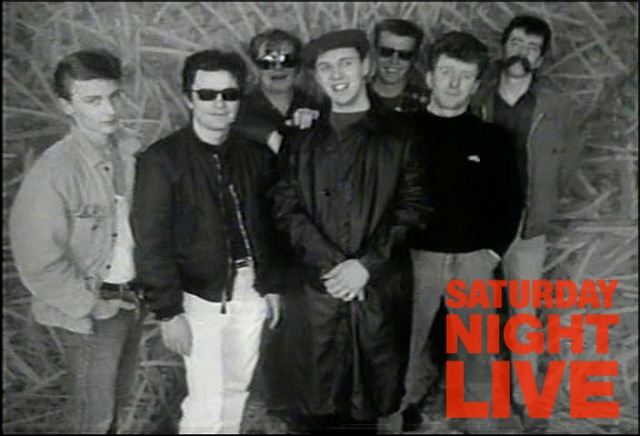
I was a Madness fan for a full year before I got to hear them play live. By that, I donโ€™t mean live in person for the first time. Heavens, no โ€“ that took another 25 years, which is a story for a whole other blog post. I mean, it took a year before I got to hear any audiovisual media transmission of Madness properly performing live. And this first listen also happened to be literally live. From New York. Itโ€™s Saturday Night!

Madness made their historic appearance on Saturday Night Live on April 14, 1984. Before this, I had seem them on American TV shows like Solid Gold and American Bandstand, but they were always miming to the recorded tracks, same as they had to do on Top of the Pops. It is possible that Iโ€™d been exposed to quick clips of Madness playing live on some MTV profile or on USA Networkโ€™s Night Flight. The producers of that show were clearly partial to Madness and British ska, airing obscure stuff like the โ€œOne Step Beyondโ€ video a lot. But footage of Madness live on stage was seemingly on embargo in this country.

In these dark ages, there were no Madness live albums for me to buy, no black market of Madness bootlegs at my disposal, no concert films on VHS, and definitely no access to the Madness U.S. tour dates of 1983-84 that may as well have been on the moon. So here Madness was, crowned as my new favorite band, even though I had no idea what they sounded like on stage.

Itโ€™s quite remarkable, when you consider how Madness earned their rapid rise to notoriety in the UK on the strength of their live show. Blowing the roofs off The Dublin Castle and The Hope and Anchor garnered their first London fans through sweat-soaked, boot-stomping word of mouth. Then the 2 Tone Tour and their first headlining tours got the rest of the country jumping on the nutty train. The hit singles and Top of the Pops secured their success, obviously, but their explosive energy on stage was what made Madness. It was quite the opposite scenario in the States, where we embraced the catchy โ€œOur Houseโ€ pop tune with zero conception of how this unassuming troupe of ragamuffins could rock the ever-loving shit out of a live audience.

Madness on Saturday Night Live

So thatโ€™s why this Saturday Night Live gig was really a big deal. Even if it had been a whole year since their big hit in America, this was our chance to finally see and hear what Madness was capable of live, on U.S. pop cultureโ€™s most high-profile live stage. The band had played a few California dates and visited Dick Clark in February-March 1984, an eventful swing that saw Lee marry his wife Debbie in Los Angeles. Madness flew back from Paris to New York for Saturday Night Live in April.

The host for their week was no Steve Martin or George Carlin โ€“ it was 1972 Democratic Presidential nominee George McGovern, who ran against Nixon and lost. He was still relevant in 1984 since heโ€™d been running for the Democratic nomination again, but had just dropped out in March. For some reason Dick Ebersol thought a failure-ridden politician with no discernible personality would be comedy gold. Spoiler alert: he wasnโ€™t. 

Infinitely more in tune with the 1984 zeitgeist was SNLโ€™s other special guest that night, none other than Clara Peller. For the benefit of the youngsters, the 81-year-old Mrs. Peller was the famed โ€œWhereโ€™s the beef?โ€ lady from the Wendyโ€™s ad campaign that debuted at the start of that year. America was in the grips of โ€œWhereโ€™s the beef?โ€ fever when this show aired, and in fact Senator McGovern was fresh from participating in the Democratic primary debate where Walter Mondale borrowed Claraโ€™s catchphrase as a zinger against Gary Hart. Good times. 

Clara Peller eats dinner with Madness

Clara got to meet Madness before their joint Saturday Night Live broadcast and even had dinner with the band. Presumably adequate cow meat was offered on the bill of fare. Believe it or not, a 2015 biographical musical called Clara and the Beef chronicled her stardom in song, with one number devoted to her SNL exploits. โ€œSaturday Night In New Yorkโ€ is very much a pastiche of โ€œOur House,โ€ with a faux-nutty rhythm bounding along to stupefying lyrics like โ€œI will wear my new mink, please please donโ€™t blink, I can be so special itโ€™s a rare treat, and quite a feat โ€“ you need to let me go, on with the show!โ€

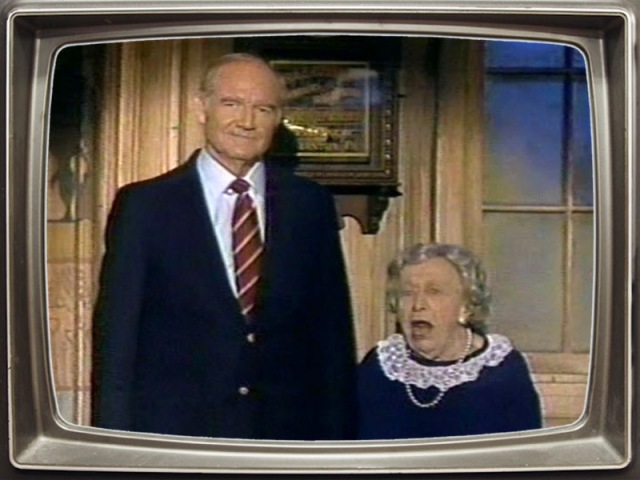
On that big SNL show, Claraโ€™s main bit was a cameo at the end of a blah sketch about unappetizing TV dinners for impoverished Reaganomics victims. โ€œWhereโ€™s the beef? Whereโ€™s the beef?โ€ she repeatedly inquired, to roars of adulation. Later Clara stepped out with George McGovern to co-introduce the musical guest.

George McGovern and Clara Peller introduce Madness

โ€œWhereโ€™s the band?โ€ demanded the marketing icon, squinting all around the studio. As raucous applause subsided, McGovern helpfully pointed out, โ€œClara, theyโ€™re right over there, and theyโ€™re called Madness.โ€

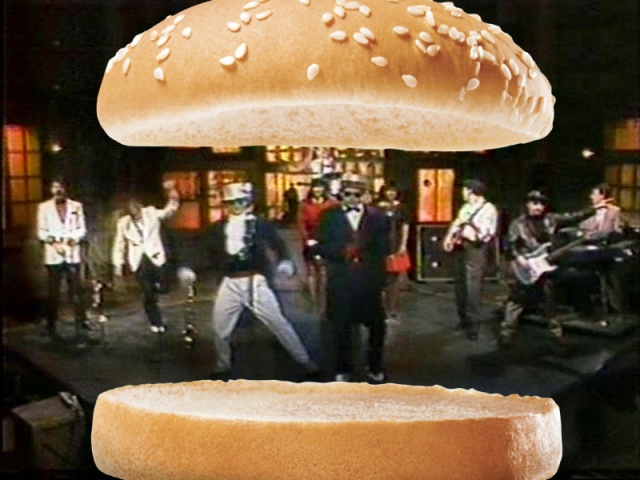
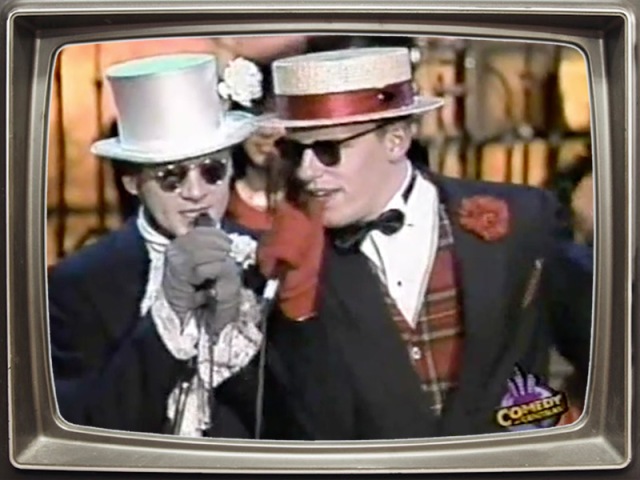
And now at last, the boys took the stage live in front of America. They dressed well for the occasion, with Woody in a middle-management necktie and short sleeves, Mark and Chris looking snazzy in their flat caps, Lee and trumpet sideman Dick Cuthell coordinated in white dinner jackets, and the gaudy duo of Suggs and Carl sporting Victorian tailcoats, lapel carnations and vintage costume hats. Suggsโ€™s dark outfit was accented in red, while Carl opted for a monochromatic look complete with silvertone facepaint, making him look transplanted from a black and white film. The band was fleshed out with James Mackie manning Barsoโ€™s abandoned post and a trio of ladies on backing vocals. 

The first Madness tune of the evening was, of course, โ€œOur House.โ€ Even though it had grown old and gray by this point and they had new music to promote, they knew well enough to give the Yanks what we wanted. Indeed, the studio audience showered them with a warm reception, even working up enthusiasm for the dreaded new song, the title track from the spanking new Keep Moving โ€“ which maybe two people in that crowd had heard, along with the loyal fans tuning in like me. By now, youโ€™re thinking I must have been pretty stoked, right?

To be honest, I wasnโ€™t that impressed. I came away from the SNL show with the disappointed assessment that Madness wasnโ€™t that great of a live band. 

Madness on Saturday Night Live

Shocking, I know! Let me hasten to add, the performance wasnโ€™t that bad. Unfortunately there are no clips readily available online, since NBC Universal guards their copyrights with an iron fist, so I canโ€™t let you judge for yourself. I do have private recordings, though. Watching them now, I can say the band was rather solid instrumentally. Mackie is no Mike Barson on the keys, but of course no one is. What soured the Saturday Night Live spotlight for me was our vocalists. 

Suggs let me down because he didnโ€™t seem to be into it. His charming expressiveness in the bandโ€™s music videos had made him my fast favorite member of the band, but live from New York, his affect struck me as flat and disinterested. Not much passion or dynamic range in his voice, compared to Madness recordings. Toward the end of โ€œOur House,โ€ Suggs went into โ€œwas our castle and our keepโ€ one bar too soon. Perhaps a few too many beverages or other SNL vices before the show?

And Carl pissed me off, too. At this point in time, I regarded Chas Smash as just a backup vocalist who sang lead on a few songs. To me Suggs was THE singer of Madness. I didnโ€™t much like seeing Carl showboating up front when it wasnโ€™t one of his songs, like he was trying to crowd out Suggs as the frontman. With Suggs playing it so low-key, Carlโ€™s voice was totally dominant at times. I wished Carl was hanging out back there with Lee and the backup girls instead. Speaking of whom, those ladies werenโ€™t helping things. The one spot where they fit in was โ€œSisterโ€™s sighing in her sleep, ah-ah-ah ahhh.โ€ Otherwise their chirps just cluttered up the vocal shambles even more.

Like dear Clara Peller, I asked myself, โ€œWhereโ€™s the band?โ€

Madness on Saturday Night Live

Since I didnโ€™t own a VCR until Christmas 1984, I had no record of that SNL show to play back. In my memories, this live Madness exhibition degenerated into a Rashomon grotesque of musical ineptitude. I recollected the whole band as sounding terrible, when that wasnโ€™t at all true. This perceived blunder didnโ€™t tarnish my opinion of Madness, though. I still loved them, I just decided they were a great studio band and not so hot on stage. No harm, no foul. I wasnโ€™t disabused of this faulty notion for a couple of years โ€“ I believe it was finding the Dance Craze LP (yet another tale for a future blog) that demonstrated how Madness was without question an extraordinary live act. 

In my defense, I can offer the court three pleas for why Madness on Saturday Night Live hit me the wrong way. First off, I was just a kid. And mighty clueless in oh so many ways. At age 14, I hadnโ€™t even been to a single rock or pop concert, just country music shows with my mom. My yardstick for grading live music was how closely it sounded like the record, lacking mature appreciation for nuances of rawness and spontaneity.

Secondly, there was a bit of sour grapes involved. With the prospects of me seeing a Madness concert seeming astronomically remote, I suppose some recess of my subconscious was glad to find fault with Madness on stage. Convincing myself that they maybe kinda sucked at playing live was a coping mechanism against teenage FOMO.

Most importantly, this is a case of what statisticians might call error from insufficient data sampling. When youโ€™ve seen a performing artist a thousand times, you can readily identify and forgive a misstep here and there. But when making a critical evaluation based on one showing, you can jump to all sorts of false conclusions. So Suggs wasnโ€™t on top form that night. So I was ignorant of Carlโ€™s evolved stage dynamics. So the backup singers werenโ€™t the best. It sure doesnโ€™t mean Madness canโ€™t play live, but I was working from the best evidence at hand. As a kid still learning about the wide world, I was prone to making sweeping generalizations based on my narrow personal frame of reference. Hell, Iโ€™m guilty of doing that nowadays, but hopefully not as often. Or as stupidly.
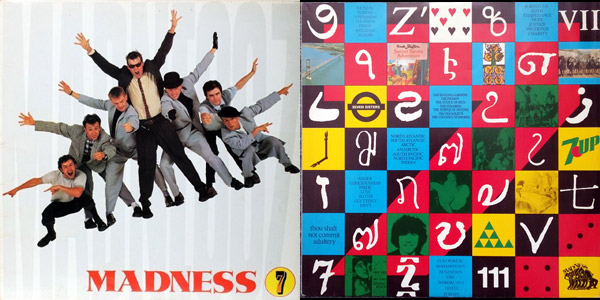
Looking back, itโ€™s ironic that one of the first Madness songs I heard live (on TV) happened to be โ€œKeep Moving.โ€ Some thirty years later, when I went to the 2015 House of Fun Weekender, the first tune in the Friday night fan-service setlist was โ€œKeep Moving.โ€ A song I never, ever, EVER dreamed I would see Madness play live (in person). As I pumped my fist in Minehead and screamed mine head off, any foolish misgivings about this bandโ€™s live musicianship were forgotten like a silly old nightmare.

Donโ€™t hide from past folly. Hold it high with a smile. Speak out loud with the mind of a child. If you’re lucky.


Special thanks to Declan McDermott for his archival assistance.
Other sources: Madness on TV, Bronwyn Douwsma

More of Trullโ€™s Mad Memories

Madness on American Bandstand: Have You No Respect?

Madness on American Bandstand

As a kid in the โ€™70s, I always hated American Bandstand. Not so much because of the music or Dick Clark, but because every week it marked the dreaded end of Saturday morning cartoons. After the final Schoolhouse Rock lesson of the day, when you heard Barry Manilow crooning about goinโ€™ hoppinโ€™ today, where things are poppinโ€™ (pop) the Philadelphia way, you knew it was over. Time to switch off the TV and scrounge up something else to do. American Bandstand was for dumb teenagers like my sister, with their inscrutable critical judgment of whether the new K.C. & The Sunshine Band single had a good beat that you could dance to.

Aging into that demographic in the โ€™80s, I began to tune into the Bandstand now and again, especially when prompted by TV Guide that bands I liked were going to be on. I recall seeing favorites like Men at Work, the Go-Goโ€™s, Big Country, General Public, Katrina and the Waves… and Madness. 

When the boys turned up on Americaโ€™s closest equivalent to Top of the Pops on March 3, 1984, it was a major event for me. They played (or more accurately, mimed) their current U.S. single โ€œThe Sun and the Rainโ€ as well as โ€œKeep Moving,โ€ title track from the just-released album. I was head-over-heels in love with the U.S. Keep Moving album, and seeing Madness promote it on American Bandstand served to validate my loyalty to the band as more than a one-hit wonder.

Presumably because of copyright enforcement, Bandstand performances are hard to find on YouTube. But there is a video clip from Dick Clarkโ€™s 1984 interview with Madness, and itโ€™s a right corker.

Analyzing this historical document, I first note how Dick addresses our dear frontman as Suggs McPherson (mispronounced like Elle McFEARson, to boot). This is what I always called him for many years: first name Suggs, last name McPherson. It wasnโ€™t until his The Lone Ranger album in 1995 that I grokked that Suggs is properly a mononym. Tacking on his surname is like saying Cher Sarkisian or Bono Hewson. At the start and end of the interview you can spot Suggs doing his patented askew โ€œglasses funny,โ€ a stage move he repeated ad nauseam during the โ€™90s reunion era. How odd it is to hear him say โ€œWeโ€™ve known each other for about six years.โ€ Man, Iโ€™m wearing socks older than that.

Asking about the bandโ€™s notorious rendition of โ€œGod Save the Queenโ€ on kazoos at the 1982 Prince Charles Trust Concert, Dick Clark randomly sticks his microphone in the face of the mustachioed trumpet player, and also his namesake, Dick Cuthell. Of course Cuthell wasnโ€™t part of that royal command performance two years prior, but he gamely replies, โ€œI didnโ€™t have a kazoo at the time.โ€

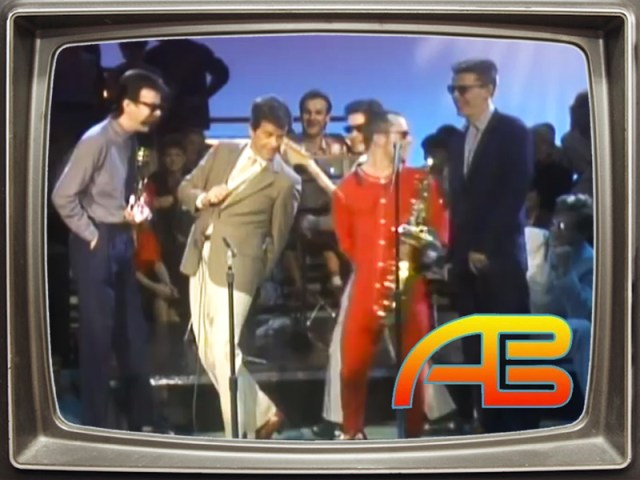
At this point the interview is rudely thrown into disarray by the unruly Lee Thompson. Clad in red longjohns, sunglasses and fingerless gloves festooned with M logos, Lee circles around Dick Clark like a jaguar stalking its prey, feigning a Benny Hill grab-and-miss at Clarkโ€™s backside. Thommo settles down for a moment before going in for a second pass, and this time he hits the target, majorly. Although the camera is on Dick Cuthell at the moment of assault, as it were, itโ€™s safe to say our Lee Jay Thompson indecently groped a beloved showbiz icon on national television.

โ€œHave you no respect?โ€ Clark bellows in mock outrage, over whoops and hollers from the underage eyewitnesses. Iโ€™ve read some tabloidy accounts of the Kix-Dick-Goose incident claiming that Clark was infuriated and cursed out the band afterwards, but thatโ€™s pretty clearly nonsense. Harmless fun was had by all, and Dick warmly thanks the band like theyโ€™re friendly old acquaintances.

Which, in fact, they were. 

At the tail end of the interview clip you can hear Dick say, โ€œWeโ€™re delighted to have you back.โ€ I did not realize until just recently that Madness first appeared on American Bandstand back in 1980! What, are you kidding me?

Yes, four years earlier, on April 19, 1980, our very young Nutty Boys capped off their second U.S. tour with an unlikely slot on the Bandstand. This was surely Madnessโ€™s American television debut, and Iโ€™m equally certain I didnโ€™t see it broadcast. Their lipsynched performances of โ€œOne Step Beyondโ€ and โ€œMadnessโ€ are not to be found on YouTube, but once again the interview segment is.

Youโ€™ll catch that right off the bat, Lee pinches Dick Clarkโ€™s inner thigh โ€“ so clearly the manโ€™s ageless derriรจre was an object of long-term enticement for Mr. Thompson. After that, Lee walks off camera and behaves himself for the remainder of the proceedings, leaving Mike and Carl to be the big cutups this time. As Dick questions Suggs about ska music, Barso angles for attention in the background with a bonkers โ€œturkey neckโ€ move. Carl mugs for the camera, joins Mike in a brief turkey mating ritual, then busts out some trademark nutty dance moves. Chrissy Boy and Bedders swing their guitar necks (in lieu of their own) and impishly prance about to dial up the pandemonium, while Woody and Lee mind their own business. And all this went down on ABC television in the year 1980. Unreal.

I just canโ€™t imagine how Madness got booked on American Bandstand back then. No hit songs, utterly unknown except in hip New York/California circles where they had toured and got minor college radio exposure. Sire Records must have had a superhumanly persuasive booking agent, or else the Bandstand had to scramble to fill a last minute cancellation by Sister Sledge. I would dearly love to see how the unsuspecting crowd of dancers reacted to Chas Smash shouting out โ€œHey you! Donโ€™t watch that, watch this!โ€ Iโ€™d almost wager the showโ€™s producers made them skip the intro and launch right into the song, lest the teenyboppers awkwardly stand by waiting for a good beat to dance to. What a strange little chapter in the bandโ€™s primordial history.

It actually upends my personal narrative as a Madness fan, a bit. Iโ€™ve always believed and maintained that I didnโ€™t get on the nutty train until โ€œOur Houseโ€ was a hit in 1983 because I never had an opportunity to be exposed to Madness before that. But no. Thatโ€™s all a lie now. I could have seen them on freaking Dick Clarkโ€™s American Bandstand back in 1980! Dang it, what a near miss and epic fail!

You canโ€™t excuse me for having been too young or too unsophisticated in taste, either. In January 1980, I saw the B-52s play โ€œRock Lobsterโ€ on Saturday Night Live and became an instant fan at the tender age of 10, nearly a decade before โ€œLove Shack.โ€ I was into weird and crazy music as a kid, and if Iโ€™d seen Madness on TV at that juncture, I doubtless would have been set on my eventual path of musical appreciation much earlier in life.

What if, on that one pivotal Saturday afternoon, I had watched American Bandstand with my sister instead of going out to play with Star Wars figures? What if I had heard โ€œOne Step Beyondโ€ and seen these hooligans clowning around with Dick Clark, talking about something mysterious called ska? What if them rockinโ€™ on AB had led me straight to โ€œRockinโ€™ in Abโ€? What if Iโ€™d got my hands on The Rise and Fall right after its UK release, and โ€œOur Houseโ€ was already an old favorite by the time U.S. radio got clued in?

What an interesting alternate history some precocious parallel universe me got to enjoy, madly accelerated. Still, Iโ€™m happy enough with the way things played out. On a scale of 35 to 98, I rate it at least a 75.

More of Trullโ€™s Mad Memories

Free in Your Bumper Pack: The American Exceptionalism of Keep Moving

Keep Moving USA

American Madness fans have always got the short end of the stick. Sporadic tours, loads of music unreleased on U.S. labels, and our general suffering from the bandโ€™s local reputation as a novelty โ€™80s one-hit wonder. But there is one notable category in which only the U.S. (and Canada) got the very best version of Madness. Because the North American edition of the 1984 Keep Moving album is infinitely superior to the original British release in every possible way. Fight me.

But before we step into the bloody ska-octagon to duke it out, let me rewind. Prior to Keep Movingโ€™s appearance, โ€œOur Houseโ€ had made me a Madness fan, and I had tracked down the bandโ€™s domestic and imported back catalogue. In this interval I wondered what the future might hold for Madness. Would they go back to being an exclusively British phenomenon? I recall telling a friend my anxiety over possibly โ€œlosingโ€ my new favorite band if they didnโ€™t have more U.S. hits. โ€œDo you think theyโ€™ll try again?โ€ I asked with trepidation. At this point I would have had no idea of Mike Barsonโ€™s impending departure or the bandโ€™s internal tensions, but for some unfounded reason I feared there may not be a next Madness album.

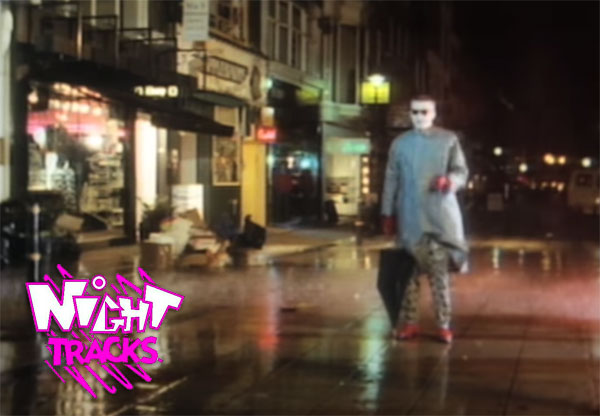
Then one Saturday night in early 1984, as I watched Night Tracks on SuperStation TBS, I caught an unfamiliar piano melody being pounded out by an absurdly long-armed fellow. The piano spontaneously exploded, a distinctive rhythm section joined in, and my shocked brain sputtered โ€œWait, could this be Madness?โ€ when Suggs McPherson himself appeared, singing in the rain with his sunglasses on. The music video credits gave me the lowdown:

The Sun and the Rain

MADNESS
โ€œThe Sun and the Rainโ€
Keep Moving
Geffen Records

Whoa! An unexpected new Madness song! A new Madness video! And better yet, a whole new Madness album! Unreal! I was so overwhelmed with sensory bombardment that I could barely absorb the song. All that registered was lyrics about inclement weather, that killer Barson piano riff, and the band wearing red bodysuits inside a mockup of Suggsyโ€™s hollow head. How thrilling to see proof that Madness was indeed trying America again. One might say they were resolved to keep moving.

The next morning I mentioned to my dad that Madness had a new album out and I was anxious to hunt for it. I figured weโ€™d need to run to Camelot Music in Hendersonville, where I had bought the One Step Beyond / Absolutely double cassette. Daddy ended up running some errands on his own that day, and to my surprise he called home from Pretzelโ€™s Records in nearby Canton. He said heโ€™d found a Madness tape at the store and wanted to make sure it was the right one. Yep, Keep Moving! That phone call was an unusual gesture from my dad, so I must have made a major impression about desperately I wanted this Madness tape. Teenage whining pays off sometimes.

Keep Moving USA

Oh, how delighted I was with Keep Moving! This was my first time getting a new Madness album upon its release, and it was spectacular. The one reservation I had at first was that the style of the vocals was now… different. Suggs had begun crooning, with a velvety tone all whispery and soft around the edges, compared to his cockney croak from early Madness. Carl got more honey-throated too, on โ€œMichael Caineโ€ and โ€œVictoria Gardens.โ€ Initially I thought their smoothed-out serenading sounded a tad posh and phony, but I soon accepted it as a natural consequence of maturity. 

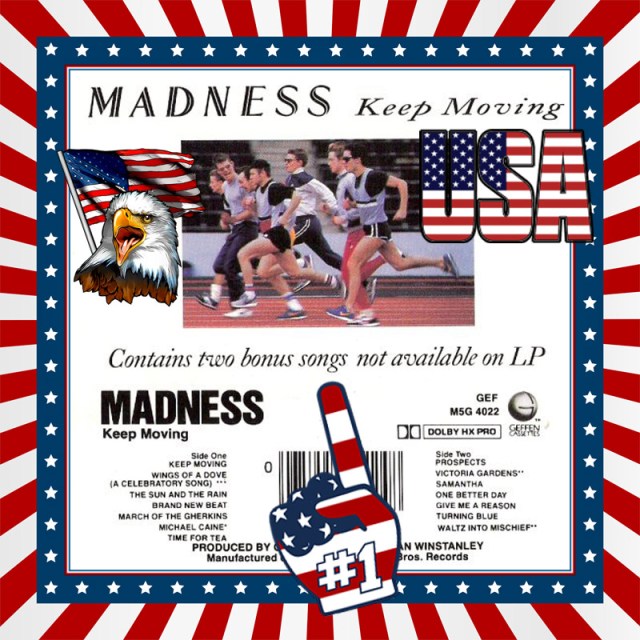
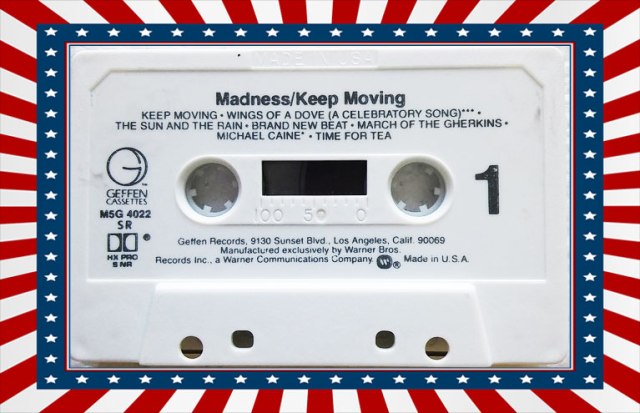
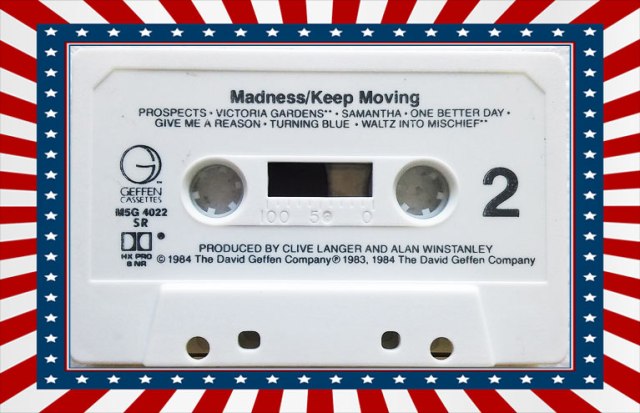
Thatโ€™s really the defining character of Keep Moving: rich, complex, sophisticated. Less zany and madcap, more artistic without veering into pretentious, still genuine and fun. A mature Madness. I found Keep Moving to be better than 7 and The Rise and Fall, and today it still ranks in my top three alongside One Step Beyond and Absolutely. The finest Madness albums have a consistent level of creative quality, no clunky fillers, each song building strength upon strength in a harmonious flow. The cover of the cassette stated โ€œContains two bonus songs not available on LP,โ€ and even those were good. Altogether, 14 lovely tracks that belong right where they are.

Wings of a Dove

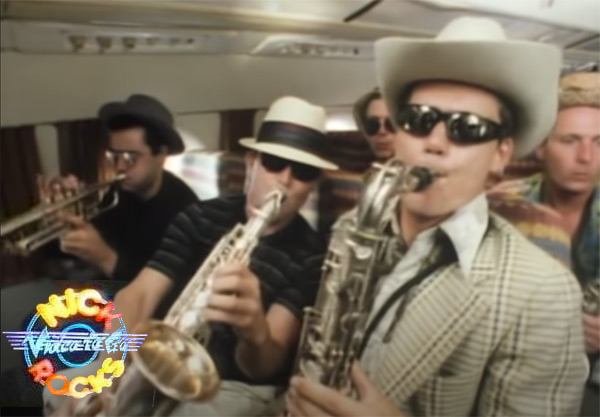
I finally got to hear โ€œWings of a Dove,โ€ which had been intriguingly mentioned as their new UK single in a Trouser Press article. Madness plus steel drums plus hallelujah gospel choir? Totally loved it. The music video for that track became a lot more widely played in the U.S. than โ€œThe Sun and the Rain,โ€ finding heavy rotation on Nickelodeonโ€™s Nick Rocks video program. I remember their credits subtitled the song as โ€œWings of a Dove (A Celebrity Song)โ€ instead of Celebratory. I think the gimmick with the van parachuting out of the plane helped to sustain the faint impression of Madness in the American consciousness, at least among teens and tweens. 

Funny thing about โ€œVictoria Gardensโ€ โ€“ listening to it, I thought the chorus sounded kinda like The English Beat, whose What Is Beat? greatest hits I had recently got. The liner notes cryptically credited โ€œGeneral Public: Back Vox,โ€ which I thought literally meant they had recorded strangers off the street. It was a few months later that a catchy single called โ€œTendernessโ€  hit the airwaves, I learned the name of Dave Wakeling and Ranking Rogerโ€™s new band, and the penny dropped. 

Keep Moving has always been my Madness album for Sundays. Maybe in part since I actually got it on a Sunday, but mainly because it has that relaxed, easygoing lazy Sunday afternoon mood. Certainly compared to the caffeinated jump of most of their other records, Keep Moving is the one to chill out to. The album also has a pleasantly old-timey sound thatโ€™s hard to put in words. It reminds me of idyllic 19th century paintings of gents in barbershop quartet outfits on pennyfarthing bicycles and ladies with parasols strolling through the park, especially โ€œBrand New Beat,โ€ โ€œMarch of the Gherkinsโ€ and โ€œProspects.โ€ These are not typical pop songs of the โ€™80s. They are from another time. I remember many times mowing the yard with Keep Moving on my Walkman, and laughing to myself, โ€œMan, no other kid in North Carolina is playing this kind of music.โ€ I was proud to be weird, and still am.

Keep Moving USA

Years later, when compact discs came along, I was in for a long-overdue discovery. Getting a batch of Madness import CDs through mail order, I found to my dismay that the songs on Keep Moving were totally screwed up. And the two biggest songs, the ones with the great music videos, werenโ€™t even on there at all! What the hell? What kind of lousy botched job had I got cheated on? Ridiculous!

And thatโ€™s when I figured it out. The original official Keep Moving had a totally different running order than the one I knew and loved. Most significantly, โ€œThe Sun and the Rainโ€ and โ€œWings of a Dove,โ€ which had been released as UK singles in 1983, were not included on the album. This was the dreadful truth. The real โ€œtwo bonus songsโ€ included on my Geffen cassette werenโ€™t โ€œTime for Teaโ€ and โ€œWaltz into Mischiefโ€ at all. AAAarrrghghhh! NOOOOOOO!

Well, damn. All I can say is that whoever the Geffen executive or producer was who assembled and packaged their release of the album, they were a total genius. They didnโ€™t just arbitrarily scramble the running order, they clearly put constructive strategy behind it. Because like I said, the North American edition of Keep Moving album is infinitely superior to the original British release in every possible way. Just take a look.

๐Ÿ‡ฌ๐Ÿ‡ง 1. Keep Moving๐Ÿ‡บ๐Ÿ‡ธ 1. Keep Moving
๐Ÿ‡ฌ๐Ÿ‡ง 2. Michael Caine๐Ÿ‡บ๐Ÿ‡ธ 2. Wings of a Dove (A Celebratory Song)
๐Ÿ‡ฌ๐Ÿ‡ง 3. Turning Blue๐Ÿ‡บ๐Ÿ‡ธ 3. The Sun and the Rain
๐Ÿ‡ฌ๐Ÿ‡ง 4. One Better Day๐Ÿ‡บ๐Ÿ‡ธ 4. Brand New Beat
๐Ÿ‡ฌ๐Ÿ‡ง 5. March of the Gherkins๐Ÿ‡บ๐Ÿ‡ธ 5. March of the Gherkins
๐Ÿ‡ฌ๐Ÿ‡ง 6. Waltz into Mischief๐Ÿ‡บ๐Ÿ‡ธ 6. Michael Caine
๐Ÿ‡ฌ๐Ÿ‡ง 7. Brand New Beat๐Ÿ‡บ๐Ÿ‡ธ 7. Time for Tea*
๐Ÿ‡ฌ๐Ÿ‡ง 8. Victoria Gardens๐Ÿ‡บ๐Ÿ‡ธ 8. Prospects
๐Ÿ‡ฌ๐Ÿ‡ง 9. Samantha๐Ÿ‡บ๐Ÿ‡ธ 9. Victoria Gardens
๐Ÿ‡ฌ๐Ÿ‡ง 10. Time for Tea๐Ÿ‡บ๐Ÿ‡ธ 10. Samantha
๐Ÿ‡ฌ๐Ÿ‡ง 11. Prospects๐Ÿ‡บ๐Ÿ‡ธ 11. One Better Day
๐Ÿ‡ฌ๐Ÿ‡ง 12. Give Me a Reason๐Ÿ‡บ๐Ÿ‡ธ 12. Give Me a Reason
๐Ÿ‡บ๐Ÿ‡ธ 13. Turning Blue
๐Ÿ‡บ๐Ÿ‡ธ 14. Waltz into Mischief*
* U.S. cassette only
  • โ€œKeep Moving,โ€ โ€œWings of a Dove,โ€ โ€œThe Sun and the Rain.โ€ Boom, thatโ€™s an epic trilogy of an album opener. Iโ€™ve heard UK fans remark that the two singles clash with the tone of the album and donโ€™t belong. Nonsense. I think they mesh splendidly with the band’s refined new sound.
  • The last fading notes of โ€œBrand New Beatโ€ ring in โ€œMarch of the Gherkinsโ€ without a pause, like โ€œHeartbreakerโ€ segues into โ€œLiving Loving Maid,โ€ or โ€œSgt. Pepperโ€™s Lonely Hearts Club Bandโ€ into โ€œWith a Little Help from My Friends.โ€ Separating them is sheer folly.
  • โ€œMichael Caineโ€ gets a comfortable buildup before its cinematic atmosphere unfolds. Itโ€™s a good song, but I donโ€™t think shoulders the weight of the albumโ€™s #2 position. Sharing a sense of spy novel intrigue, โ€œTime for Teaโ€ feels right as an off-kilter epilogue. 
  • โ€œProspectsโ€ is a quintessential Side 2 starter, resetting the table for the albumโ€™s next movement. The songโ€™s languid outro nicely tees up Dave and Rogerโ€™s merry bounce into โ€œVictoria Gardens.โ€
  • The brooding โ€œSamanthaโ€ turns the corner into the dark heart of Keep Moving, leading off a suite of four minor-key-type tunes that mean serious business. The emotional catharsis of โ€œOne Better Day,โ€ the suspense-thriller soundtrack climax of โ€œGive Me a Reason,โ€ the urgent denouement of โ€œTurning Blue.โ€
  • โ€œWaltz into Mischiefโ€ supplies the much-needed cooldown and signoff, as a raucous pint-raising singalong chorus gives way to chuffed strings and brass winding down to a stop.

I just canโ€™t listen to the UK Keep Moving. It doesnโ€™t make sense to me, and the beautiful flow is not there. Itโ€™s amazing how much difference the sequencing of songs can make. When I gained the technology to burn my own CDs, the first thing I did was create a disc of the American Keep Moving. Geffen eventually issued it on CD in the U.S., thank goodness, almost matching the old cassette but with โ€œTime for Teaโ€ inserted as track 13 instead of track 6. Not perfect, but close enough to be serviceable.

All that being said, and as much as I relish chanting โ€œUSA! USA!โ€ in this specific context, I freely admit that itโ€™s all subjective. When a creative work comes in multiple variants, in films or books or music, youโ€™ll always prefer the version that you fell in love with, whether it was the original or altered or what. Iโ€™ve actually had the exact same experience with another landmark British pop album from 1984: Iโ€™m biased toward the Style Councilโ€™s American My Ever Changing Moods album, even though Paul Weller fans almost unanimously revere the original Cafรฉ Bleu. Fair play to all the other Madness fans who likewise feel their treasured edition of Keep Moving is flawless and unbeatable.

To borrow a phrase from the pen of Lee Thompson: Star-shaped badges that shine around, called โ€œWings of a Doveโ€ and โ€œThe Sun and the Rain,โ€ come free in your U.S. Keep Moving bumper pack. But if a different tracklist is left around too long, itโ€™ll burn right through to your heart and your soul.

Keep Moving USA

More of Trullโ€™s Mad Memories

Vinyl Answer: The Quest for 7 and The Rise and Fall

Most Wanted: 7 and The Rise and Fall

Back when I was a newly minted Madness fan, after โ€œOur House,โ€ One Step Beyond and Absolutely had won me over, I found myself on the horns of an international crisis. Pop journalism informed me that the band had another two full albums to its credit: 7 from 1981, and The Rise and Fall from 1982. But since Sire Records had dropped Madness before their big 1983 hit, those two most recent records remained the stuff of legend in the United States. That didnโ€™t stop me from checking the โ€œMโ€ section at every record store in obsessive-compulsive vain, though I knew the search was going to require purveyors of exotic imported goods. And I would have to deal not only in foreign commodities, but also with a foreign format: the vinyl LP.

In all my music-loving life, I have never been a vinyl person. I did grow up in a home with a turntable, and my parents had a decent stack of country music LPs stashed in the closet by the likes of Conway Twitty, Hank Snow and Dolly Parton. But I never remember Mom and Dad playing records. They always just listened to the radio. My older sister had her vinyl collection with The Carpenters, Neil Sedaka and Frampton Comes Alive!, which of course she never wanted me messing with. I was raised on 8-track tapes and later cassettes. Only rarely did I ever own anything on vinyl beyond kiddie records. I demanded for my folks to get me the Kiss Alive II double LP, only because someone brought a copy to school and showed off all the cool scratch-off tattoos and goodies that didnโ€™t come with the cassette. And I had a few odd 45 rpm singles like โ€œOur Lips Are Sealedโ€ by the Go-Goโ€™s (major crush on Belinda Carlisle) and โ€œRaptureโ€ by Blondie (which I got by mailing in Pop-Tarts box tops).

Frankly, I just never liked vinyl. The sound was all crackly and prone to skipping. It was a pain to flip the record over. They were so fragile and easy to wreck with a single scratch or stray wisps of dust. Vinyl lovers extoll the โ€œwarmth and richnessโ€ of the โ€œsuperior dynamic analogโ€ whatever, and more power to โ€™em. They can take those old records off the shelf and sit and listen to โ€™em by themselves. In my book, tapes sounded way better than phonograph platters then, and well-mastered compact discs sound way better now. Yep, I think vinyl sucks.

But if I ever wanted to obtain the elusive 7 and The Rise and Fall as a teenager, I was going to have to settle for the import LPs. With a bit of work, I ended up scoring them both. Looking back now, I see evidence that Stiff Records did in fact release them on cassette, which would have been a blessing beyond imagination to my younger self. I gather that the market share for cassettes was quite smaller in the UK than in America, and in my music collecting experience I canโ€™t recall ever seeing, in person, import cassettes by artists I like. Youโ€™d have to turn to our friends at Retro Madness to procure such rare museum-class artifacts.

I actually found The Rise and Fall first, to make my reversed timeline of Madness catalogue discovery all the more knotty. The bandโ€™s fourth album turned up at an eclectic record shop in Asheville, North Carolina. It may have been a used copy, but if so it was in nice condition. Of course I was amazed to lay my lucky hands on it, but not unreservedly thrilled. For one thing, by that point we no longer had a record player in my house. Either weโ€™d gotten rid of the old turntable for some reason, or my sister had taken it when sheโ€™d moved out. On top of that, I thought the price on the LP was outrageous. I donโ€™t recall how much exactly, but it was probably around $15 โ€“ exorbitant by my financial standards at the time. The very idea of shelling out twice the cost of an average cassette tape, for a record I couldnโ€™t even play at home, and half of whose songs I already had on the Geffen compilation? Sworn to Madness allegiance though I was, it was still a bitter pill to gulp down.

The Rise and Fall LP

Stirring further consternation was a little grocery-store-style sticker on the back of the LP sleeve: โ€œMADE IN SPAIN.โ€ Whoa! An import not from Englandโ€™s mountains green, but shipped all the way from the land of tapas and toreros! It bore the Stiff Records label, though the fine print specified โ€œEditado por Discos Victoria, S.A,, distribuido por Edigsa.โ€ With grave concern I went to ask the shop clerk: โ€œIf this recordโ€™s made in Spain, will the singing still be in English?โ€ He assured me with amusement it would be. Itโ€™s a good thing I was unaware of โ€œUn Paso Adelanteโ€ at that point. ยกAy, caramba!

So I purchased my Spanish-but-not-Espaรฑol Madness record and took it to my auntโ€™s house to give it a first listen, before getting a friend to make a good cassette recording on his stereo system. I recall my first impression was… underwhelmed. I could see why Geffen had fashioned a compilation for U.S. listeners instead of issuing The Rise and Fall. Tracks like โ€œMr Speaker (Gets the Word)โ€ and โ€œNew Delhiโ€ just arenโ€™t very strong. โ€œSunday Morningโ€ is charming enough, but it comes across as a less successful variation on the same themes as โ€œOur House.โ€ (Probably as evidence that only Chas and Woody contributed songs about their upbringings, per the albumโ€™s original concept.) 

I was more impressed with the clever verbosity of โ€œTiptoesโ€ (rhyming โ€œthe doorโ€™s already shuttingโ€ with โ€œto reach the 19th buttonโ€!) and the unusual musical structure of โ€œThat Face.โ€ To me, Mike Barsonโ€™s piano and Mark Bedfordโ€™s bass are the quintessential elements of the Madness sound, and itโ€™s remarkable how โ€œThat Faceโ€ arranges their parts in minimalistic bursts that create both tension and airiness in the gaps between. Itโ€™s a mature new style that points toward the direction of Keep Moving

In my 11th grade English class, we had an assignment to present a song of our choice to the class and analyze its lyrics like poetry. Mrs. Caldwell told us to find songs with more artistic or social relevance than โ€œbaby baby letโ€™s partyโ€ or whatever. I chose to discuss โ€œAre You Coming (With Me)โ€ and dissect its bleak message of trying to reach a self-destructive friend in the throes of drug addiction. Looking back, I wonder why I didnโ€™t pick some other Madness tune like โ€œEmbarrassmentโ€ โ€“ another Lee Thompson composition with a meaningful story behind it, and a catchier melody. I believe in part I liked the idea of playing this tape recorded from a super obscure record that none of my captive audience would ever hear otherwise. And it was an opportunity to show that my favorite band could do something more serious and soulful than that โ€œhouse in the middle of the streetโ€ ditty. 

7 LP

Not long after I got The Rise and Fall, I acquired the 7 album through mail order. My friends and I had discovered a company called Burning Airlines (still in business since 1978!) that sold music T-shirts and merch. We had sent away for their full catalog, and among the typewriter-keyed listings of import LPs I spotted โ€œMadness 7.โ€ Iโ€™m sure it must have cost even more than what Iโ€™d shelled out for The Rise and Fall, but price could no longer deter me. I had to gain the one remaining โ€œlostโ€ Madness album by any means necessary. I know one motivating factor was my OCD need for something to put on the blank side of my Rise and Fall tape. Less rewinding!

Once I finally got it transferred to the B-side of that cassette, I was generally more pleased with 7 at first blush than Iโ€™d been with The Rise and Fall โ€“ not least because it had a greater number of new-to-me tracks, a total of ten. And of the familiar ones, two were different mixes. Compared to the Geffen Madness album, โ€œCardiac Arrestโ€ was shorter and โ€œShut Upโ€ was longer. In both cases I prefer the extended outro versions. I became an instant fan of โ€œTomorrowโ€™s Dreamโ€ (nothing at all like the Black Sabbath song), โ€œBenny Bullfrogโ€ (favored among my friends that I tried to convert to Madness), and โ€œThe Opium Eatersโ€ (proof that the band could really do a brilliant film soundtrack). Iโ€™ve always thought โ€œDay on the Townโ€ is underrated and deceptively chilling, a dub-tinged spiritual cousin to The Specialsโ€™ โ€œGhost Town.โ€

One particular track holds dark personal memories for me. When was in my first fender-bender as a newly licensed young driver, 7 was playing in my Oldsmobile Cutlass tape deck. I got rear-ended on the highway, and just as I braked to a screeching halt, the opening bars of โ€œSign of the Timesโ€ chimed out, Barsonโ€™s plonked keys taunting โ€œding-ding-ding, ding-ding-da-ding!โ€ at me like a game-show loser alarm. I couldnโ€™t bear to listen to 7 for months from the PTSD flashbacks.

7 LP sleeve

Another thing I have to mention about 7 is the album cover. I still think itโ€™s the best artwork on any Madness album ever, even better than the iconic nutty train. On the Divine Madness DVD commentary track, Chas and Mike argue about which one of them choreographed the 7 pose, which reminds me of a superhero team splash page. In fact, I had a poster of it on my bedroom wall since I first became a Madness fan, which surely predisposed me to like the album once I finally got it. And I love the inner sleeve with the 7ร—7 checkerboard grid of famous sevens, septets and sevenths: the 7 deadly sins, the 7 wonders of the world, the 7 seas, Seven Samurai, 7Upโ€ฆ so awesome! As I had done with The Rise and Fall, I finagled this album into another school assignment by drawing a detailed pencil study of that epic 7 cover. Poor Mrs. Williams also had to grade me on a rendering of Big Countryโ€™s Stuart Adamson in pastels, and a giant mural painting of Beta Ray Bill from The Mighty Thor.

Once I got my first CD player in 1987 as a college freshman, I was able to track down all the Madness albums on import CDs within a couple of years. And boy, did 7 and The Rise and Fall benefit from crystal clarity in place of the snap, crackle, pop of my LP recordings. Vinyl, I still hate your guts. But I thank you for making some important introductions and lasting connections in my life. To paraphrase that song that heckled me at the terrifying instant of my first car wreck:

This is disposable, throw it away
This is on vinyl, donโ€™t let it play
That was the past, so leave it behind
I found the music, itโ€™s all in my mind

Most Wanted: 7 and The Rise and Fall

More of Trullโ€™s Mad Memories