Chris Foreman has recently claimed that when the band sat down to gather old stories for the Before We Was We book, he was the only one who could remember that they had toured America in 1979. Either Chrissy Boy was exaggerating his bandmates’ faulty memory or they’ve miraculously reversed their amnesia, because we’ve got new evidence of them recounting those early U.S. adventures on film.
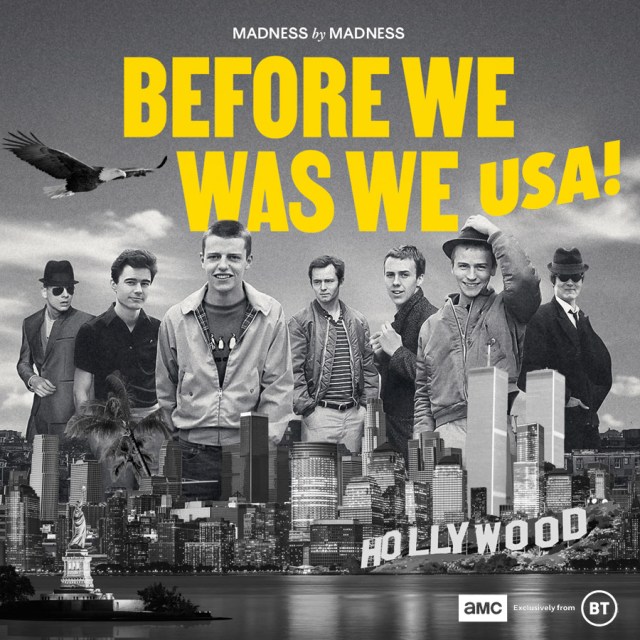
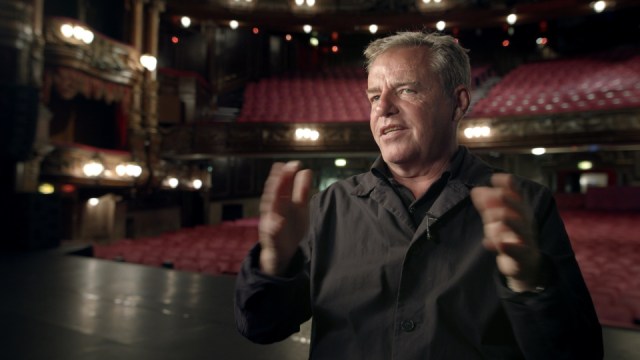
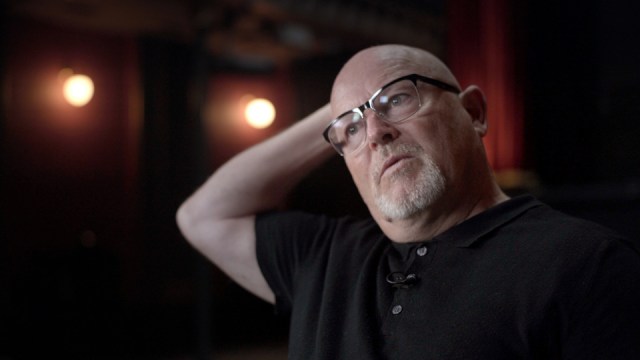
The new documentary series inspired by that namesake autobiography, Before We Was We: Madness by Madness, is being released in the UK on demand on BT TV and exclusively on AMC from BT TV. Through the kindness of our friends at the Madness Information Service, SSM has taken an exclusive sneak peek at the third and final episode of the series, airing May 15 in the UK. In the snippets below, formatted in the style of the book, the band reminisce about those first visits to New York City and Los Angeles, and the distinctly contrasting and lasting impressions they formed there.
Full episodes of Before We Was We are being posted on the BT YouTube channel, although it appears these will not be playable in the United States. Word has it that the series will make its way to digital services in the U.S. later this year. Count on Stateside Madness to keep you informed of any official announcements. But for now, here’s what the band had to say about their maiden voyage to the land of the free and the home of the brave…
MIKE: So we left the 2 Tone Tour early because Dave Robinson had this idea, he wanted us to get to America before The Specials. He thought whoever got to America first was going to be the one that they all remembered, the one they thought started the ska thing. He wanted it to be Madness.
MARK: They got hold of Seymour Stein, who had Sire Records. He said that he would sign us for just America. So it was obvious then that we would go to America at some point to promote the record. But it came very quickly.
The Mean Streets of Manhattan
MARK: Like a lot of people in bands, I think, it was a bit of a dream to go to America. And we got the chance. It was incredibly exciting. It’s that moment, you make that drive in from the airport in New York, and you see the Manhattan skyline. It really is just mind-blowing.
WOODY: It was a mad city.
LEE: Everything was big. Massive. Buzzing.
SUGGS: New York in 1979 was just like in the movies. Steam coming out the subway vents. Street lights not working. Potholes.
WOODY: It was one of the first places where I noticed immense wealth right up against the shoulder of poverty.
MARK: It was pretty depressed. There was rubbish everywhere. They’d almost gone bankrupt. They were having strikes.
WOODY: So you could just walk down one road and go “What the fuck? This is just horrendous!”
CATHAL: I remember walking down the street and the vibe was scary.
MARK: We wandered through some of the worst areas fearless. All around the Lower East Side and Alphabet City, where it was really dodgy. We played three or four clubs in New York in pretty quick succession. We’d sometimes play two sets a night as well, so sometimes we’d go on at 2:00 in the morning, 4:00 in the morning. Weird times.
CHRIS: The first two shows nearly sort of killed us, because we went on late, we were kind of jetlagged, and we were drunk. I really thought I was going to die.
CATHAL: The drink measures were more than we expected.
SUGGS: Of course the other problem was they didn’t go out until 10:00 at night, but we’d have been started by 7:00. So we’d be absolutely fucked by 3:00 in the morning.
CATHAL: Me and Suggs went out early, too early. And we came back drunk and out of our minds.
SUGGS: We were definitely fish out of water. It was kind of like the audiences were coming to see this funny novelty band. Our accents, and what we were singing about, and the music we were playing were so out of step with what was going on in New York. And it just wasn’t making any sense being there.
MARK: But California was just completely different.
California Dreamin’
WOODY: We hit Los Angeles, and there were palm trees, sunshine. I just went “Ah, it’s just lovely.”
MARK: It was just sunny every day, and the people there had this sort of, not childlike but childish innocence to them. There was definitely a spillover from the hippie times there. Everyone was very laid back, nothing was a problem. Yeah, it was completely different.
MARK: We met the Go-Go’s, who were an all-girl group, and we did shows together with them. We got on very well with them. The great thing about that was that they took us around places, they showed us places to go. So we had a really nice time there.
CHRIS: So we hang out with the Go-Go’s, and Bedders is seeing the drummer, Gina. I thought, that guitarist Jane is very nice, so I sort of ended up with her. You know, we extended English hospitality.
LEE: My missus is convinced that I was knocking the lead singer off. Belinda Carlisle. But, ah… I was in her bedroom with Chrissy Boy, and I had a right old case of the wind. Yeah, she never invited me back in her bedroom again. The fucking bathroom tiles were sliding off the walls. (Laughs.) The wallpaper peeled.
SUGGS: We did two shows a night at the Whisky A Go-Go, wearing the same clothes that were still wet from the first show. The foolishness of youth.
MIKE: When you played in L.A. everyone was totally out of it. But does it matter? I don’t know. You got the feeling sometimes like it didn’t. You got the feeling you could do anything.
See Ya Later, Uncle Sam
WOODY: It was a brutal tour, really hard work.
MIKE: I guess the performances were good, but touring America takes its toll.
WOODY: Yeah, I’d already been frazzled to fuck on the 2 Tone Tour, and then in America I really felt dreadful most of the time. Hanging on for dear life.
MIKE: The whole thing was all getting a bit chaotic, really. People kept disappearing, meeting Americans, going off in their different directions. So we all had this sense of belonging together, but then everybody was getting into these different situations. Which was exciting and everything, but a bit dispersing at the same time.
WOODY: Being in these amazing places… but we were missing home.
Special thanks to Jon Young of the MIS for setting up this SSM exclusive preview.
Madness guitarist/songwriter Chris Foreman recently honored us as a guest on the Stateside Madness Podcast, chatting with hosts Laurie Alfaro, Poly Collins and Bobby Rubin. In the following excerpts from the rollicking interview, Chrissy Boy discusses the band’s plans and hopes to get back to touring and recording, the new American greatest hits album, the process of writing “Our House,” memories of early visits to America, and the real important scoop here, which is the untold origins of his ever-popular “Showtime!” solo cabaret routines.
Be sure to listen to the podcast for the complete interview, including exclusive clips from new song demos Chris has been working on. And now, let’s get ready to thingybob! The louder you scream, the faster the ride!
Poly:Chris, thank you for joining us, and if you’d be so kind, why don’t you tell us what the last year’s been like for you?
Oh yeah, pretty normal. Up in my loft. Has something been going on that I missed? (Laughs.) No, it’s been terrible, of course.
Last March, we were going to go to Dubai and get some hot weather. And suddenly our tour manager calls it off. And it’s been like that ever since, really. Yeah, it’s kind of like I had all this stuff in my calendar, obviously coming to the USA. So this stuff will come up in my diary, you know, like I’m supposed to be in Paris. And I’m in a shopping mall.
But yeah, it’s been difficult for everyone, hasn’t it? So you know, I’ve got a nice house, big garden, sort of on the outskirts of Brighton. So it’s okay, you know, for me.
Poly:I suppose that’s the same for very nearly all of us. We were so looking forward to the American tour. But we’re willing to hang in there.
I don’t know if we’re going to come, I’m afraid. This year, anyway. You know, Punk Rock Bowling’s been put off again. I’ve written a few songs, so that’s good. And we’ve met up a few times, the band. We started renting this unit. There was a kind of thing here where, “It will calm down a bit, you can almost go back to normal.” And we’ve rented this kind of industrial unit and we’ve put a load of equipment in, and we met there, yeah. We came up with a couple songs, so you know. We’re ready. (Laughs.)
Poly:Great! We’ll be looking forward to that.
Laurie:So Chris, so why are you releasing an American compilation at this time, and what’s your favorite song on the compilation?
Well, the compilation was supposed to tie in with the tour. So I guess they kind of had it on the spreadsheets for a while and we have to release it at some point, because I suppose they must have manufactured it. And that’s the kind of business side of things.
My favorite track? I don’t know, gee… You know, it’s kind of all about the hits, isn’t it? I mean, I always really liked “The Prince,” you know. And I enjoy playing it live, it doesn’t get too tired. There’s something about that song. So let’s go with that. It is on the compilation, I assume? (Laughs.)
Laurie:I do hope you guys get to tour America, because I’ve never seen you live, and this was going to be the year. I was gonna go to Vegas and finally see you.
Oh, Vegas! I love Vegas.
Laurie:So do I. So fingers crossed.
We were, as you say, stoked. Because, you know, you get loads of cheap clothes. (Laughs.) It’s fantastic. Yeah, stuff like Penguin, not to promote a brand. I went in the Penguin shop last time I was there, and I was wearing a Penguin shirt. And the guy said, if you come in wearing Penguin, you get a discount. So you know, win-win.
Bobby:Just echoing what Laurie said, I’ve been really looking forward to you all coming to the States. I’ve not seen you before. I do have tickets for the Boston and New York shows. Back to the compilation album, what’s your hope for the album? Is it meant to reconnect with U.S. fans, or is it meant to bring in new U.S. fans?
Yeah, it’s kinda like keep the wheels, you know, the big wheels going. And yeah, maybe people think “what’s this, it looks pretty cool” and discover us, you know, that kind of thing.
Poly:Do you guys have any influence on what gets selected for the tracks, or do you feel it was just kind of obvious what the songs are going to be?
It’s kind of really difficult, because we were originally on Stiff Records in England for pretty much all our career. But we did an American deal with Sire Records with Seymour Stein, who’s kind of legend. We really liked Seymour and we liked Sire Records. So we kind of went along with that, for a few years. And then the Geffen thing came about because a guy from Geffen called John Kalodner, who’s another legend. He came to England and he heard “Our House” and he said, “This is a hit.” So that Geffen thing is kind of like Frankenstein’s, you know. It was based on the album we had out, The Rise and Fall. That was that, and they licensed some other tracks.
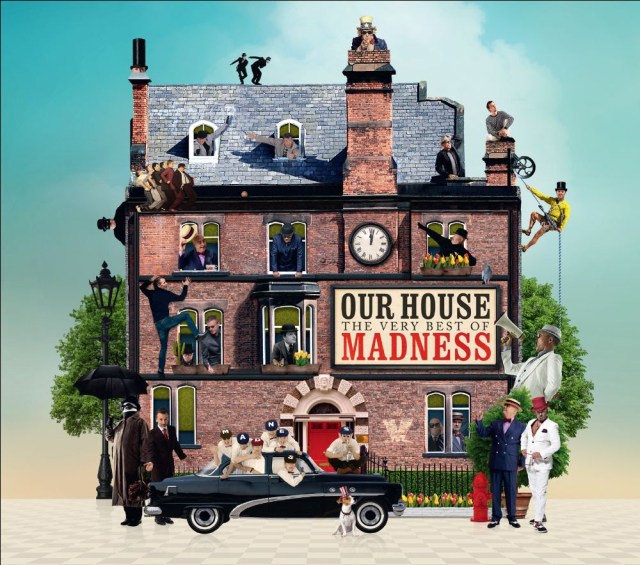
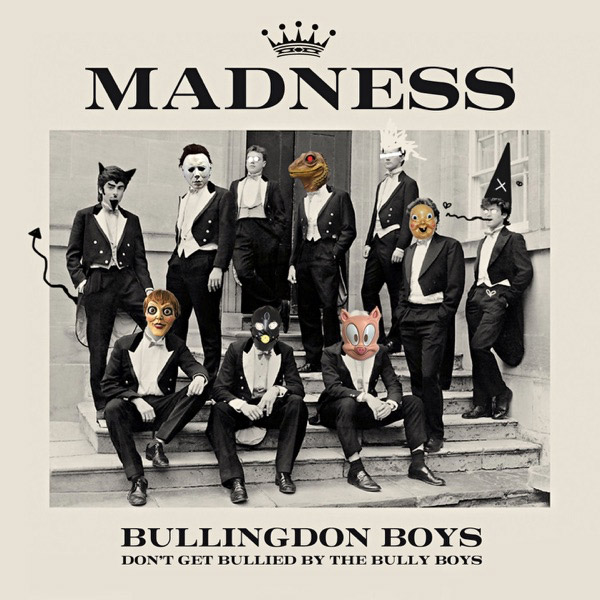
So I suppose this is the first kind of comprehensive… Look, you know I’m going to throw it out that we’ve done loads of greatest hits albums, everybody does. It’s kind of like that Walt Disney thing, you know. They used to re-release the films every few years. (Laughs.) You know, I’m not “anti” it. So you know, we try and make sure that the artwork’s good, and stuff like that. Because actually we kind of did a similar album in England, with a similar artwork, and I thought that might go down well with our American friends. But yeah, that’s it. It’s not like, you know, some master game plan. (Laughs.) Yeah, that was to accompany the tour, you know. Maybe we’ll release another one next year, eh?
Laurie:So one of the things that’s notable about this particular compilation is this is the first time that you’ve released the song “Bullingdon Boys” on a physical medium.
Oh yeah, of course.
Laurie:I wanted to ask you to explain a little bit for American fans who might not understand what that song is about.
In America you’ve got Harvard and places like that, haven’t you, I suppose? And it’s about a group of people that became very influential, and there’s this club [at Oxford] called the Bullingdon Club. Yeah, a lot of them, you know. The Prime Minister, he’s one of the Bullingdon boys. So that’s kind of what it’s about. You know, the elite, as it were. So it’s kind of good to have some contemporary stuff on it as well.
Bobby:This Go-Go’s documentary that was released fairly recently has a lot of people talking, and I’m wondering what it was like to hang out with the Go-Go’s? What can you tell us?
Yeah, it’s a shame, because I really wanted to be in the documentary, but I live in Brighton and for one reason or another I didn’t make it. But I mean, we came to L.A., it’s the first time we’ve been there, you know. And we played at the Whisky, and I was at the hotel and the rest of the band went to see the Go-Go’s. And they came out like, “Whoa, these girls! This girl Charlotte, she had the old whammy on!”
They were great fun and a great band, they really were, you know. They had some good songs and you know, they rocked. And, erm, we had great affection for them, shall we say.
Poly:Chris, while we’re on that time around the early ’80s, what was your favorite other band from that era?
It’s difficult really. (Pause.) I’d have to say Van Halen (laughs). No, it’s because, I don’t know when that album came out and they did “You Really Got Me.”
And it was on the radio in heavy rotation, and I went and got the album that’s got that on. And I kind of really liked that. But I didn’t go and see them. I mean I liked a lot of things, but really, yeah, it’s hard to say because a lot of the time we’d be playing with The Specials and those kind of bands. I liked quite a lot of stuff in the ’80s. I mean, hip hop came out, I really like Run-DMC, Schoolly D, LL Cool J. But yeah, I’m quite eclectic, so I didn’t really have a favorite per se.
Poly:I’m glad you mentioned Van Halen, because I try to ask everybody about the Kinks every time I get. When you mentioned “You Really Got Me,” the Van Halen cover, how formative would the Kinks have been in your sound or just for you as fan?
Yeah, I wrote a song called “E.R.N.I.E.,” which is on our second album, and classed it as really like the Kinks, you know. And when I grew up, the Kinks were around. They were absolutely brilliant, and at that time in my life, everything I’m writing sounds like the Kinks, you know.
Even that song was about quite a strange thing, you know. E.R.N.I.E. is a machine that picks these numbers like a lottery. It’s a kind of government lottery. There are these things called premium bonds, I’ve got some actually. Last year I won like, not a lot, about four or five times I won £25. And that’s not a fortune, but you don’t get anything with your money in the bank.
But The Kinks, and some of these things, it’s like… you sort of write a song and then you think, “It does sound a bit like this.” I never set out thinking, “I’m gonna write something like this,” you know. I did one the other day that’s a bit like Bryan Ferry or Roxy, later Roxy, who we obviously liked a lot.
Laurie:So speaking of songwriting, you and Carl co-wrote the band’s biggest international hit, right? “Our House.” When you guys recorded it, when you did the video, was there ever any kind of feeling that that was gonna blow up internationally, the way it did?
I’ve been talking about this recently. Sort of like, I came in with this song, it wasn’t really very good. And you know he did the lyrics, and then the band slowly, you know, we got it a bit Motown. I suppose we did used to think, especially the first couple of albums, “Get a song, right, but do it ska.” (Imitates ska rhythm.) You do it kind of offbeat, we were always sticking that thing in. And then we kind of got away from that. We thought when we did this, we did it kind of Motown. I think our producer, he’s the one that really made (sings chorus)“our house,” you know that, it kind of changes the rhythm. Which I didn’t really think at the time.
But yeah, I didn’t think… I thought this is good, you know. I thought “Tomorrow’s Just Another Day,” that’s the one. I thought it was so good it would be a bigger hit. This one, yeah, it’s done very well, and (laughs) I do quite well out of sync licenses, you know. People want to use it. So yeah, it’s done me well!
Laurie: I have to make a confession. I grew up watching your videos on MTV, and when I first saw the video for “Our House,” I absolutely fell in love. But the scene, where you’re playing, first you’re playing on the tennis racket and then you’re going through like the the ’60s and the ’70s glam, I honestly thought you were three different people. I didn’t realize that it was the same person!
It’s just a costume, innit? Yeah yeah, because, for once, we’ve got a song that hasn’t got a sax solo. Because Lee’s always you know, “I want to be flying!” I thought, “Yeah, I want to be like a kid with a tennis racket,” you know, starting off and going through those eras of music. Rockabilly, you know, another favorite of mine. It was fun doing that, yeah.
Bobby:I’m really interested in knowing about any of your past experiences on U.S. tours. What’s one of your favorite memories or experiences?
The first time we ever came to America, we went to New York. And we’ve been told it’s going to be quite cold, so we had those coats, those crombie coats. So we kind of go around a bit like this gang. And we had this manager at the time, and he said “Guys, I know you’re busy. Go to this bar, there’s this bar everybody goes to. All the musicians go there.”
So we kind of walk in this bar, and I was thinking, “Hey, there isn’t many chicks.” And it was a gay bar, you know. And it was just hilarious, we had such a laugh. Because it was that kind of thing where, you know, the kind of lumberjack kind of thing, “Oh, you know, we’re not…” And I don’t want to get into bad territory or be un-P.C. or something. I mean, we didn’t realize that that everybody is this bar was gay.
That was like one of the earliest experiences we had of going to New York. And we stayed in this hotel called the Iroquois Hotel. And it’s just like you’ve seen in the films, you know. It’s all marble, there’s some old black guy cutting people’s hair. We thought, this is great. Then you got up to the rooms (laughs), all the doors have been jimmied open, I mean it was like such a dodgy hotel.
So yeah yeah, we love New York and Boston and flipping you know, we took to America, you know. Because you guys kind of talk English, you know. (Laughs.) We’re not talking about Canada. But New Jersey, yeah, what was it? “We’ll deliver anywhere except New Jersey.” We kind of got all the references, you know. Yeah, I think that first tour was great. We were in these cars and all they had was FM radio. That’s probably where I heard Van Halen, you know.
But I mean that was our first tour, it was great because we liked New York, the kind of new fans, the cool clubs. And L.A. was, you know, the Whisky. But then in between there’s some fun places. Boston’s great, there’s the Paradise Club in Boston. Yeah, we had a lot of fun. I don’t think you can beat that first experience of everything that we’ve seen on television.
You know, to us it was so exciting. I suppose you guys, maybe you see England and Big Ben and all that, I don’t know if you’ve been to England, and then you get there and “Whooo!” (Laughs.) It’s like that. You know, “It’s Times Square! Look at those taxis!” You know those big yellow New York cabs, which Travis Bickle of course had in Taxi Driver. We were like obsessed with them and we’re only getting in them. No, it’s always been fun, really, America yeah.
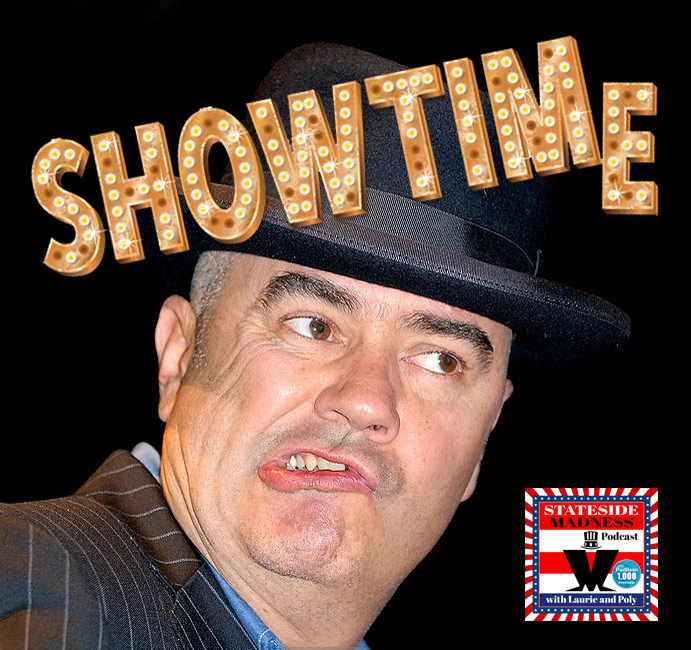
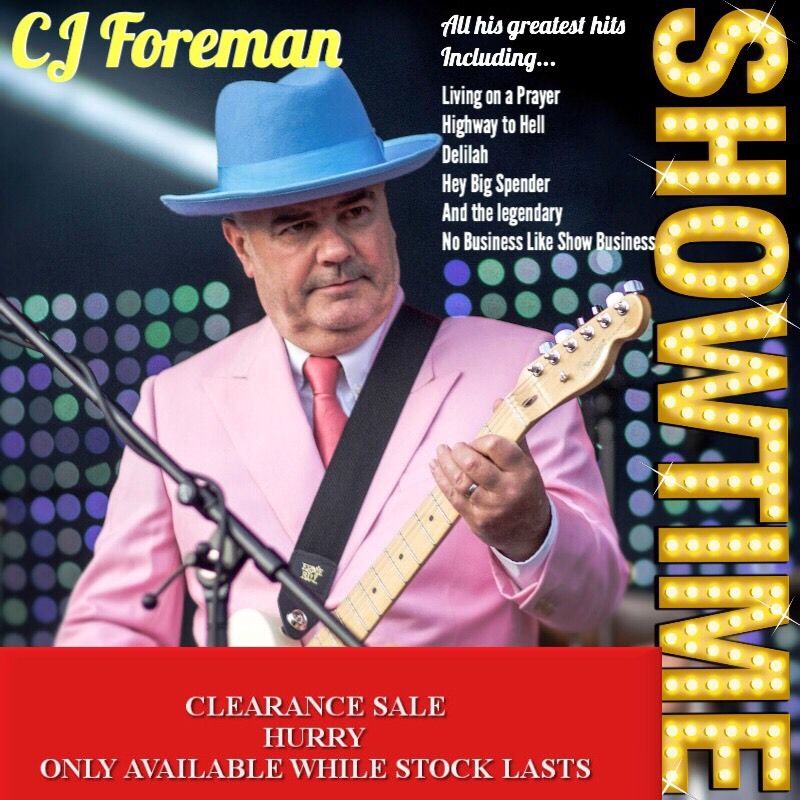
Poly:So our friend Donald, who does our blog and website, part of the admin team, is dying to know about “Showtime.”
(Laughs.) What happened there was… In fact, it was in America. There was me, Lee, Carl and Suggs – yeah, we’re quite a little gang, you know – and we went to see The Matrix, the first Matrix film. And it’s quite mind-blowing. And there’s this guy in front of me with his girlfriend and he’s getting really agitated, you know. He’s loving it, he’s really one of those New York guys. So there’s a bit in The Matrix, if you haven’t seen it, where he says “We need guns, lots of guns,” and all these guns appear.
And this guy went, “Yeah! Showtime!” And you know why the guy said it. Because he knew it was going to be absolute mayhem, all right?
So you know, going many years later, we’re doing this show somewhere, and I was a little bit, you know… “refreshed.” (Laughs.) And I looked at the setlist and I thought, you know what? After this song, it was all hits, you know, right at the end. All hits. And I thought, “It’s showtime.” It’s showtime, you know. And I said, “Suggs, gimme the mic!” And I went, I dunno, I think I just said, “IT’S SHOOOOW-TIME!” you know?
Because me and Suggs generally have a lot of fun onstage, making fun of each other, or I try and make him laugh – sometimes I’m really annoying. But he thought it was really funny, so the next gig we do, he goes, “What time is it?” So I went “SHOWTIME!” And then I started going “Let’s get ready to rumble!”
One day, I thought you know, I’ve gone as far as I can with this, so I got “Highway to Hell.” And I put it in a music thing, so I just had the beginning (imitates guitar riff), you know. And I kind of just spliced in the choruses. And we’re in Amsterdam and I hadn’t told any of the band, so I got the sound guy to play it onstage. So Suggs says “What time is it?” and then “Highway to Hell” comes out of the PA, and I started singing “Highway to Hell” and the band are like…?
And “Highway to Hell,” it’s like, I think you could go to the Amazon rainforest and people there would know it. You know, the most remote, anywhere in the world, everybody knows that song. So yeah, they were like mind-boggled.
And then I kind of like really ran with it, and started doing “Livin’ on a Prayer.” That was one of my favorites. Same kind of method. (Laughs.) But then a few years ago, I kind of stopped doing it. But between me and you, I’ll tell you… when we come back, we’re gonna do it. Yeah, the first show, and I’m not telling them. (Laughs.) You know there’s some things you do, there’s some really good ones where the audience filmed it. Then there’s people like booing, obviously.
I mean, you know that guy in that band, The Hives? They are flippin’ brilliant. Check them out, Bobby. They’re sort of kind of punky, but they’re really not. And they do things like, they’ll all wear top hats, they kind of look really good. And we played with them a few times and I really like them. And I was having a drink with them, and the singer went, “Hey, why the karaoke?” I said, “That is not karaoke!”
But yeah, that’s where it came from. From watching The Matrix, you know, to my looking at that setlist. And I was doing that “Let’s get ready to rumble” and then somebody said, you know, if you come to America and say that you could – because that guy owns the rights to it or something – I could probably get sued for a billion dollars.
Poly:All right, Chris, on many of our earlier podcasts I am always hypothesizing about how young British folks got into ska. So my question to you is, early on in the formative days of the band, who of the members were really bringing ska into your sound? And did any of you, once you did get going, did any of you really feel like there was a real movement happening?
I always say this to anyone starting a band. Find some sort of songs that you like and learn them, and play them – unless you’re just geniuses and you’ve got your own songs straight away, which there’s nothing wrong with that. But that’s what we did. So we started this band and we’re playing like the Coasters, Fats Domino, Elvis, “Tequila.” We’re doing all those kind of old standards, right?
And I think it was probably Suggs. He said “Oh, I’ve got this,” I think it was actually Georgie Fame doing “Madness,” and I thought this is good, you know. I think we kind of started doing that and we started doing “One Step Beyond.”
And it was just like, ’cause we liked it. We liked those songs. And to tell the truth, I never thought we really played that music brilliantly, compared to a lot of the other bands. And then we started writing our own songs, some which would be reggae. But something like “Land of Hope and Glory” isn’t, or “Bed and Breakfast Man,” so we had this kind of weird little thing going.
And then this band Specials started getting pretty big. And then we met them, Suggs met Jerry Dammers and said we’ve got this band. They put a single out. So we kind of became part of this thing, and I think it’s because all of those bands, they were all kind of round about our age, you know. (Mutters) I’m older than some of them.
But we can remember when that music first came out, you know. We liked it, but you know, we also liked glam rock, everything. That’s one of the things about our band – I think everybody’s got very varied tastes, not just one thing. You know, we never said, “We are a ska band.” In fact, if you look at the second album, I kind of said that in an interview. I don’t think we were. But it was a great thing to be involved with, you know. I mean, every now and then, I wrote this really good kind-of-reggae song the other day, actually. I’ve done a couple. It’s very good.
And that’s kind of what happened and that’s that. And don’t let anyone tell you otherwise. Anyone from our band, because they don’t know what they’re talking about. They can’t remember anything. We just did a book called Before We Was We, you may have read it? Before we did the book, we were on tour and we were discussing it. And I said, “Oh yeah, when we went to America…” and you know, most of them couldn’t remember that we went to America in 1979. I mean how you couldn’t remember that? I had to go and Google it. “Yeah, boomers” and show them. I won’t say who – it was about all of them. (Laughs.)
It was crazy times. The other day I was thinking, oh, you know when you think if you could go back in time, anytime in your life, I thought L.A. 1979. Walking around to get some beer from this liquor store. And this girl came along, like lycra trousers on, you know, sort of hair and roller skates on, and she collides into me. It doesn’t happen in Camden Town, you know.
Laurie:All right, you’ve mentioned that you’ve been working on writing a few new songs. Are there plans for a new album anytime soon?
Oh yeah, we’ll be doing a new album, we’re always doing a new album. I’ve done a lot of songs that aren’t any particular genre. Here’s one that’s kind of reggae-ish. (Plays part of a demo.)
Honestly I was like, sitting on the john. You know, just contemplating. I was probably on Instagram. I wasn’t actually, you know, going to the toilet. And I thought of this tune and I sung it into my phone. That’s what I do. I sing it into my phone and email it to myself, and I drag it into a music thing. That’s a good one, that. And I’ve been writing some lyrics. So you know, it could be a few changes round here when you come see Madness. If Suggs is just on maracas, you know. (Laughs.) Sorry, kidding. He’s a good singer, yeah. He’s one of the best.