In his recent guest spot on the Stateside Madness Podcast, Chris Foreman mentioned how he has profited as co-writer of “Our House,” a staple of the advertising circuit. “I do quite well out of sync licenses, you know,” he said with a laugh. “People want to use it. So yeah, it’s done me well!” The past year has seen the tune become a pandemic anthem in a lovely Miracle-Gro ad as well as spots for midwestern supermarket chain Hy-Vee and UK retailer Very.
And now it’s Allstate putting more U.S. dollars in Chrissy Boy’s pocket, thanks to their new “Our House” ad that steps beyond the coronavirus era. Contrary to the whole home-lockdown angle, this one proposes taking your castle and your keep with you on the go, in a manner of speaking.
The whimsical ad features comedic actress Erin Alexis hauling a whole house (albeit of the tiny variety) down the road hitched to her modest mom-mobile, over the familiar strains of “Our House.” The dulcet baritone of Allstate pitchman Dennis Haysbert implores viewers to bundle their home insurance with their auto policy to save a bundle. “You already pay for car insurance. Why not take your home along for the ride?”
It’s nowhere near as magical as the Miracle-Gro commercial, but it’s a good ad. There are two interesting things to note about the sociocultural mechanics that make it work.
First, it’s not until halfway through the ad that the song lyrics kick in. I think most “Our House” ads jump into a chorus or verse straightaway, but this one demonstrates patience. Likewise, we don’t see the whole visual gag at first, just tight shots of the house’s rumbling interior, a window box planter and curtains in the breeze, set to the instrumental overture. This shows that Allstate was confident enough that most people in their target demo would recognize the song and get the joke even before hearing Suggs and Carl. Just like when we hear the distinct bassline and cha-chings of Pink Floyd’s “Money,” we know an ad’s going to be about finances, and “We Are Family” telegraphs blood relations even without the Sister Sledge vocals, the “Our House” melody alone is enough to make us anticipate a commercial about home.
The other noteworthy thing about the ad is how it hinges on a common American misinterpretation of the chorus. “Our house, in the middle of our street.” This phrasing strikes U.S. listeners oddly, evoking nonsense images of a house erected right in the road itself, blocking traffic on both sides and violating of all sorts of zoning ordinances.
Even as a 13-year-old kid, I managed to figure out this meant the house was situated centrally along the length of the street, rather than across its width. Go halfway down our street, turn left at our house. Ten years ago, the blog Separated by a Common Language offered a thorough analysis of the British English idioms in “Our House,” wherein author Lynne “Lynneguist” Murphy astutely notes the following:
To my young American ears, this sounded intentionally funny. The house is in the middle of the street! Like where the manholes should be! No, no, no. This is the British English equivalent of in American English in the middle of our block. … But even if it weren’t in the middle of the street, ‘our house’ would still be in our street, because in British English addresses can be in the street or road.
Indeed, let us not forget that the earthquake was erupting but not in Orange Street. If Lee Thompson had an American editor, it would have been not erupting on Orange Street. And then we have Suggs’s new composition “In My Street,” which puts the Yank-baffling choice of preposition front and centre. Although it is interesting that Suggs also wrote of passing Amy Winehouse on Dean Street, rather than “in Dean Street”… perhaps because the scene of a personal encounter is different from a fixed address?
As a side note, the “Our House” lyric that always tripped me up most was “the kids are playing up downstairs.” I recall one of my friends postulating that the children were on a lower floor above the sub-basement. Murphy’s blog post helpfully explains that “playing up” means “behaving irritatingly or erratically,” which we might express as kids “acting up” or “cutting up” downstairs.
But back to the Allstate ad. Even if it it requires being thickheaded to think the house in “Our House” was literally in the road, where the lines are painted, and where the chicken crosses, that peculiar pinch of British flavour is inherent to our experience of the song in America. So much so that an ad agency selling the benefits of combining car and home insurance was able to find a nostalgic pop hit that expresses this specific concept to us. And Allstate was confident enough to let the music speak for itself, free of exposition by way of lyrics or President David Palmer, for the exorbitantly expensive duration of 15 seconds. It’s pretty cool that Madness still occupies its minuscule niche of American pop culture enough to pull that off. “Our House” is in good hands with Allstate.
And honestly, it makes for a better insurance ad than “Driving in My Car” or “Mrs Hutchinson” ever could.
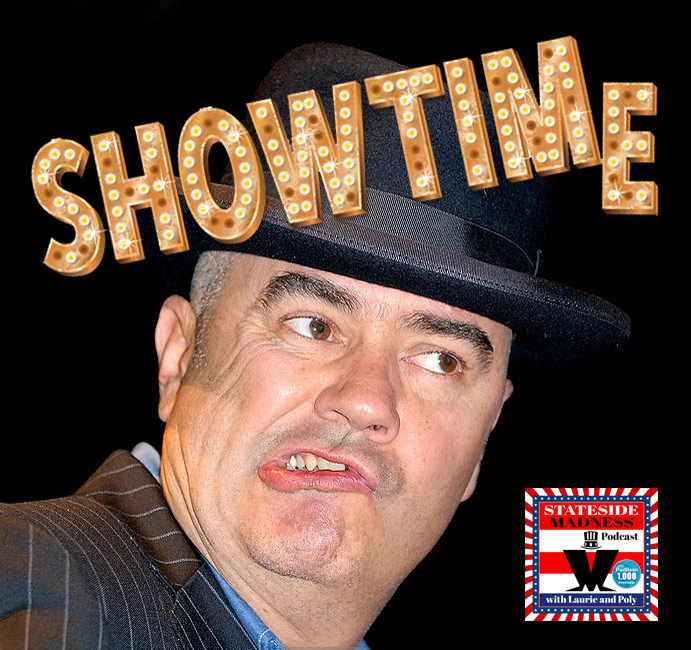
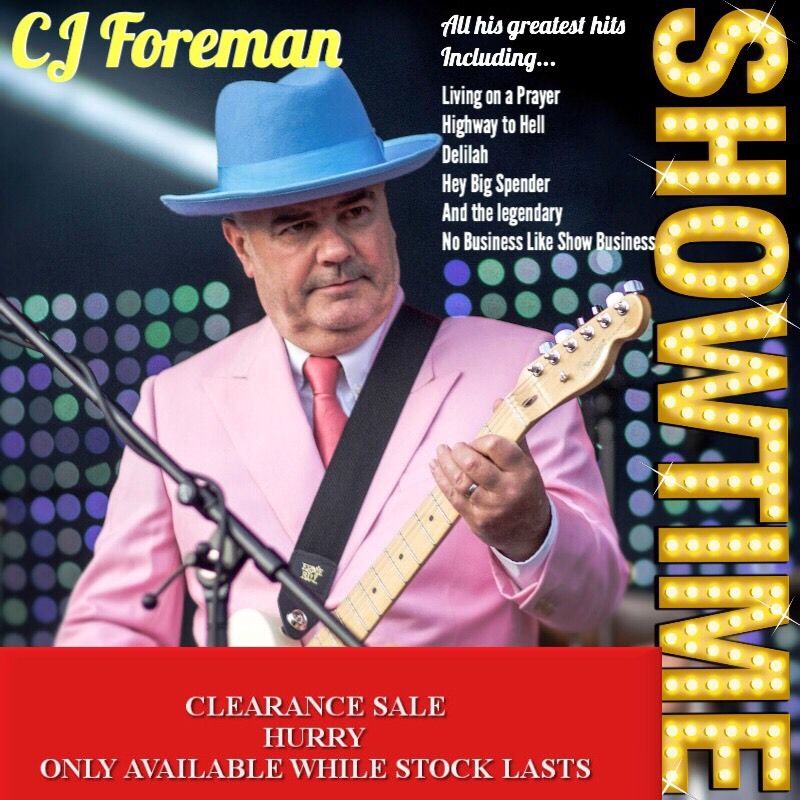
Madness guitarist/songwriter Chris Foreman recently honored us as a guest on the Stateside Madness Podcast, chatting with hosts Laurie Alfaro, Poly Collins and Bobby Rubin. In the following excerpts from the rollicking interview, Chrissy Boy discusses the band’s plans and hopes to get back to touring and recording, the new American greatest hits album, the process of writing “Our House,” memories of early visits to America, and the real important scoop here, which is the untold origins of his ever-popular “Showtime!” solo cabaret routines.
Be sure to listen to the podcast for the complete interview, including exclusive clips from new song demos Chris has been working on. And now, let’s get ready to thingybob! The louder you scream, the faster the ride!
Poly:Chris, thank you for joining us, and if you’d be so kind, why don’t you tell us what the last year’s been like for you?
Oh yeah, pretty normal. Up in my loft. Has something been going on that I missed? (Laughs.) No, it’s been terrible, of course.
Last March, we were going to go to Dubai and get some hot weather. And suddenly our tour manager calls it off. And it’s been like that ever since, really. Yeah, it’s kind of like I had all this stuff in my calendar, obviously coming to the USA. So this stuff will come up in my diary, you know, like I’m supposed to be in Paris. And I’m in a shopping mall.
But yeah, it’s been difficult for everyone, hasn’t it? So you know, I’ve got a nice house, big garden, sort of on the outskirts of Brighton. So it’s okay, you know, for me.
Poly:I suppose that’s the same for very nearly all of us. We were so looking forward to the American tour. But we’re willing to hang in there.
I don’t know if we’re going to come, I’m afraid. This year, anyway. You know, Punk Rock Bowling’s been put off again. I’ve written a few songs, so that’s good. And we’ve met up a few times, the band. We started renting this unit. There was a kind of thing here where, “It will calm down a bit, you can almost go back to normal.” And we’ve rented this kind of industrial unit and we’ve put a load of equipment in, and we met there, yeah. We came up with a couple songs, so you know. We’re ready. (Laughs.)
Poly:Great! We’ll be looking forward to that.
Laurie:So Chris, so why are you releasing an American compilation at this time, and what’s your favorite song on the compilation?
Well, the compilation was supposed to tie in with the tour. So I guess they kind of had it on the spreadsheets for a while and we have to release it at some point, because I suppose they must have manufactured it. And that’s the kind of business side of things.
My favorite track? I don’t know, gee… You know, it’s kind of all about the hits, isn’t it? I mean, I always really liked “The Prince,” you know. And I enjoy playing it live, it doesn’t get too tired. There’s something about that song. So let’s go with that. It is on the compilation, I assume? (Laughs.)
Laurie:I do hope you guys get to tour America, because I’ve never seen you live, and this was going to be the year. I was gonna go to Vegas and finally see you.
Oh, Vegas! I love Vegas.
Laurie:So do I. So fingers crossed.
We were, as you say, stoked. Because, you know, you get loads of cheap clothes. (Laughs.) It’s fantastic. Yeah, stuff like Penguin, not to promote a brand. I went in the Penguin shop last time I was there, and I was wearing a Penguin shirt. And the guy said, if you come in wearing Penguin, you get a discount. So you know, win-win.
Bobby:Just echoing what Laurie said, I’ve been really looking forward to you all coming to the States. I’ve not seen you before. I do have tickets for the Boston and New York shows. Back to the compilation album, what’s your hope for the album? Is it meant to reconnect with U.S. fans, or is it meant to bring in new U.S. fans?
Yeah, it’s kinda like keep the wheels, you know, the big wheels going. And yeah, maybe people think “what’s this, it looks pretty cool” and discover us, you know, that kind of thing.
Poly:Do you guys have any influence on what gets selected for the tracks, or do you feel it was just kind of obvious what the songs are going to be?
It’s kind of really difficult, because we were originally on Stiff Records in England for pretty much all our career. But we did an American deal with Sire Records with Seymour Stein, who’s kind of legend. We really liked Seymour and we liked Sire Records. So we kind of went along with that, for a few years. And then the Geffen thing came about because a guy from Geffen called John Kalodner, who’s another legend. He came to England and he heard “Our House” and he said, “This is a hit.” So that Geffen thing is kind of like Frankenstein’s, you know. It was based on the album we had out, The Rise and Fall. That was that, and they licensed some other tracks.
So I suppose this is the first kind of comprehensive… Look, you know I’m going to throw it out that we’ve done loads of greatest hits albums, everybody does. It’s kind of like that Walt Disney thing, you know. They used to re-release the films every few years. (Laughs.) You know, I’m not “anti” it. So you know, we try and make sure that the artwork’s good, and stuff like that. Because actually we kind of did a similar album in England, with a similar artwork, and I thought that might go down well with our American friends. But yeah, that’s it. It’s not like, you know, some master game plan. (Laughs.) Yeah, that was to accompany the tour, you know. Maybe we’ll release another one next year, eh?
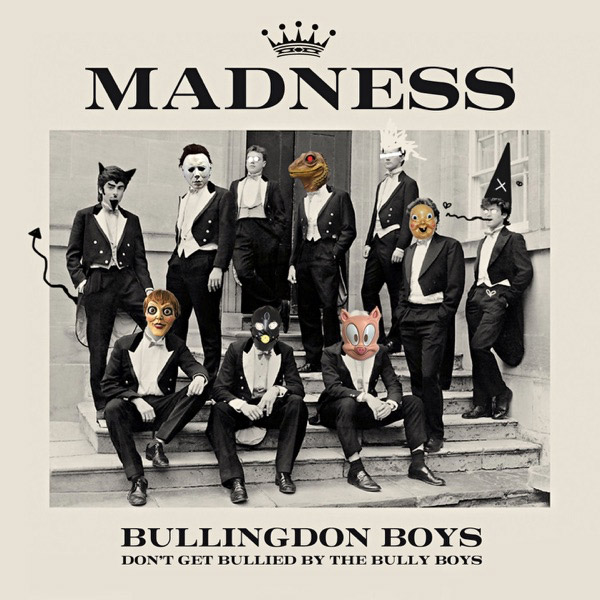
Laurie:So one of the things that’s notable about this particular compilation is this is the first time that you’ve released the song “Bullingdon Boys” on a physical medium.
Oh yeah, of course.
Laurie:I wanted to ask you to explain a little bit for American fans who might not understand what that song is about.
In America you’ve got Harvard and places like that, haven’t you, I suppose? And it’s about a group of people that became very influential, and there’s this club [at Oxford] called the Bullingdon Club. Yeah, a lot of them, you know. The Prime Minister, he’s one of the Bullingdon boys. So that’s kind of what it’s about. You know, the elite, as it were. So it’s kind of good to have some contemporary stuff on it as well.
Bobby:This Go-Go’s documentary that was released fairly recently has a lot of people talking, and I’m wondering what it was like to hang out with the Go-Go’s? What can you tell us?
Yeah, it’s a shame, because I really wanted to be in the documentary, but I live in Brighton and for one reason or another I didn’t make it. But I mean, we came to L.A., it’s the first time we’ve been there, you know. And we played at the Whisky, and I was at the hotel and the rest of the band went to see the Go-Go’s. And they came out like, “Whoa, these girls! This girl Charlotte, she had the old whammy on!”
They were great fun and a great band, they really were, you know. They had some good songs and you know, they rocked. And, erm, we had great affection for them, shall we say.
Poly:Chris, while we’re on that time around the early ’80s, what was your favorite other band from that era?
It’s difficult really. (Pause.) I’d have to say Van Halen (laughs). No, it’s because, I don’t know when that album came out and they did “You Really Got Me.”
And it was on the radio in heavy rotation, and I went and got the album that’s got that on. And I kind of really liked that. But I didn’t go and see them. I mean I liked a lot of things, but really, yeah, it’s hard to say because a lot of the time we’d be playing with The Specials and those kind of bands. I liked quite a lot of stuff in the ’80s. I mean, hip hop came out, I really like Run-DMC, Schoolly D, LL Cool J. But yeah, I’m quite eclectic, so I didn’t really have a favorite per se.
Poly:I’m glad you mentioned Van Halen, because I try to ask everybody about the Kinks every time I get. When you mentioned “You Really Got Me,” the Van Halen cover, how formative would the Kinks have been in your sound or just for you as fan?
Yeah, I wrote a song called “E.R.N.I.E.,” which is on our second album, and classed it as really like the Kinks, you know. And when I grew up, the Kinks were around. They were absolutely brilliant, and at that time in my life, everything I’m writing sounds like the Kinks, you know.
Even that song was about quite a strange thing, you know. E.R.N.I.E. is a machine that picks these numbers like a lottery. It’s a kind of government lottery. There are these things called premium bonds, I’ve got some actually. Last year I won like, not a lot, about four or five times I won £25. And that’s not a fortune, but you don’t get anything with your money in the bank.
But The Kinks, and some of these things, it’s like… you sort of write a song and then you think, “It does sound a bit like this.” I never set out thinking, “I’m gonna write something like this,” you know. I did one the other day that’s a bit like Bryan Ferry or Roxy, later Roxy, who we obviously liked a lot.
Laurie:So speaking of songwriting, you and Carl co-wrote the band’s biggest international hit, right? “Our House.” When you guys recorded it, when you did the video, was there ever any kind of feeling that that was gonna blow up internationally, the way it did?
I’ve been talking about this recently. Sort of like, I came in with this song, it wasn’t really very good. And you know he did the lyrics, and then the band slowly, you know, we got it a bit Motown. I suppose we did used to think, especially the first couple of albums, “Get a song, right, but do it ska.” (Imitates ska rhythm.) You do it kind of offbeat, we were always sticking that thing in. And then we kind of got away from that. We thought when we did this, we did it kind of Motown. I think our producer, he’s the one that really made (sings chorus)“our house,” you know that, it kind of changes the rhythm. Which I didn’t really think at the time.
But yeah, I didn’t think… I thought this is good, you know. I thought “Tomorrow’s Just Another Day,” that’s the one. I thought it was so good it would be a bigger hit. This one, yeah, it’s done very well, and (laughs) I do quite well out of sync licenses, you know. People want to use it. So yeah, it’s done me well!
Laurie: I have to make a confession. I grew up watching your videos on MTV, and when I first saw the video for “Our House,” I absolutely fell in love. But the scene, where you’re playing, first you’re playing on the tennis racket and then you’re going through like the the ’60s and the ’70s glam, I honestly thought you were three different people. I didn’t realize that it was the same person!
It’s just a costume, innit? Yeah yeah, because, for once, we’ve got a song that hasn’t got a sax solo. Because Lee’s always you know, “I want to be flying!” I thought, “Yeah, I want to be like a kid with a tennis racket,” you know, starting off and going through those eras of music. Rockabilly, you know, another favorite of mine. It was fun doing that, yeah.
Bobby:I’m really interested in knowing about any of your past experiences on U.S. tours. What’s one of your favorite memories or experiences?
The first time we ever came to America, we went to New York. And we’ve been told it’s going to be quite cold, so we had those coats, those crombie coats. So we kind of go around a bit like this gang. And we had this manager at the time, and he said “Guys, I know you’re busy. Go to this bar, there’s this bar everybody goes to. All the musicians go there.”
So we kind of walk in this bar, and I was thinking, “Hey, there isn’t many chicks.” And it was a gay bar, you know. And it was just hilarious, we had such a laugh. Because it was that kind of thing where, you know, the kind of lumberjack kind of thing, “Oh, you know, we’re not…” And I don’t want to get into bad territory or be un-P.C. or something. I mean, we didn’t realize that that everybody is this bar was gay.
That was like one of the earliest experiences we had of going to New York. And we stayed in this hotel called the Iroquois Hotel. And it’s just like you’ve seen in the films, you know. It’s all marble, there’s some old black guy cutting people’s hair. We thought, this is great. Then you got up to the rooms (laughs), all the doors have been jimmied open, I mean it was like such a dodgy hotel.
So yeah yeah, we love New York and Boston and flipping you know, we took to America, you know. Because you guys kind of talk English, you know. (Laughs.) We’re not talking about Canada. But New Jersey, yeah, what was it? “We’ll deliver anywhere except New Jersey.” We kind of got all the references, you know. Yeah, I think that first tour was great. We were in these cars and all they had was FM radio. That’s probably where I heard Van Halen, you know.
But I mean that was our first tour, it was great because we liked New York, the kind of new fans, the cool clubs. And L.A. was, you know, the Whisky. But then in between there’s some fun places. Boston’s great, there’s the Paradise Club in Boston. Yeah, we had a lot of fun. I don’t think you can beat that first experience of everything that we’ve seen on television.
You know, to us it was so exciting. I suppose you guys, maybe you see England and Big Ben and all that, I don’t know if you’ve been to England, and then you get there and “Whooo!” (Laughs.) It’s like that. You know, “It’s Times Square! Look at those taxis!” You know those big yellow New York cabs, which Travis Bickle of course had in Taxi Driver. We were like obsessed with them and we’re only getting in them. No, it’s always been fun, really, America yeah.
Poly:So our friend Donald, who does our blog and website, part of the admin team, is dying to know about “Showtime.”
(Laughs.) What happened there was… In fact, it was in America. There was me, Lee, Carl and Suggs – yeah, we’re quite a little gang, you know – and we went to see The Matrix, the first Matrix film. And it’s quite mind-blowing. And there’s this guy in front of me with his girlfriend and he’s getting really agitated, you know. He’s loving it, he’s really one of those New York guys. So there’s a bit in The Matrix, if you haven’t seen it, where he says “We need guns, lots of guns,” and all these guns appear.
And this guy went, “Yeah! Showtime!” And you know why the guy said it. Because he knew it was going to be absolute mayhem, all right?
So you know, going many years later, we’re doing this show somewhere, and I was a little bit, you know… “refreshed.” (Laughs.) And I looked at the setlist and I thought, you know what? After this song, it was all hits, you know, right at the end. All hits. And I thought, “It’s showtime.” It’s showtime, you know. And I said, “Suggs, gimme the mic!” And I went, I dunno, I think I just said, “IT’S SHOOOOW-TIME!” you know?
Because me and Suggs generally have a lot of fun onstage, making fun of each other, or I try and make him laugh – sometimes I’m really annoying. But he thought it was really funny, so the next gig we do, he goes, “What time is it?” So I went “SHOWTIME!” And then I started going “Let’s get ready to rumble!”
One day, I thought you know, I’ve gone as far as I can with this, so I got “Highway to Hell.” And I put it in a music thing, so I just had the beginning (imitates guitar riff), you know. And I kind of just spliced in the choruses. And we’re in Amsterdam and I hadn’t told any of the band, so I got the sound guy to play it onstage. So Suggs says “What time is it?” and then “Highway to Hell” comes out of the PA, and I started singing “Highway to Hell” and the band are like…?
And “Highway to Hell,” it’s like, I think you could go to the Amazon rainforest and people there would know it. You know, the most remote, anywhere in the world, everybody knows that song. So yeah, they were like mind-boggled.
And then I kind of like really ran with it, and started doing “Livin’ on a Prayer.” That was one of my favorites. Same kind of method. (Laughs.) But then a few years ago, I kind of stopped doing it. But between me and you, I’ll tell you… when we come back, we’re gonna do it. Yeah, the first show, and I’m not telling them. (Laughs.) You know there’s some things you do, there’s some really good ones where the audience filmed it. Then there’s people like booing, obviously.
I mean, you know that guy in that band, The Hives? They are flippin’ brilliant. Check them out, Bobby. They’re sort of kind of punky, but they’re really not. And they do things like, they’ll all wear top hats, they kind of look really good. And we played with them a few times and I really like them. And I was having a drink with them, and the singer went, “Hey, why the karaoke?” I said, “That is not karaoke!”
But yeah, that’s where it came from. From watching The Matrix, you know, to my looking at that setlist. And I was doing that “Let’s get ready to rumble” and then somebody said, you know, if you come to America and say that you could – because that guy owns the rights to it or something – I could probably get sued for a billion dollars.
Poly:All right, Chris, on many of our earlier podcasts I am always hypothesizing about how young British folks got into ska. So my question to you is, early on in the formative days of the band, who of the members were really bringing ska into your sound? And did any of you, once you did get going, did any of you really feel like there was a real movement happening?
I always say this to anyone starting a band. Find some sort of songs that you like and learn them, and play them – unless you’re just geniuses and you’ve got your own songs straight away, which there’s nothing wrong with that. But that’s what we did. So we started this band and we’re playing like the Coasters, Fats Domino, Elvis, “Tequila.” We’re doing all those kind of old standards, right?
And I think it was probably Suggs. He said “Oh, I’ve got this,” I think it was actually Georgie Fame doing “Madness,” and I thought this is good, you know. I think we kind of started doing that and we started doing “One Step Beyond.”
And it was just like, ’cause we liked it. We liked those songs. And to tell the truth, I never thought we really played that music brilliantly, compared to a lot of the other bands. And then we started writing our own songs, some which would be reggae. But something like “Land of Hope and Glory” isn’t, or “Bed and Breakfast Man,” so we had this kind of weird little thing going.
And then this band Specials started getting pretty big. And then we met them, Suggs met Jerry Dammers and said we’ve got this band. They put a single out. So we kind of became part of this thing, and I think it’s because all of those bands, they were all kind of round about our age, you know. (Mutters) I’m older than some of them.
But we can remember when that music first came out, you know. We liked it, but you know, we also liked glam rock, everything. That’s one of the things about our band – I think everybody’s got very varied tastes, not just one thing. You know, we never said, “We are a ska band.” In fact, if you look at the second album, I kind of said that in an interview. I don’t think we were. But it was a great thing to be involved with, you know. I mean, every now and then, I wrote this really good kind-of-reggae song the other day, actually. I’ve done a couple. It’s very good.
And that’s kind of what happened and that’s that. And don’t let anyone tell you otherwise. Anyone from our band, because they don’t know what they’re talking about. They can’t remember anything. We just did a book called Before We Was We, you may have read it? Before we did the book, we were on tour and we were discussing it. And I said, “Oh yeah, when we went to America…” and you know, most of them couldn’t remember that we went to America in 1979. I mean how you couldn’t remember that? I had to go and Google it. “Yeah, boomers” and show them. I won’t say who – it was about all of them. (Laughs.)
It was crazy times. The other day I was thinking, oh, you know when you think if you could go back in time, anytime in your life, I thought L.A. 1979. Walking around to get some beer from this liquor store. And this girl came along, like lycra trousers on, you know, sort of hair and roller skates on, and she collides into me. It doesn’t happen in Camden Town, you know.
Laurie:All right, you’ve mentioned that you’ve been working on writing a few new songs. Are there plans for a new album anytime soon?
Oh yeah, we’ll be doing a new album, we’re always doing a new album. I’ve done a lot of songs that aren’t any particular genre. Here’s one that’s kind of reggae-ish. (Plays part of a demo.)
Honestly I was like, sitting on the john. You know, just contemplating. I was probably on Instagram. I wasn’t actually, you know, going to the toilet. And I thought of this tune and I sung it into my phone. That’s what I do. I sing it into my phone and email it to myself, and I drag it into a music thing. That’s a good one, that. And I’ve been writing some lyrics. So you know, it could be a few changes round here when you come see Madness. If Suggs is just on maracas, you know. (Laughs.) Sorry, kidding. He’s a good singer, yeah. He’s one of the best.
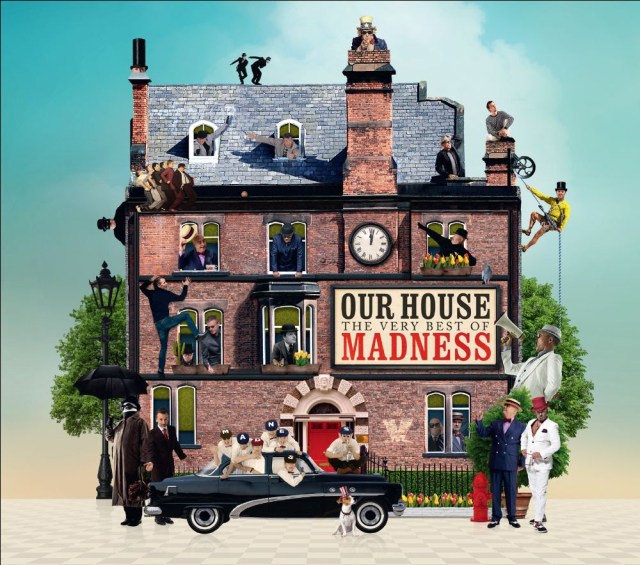
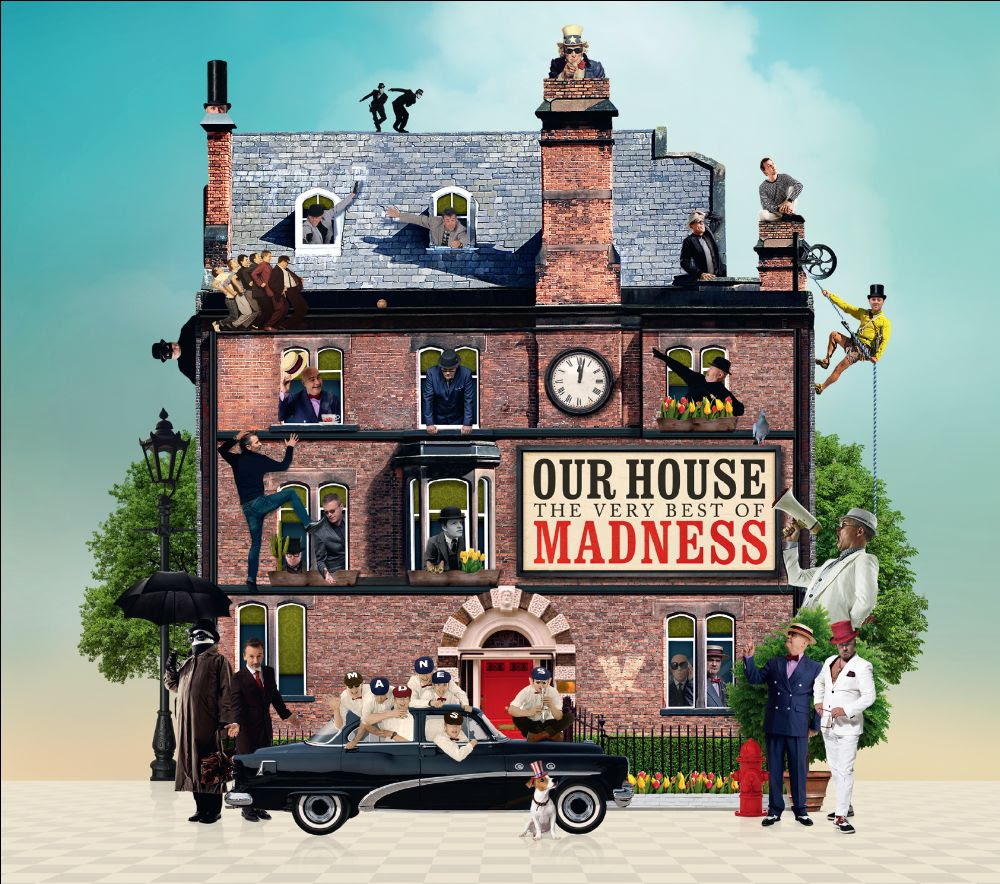
BMG will release a new U.S. exclusive greatest hits compilation entitled Our House: The Very Best of Madness. Originally announced for May 2020, then postponed along with the band’s North American tour, the album is now set for release on March 12.
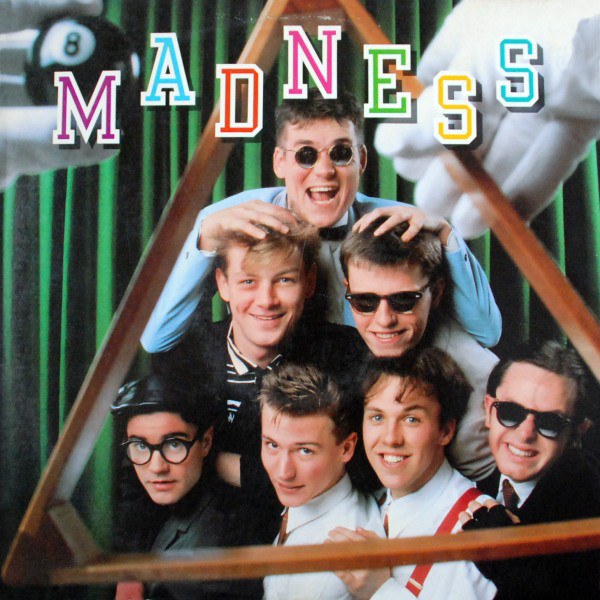
Our House will be available on CD, vinyl LP and digital bundle, and preorders are up on Amazon. See above for a first look at the album sleeve artwork, which is similar to (but slightly different from) the Full House compilation released in the UK in 2017.
The new collection consists of 12 tracks spanning the whole of Madness’s career (full list below). Of particular note to fans and collectors, this will mark the first physical release of any kind for “Bullingdon Boys,” which debuted as a digital-only single in November 2019.
Our House is clearly designed for the American market, named for and led off by the band’s biggest stateside hit, with the other familiar single “It Must Be Love” in the second slot. As a clever nod to the band’s U.S. beginnings, the track list also includes the subtly polished remix of “Night Boat to Cairo” that first appeared on the 1983 Madness album released by Geffen in the U.S.
But this collection isn’t entirely stuck in the past – Our House is the band’s first-ever hits collection for the U.S. that encompasses their 21st century post-reunion output, making room for “NW5” and “Mr Apples” alongside the most recent “Bullingdon Boys.” Discovering these new tunes, casual American fans who only know the ’80s hits will have the chance to learn that Madness is still very much alive and kicking in the present day!
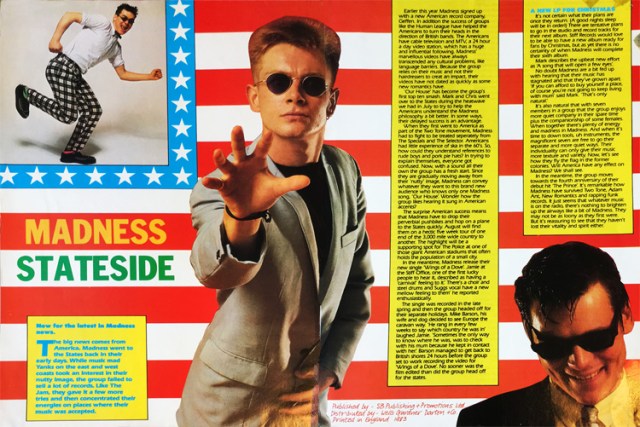
As Stateside Madness reaches its first anniversary, it’s an opportune time to present a fun discovery worthy of the Oxford English Dictionary: possibly the earliest use of our name in print (albeit in reverse), complete with our stars & stripes graphical motif! This article ran in Pop83 magazine in spring 1983, reporting on the breakthrough U.S. chart success of “Our House.”
For me this article is an interesting insight, since I’ve always been curious about what the British press and fans made of the band’s belated popularity in America. Did they notice? Were they glad to hear we caught on? Did they really even care? It’s amusing to note the backhanded remarks about “Our House” being kind of an old song by that point, so out of step were those hapless Yanks. And I personally delight in seeing Madness lumped in with The Jam as top stars that fizzled on our side of the pond, given that Paul Weller happens to be my second favorite UK act. I have a nose for obscure wonders from distant shores.
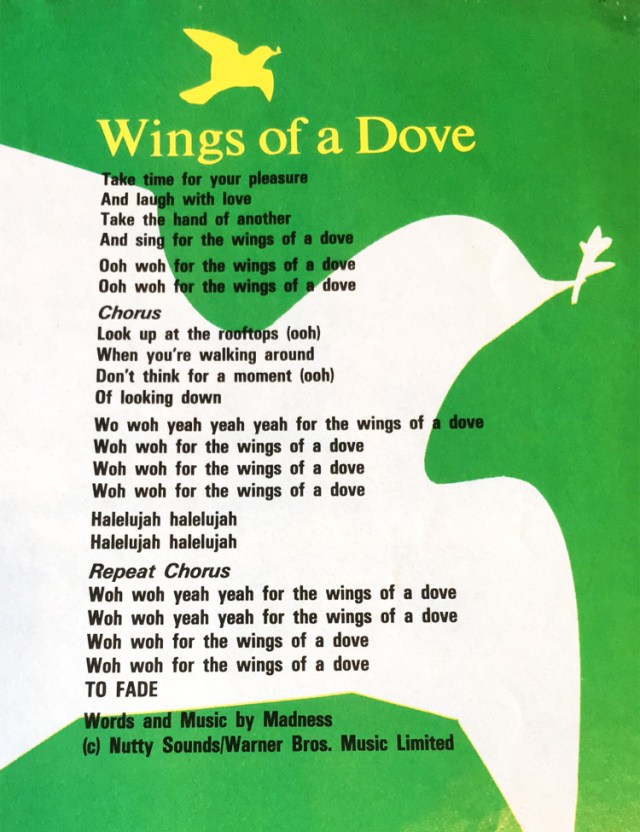
This Pop83 issue also included a feature on Madness’s evolving style and image, previews of upcoming single “Wings of a Dove” and the LP that would be Keep Moving, and a lengthy list of trivia tidbits that could surprise even the most knowledgable Madheads among us. All of these historic contents are presented below for your reading pleasure. I have annotated them with YouTube links to some of the less familiar vintage-1983 songs and artists referenced. Our fond thanks to Jon Young, our esteemed MIS ambassador and advocate, for sharing the magazine scans with us.
Now for the latest in Madness news.
The big news comes from America. Madness went to the States back in their early days. While music-mad Yanks on the east and west coasts took an interest in their nutty image, the group failed to sell a lot of records. Like The Jam, they gave it a few more tries and then concentrated their energies on places where their music was accepted.
Earlier this year Madness signed up with a new American record company, Geffen. In addition the success of groups like the Human League have helped the Americans to turn their heads in the direction of British bands. The Americans have cable television and MTV, a 24 hour a day video station, which has a huge and influential following. Madness’ marvellous videos have always transcended any cultural problems, like language barriers. Because the group relies on their music and not their hairdressers to create an impact, their videos have not dated as quickly as some new romantics have.
“Our House” has become the group’s first top ten smash. Mark and Chris went over to the States during the heatwave we had in July to try to help the Americans understand the Madness philosophy a bit better. In some ways, their delayed success is an advantage.
When they first went to America as part of the Two Tone movement, Madness had to fight to be treated separately from The Specials and The Selecter. Americans had little experience of ska in the ’60s. So, how could they understand references to rude boys and pork pie hats? In trying to explain themselves, everyone got confused. Now, with a sound all their own the group has a fresh start. Since they are gradually moving from their “nutty” image, Madness can convey whatever they want to this brand new audience who knows only one Madness song, “Our House.” Wonder how the group likes hearing it sung in American accents?
The surprise American success means that Madness have to drop their proverbial pushbikes and hop on a plane to the States quickly. August will find them on a hectic five week tour of one end of the 3,000 mile wide country to another. The highlight will be a supporting spot for The Police at one of those giant American stadiums that often holds the population of a small city.
In the meantime, Madness release their new single “Wings of a Dove.” Jamie at the Stiff Office, one of the first lucky people to hear it, described as having a “carnival” feeling to it. “There’s a choir and steel drums and Suggs’ vocals have a new mellow feeling to them,” he reported enthusiastically.
The single was recorded in the late spring and then the group headed off for their separate holidays. Mike Barson, his wife and dog decided to see Europe the caravan way. “He rang in every few weeks to say which country he was in,” laughed Jamie. “Sometimes the only way to know where he was, was to check with his mum because he kept in contact with her.” Barson managed to get back to British shores 24 hours before the group set to work recording the video for “Wings of a Dove.” No sooner was the film edited than did the group head off for the states.
A New LP for Christmas
It’s not certain what their plans are once they return. (A good night’s sleep will be in order!) There are tentative plans to go in the studio and record tracks for their next album. Stiff Records would love to be able to have a new album ready for fans by Christmas, but as yet there is no certainty of when Madness will complete their sixth album.
Mark describes the upbeat new effort as “A song that will open a few eyes.” No doubt Madness are a bit fed up with hearing that their music has stagnated and that they’ve grown apart. “If you can afford to buy yourself a place, of course you’re not going to keep living with mum,” said Mark. “That’s only natural.”
It’s also natural that with seven members in a group that the group enjoys more quiet company in their spare time plus the companionship of some females. When together there’s plenty of energy and madness in Madness. And when it’s time to down tools, uh instruments, the magnificent seven are free to go their separate and more quiet ways. Their individuality can only give their music more texture and variety. Now, let’s see how they fly the flag in the former colonies. Will America have any effect on Madness? We shall see.
In the meantime, the group moves towards the fourth anniversary of their debut hit “The Prince.” It’s remarkable how Madness have survived Two Tone, Adam Ant, New Romantics and rapping funk records. It just seems that whatever music is on the radio, there’s nothing to brighten up the airways like a bit of Madness. They may not be as loony as they first were. But it’s reassuring to see that they haven’t lost their vitality and spirit either.
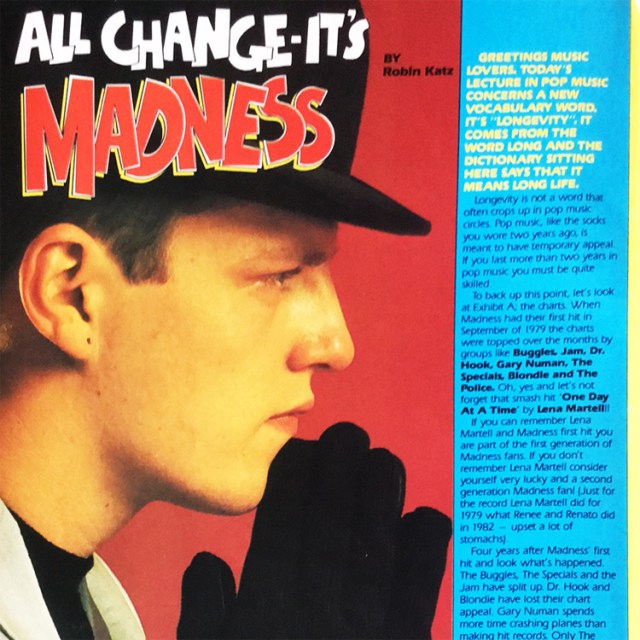
ALL CHANGE – IT’S MADNESS
Greetings music lovers. Today’s lecture in pop music concerns a new vocabulary word. It’s “longevity.” It comes from the word “long” and the dictionary sitting here says that it means “long life.”
Longevity is not a word that often crops up in pop music circles. Pop music, like the socks you wore two years ago, Is meant to have temporary appeal. If you last more than two years pop music, you must be quite skilled.
To back up this point, let’s look at Exhibit A: the charts. When Madness had their first hit in September of 1979 the charts were topped over the months by groups like Buggles, The Jam, Dr. Hook, Gary Numan, The Specials, Blondie and The Police. Oh, yes and let’s not forget that smash hit “One Day at a Time” by Lena Martell!
If you can remember Lena Martell and Madness’ first hit you are part of the first generation of Madness fans. If you don’t remember Lena Martell consider yourself very lucky and a second generation Madness fan! (Just for the record Lena Martell did for 1979 what Renee and Renato did in 1982 — upset a lot of stomachs.)
Four years after Madness’ first hit and look what’s happened. The Buggles, The Specials and The Jam have split up. Dr. Hook and Blondie have lost their chart appeal. Gary Numan spends more time crashing planes than making hit records. Only The Police remain superstars. Lena Martell has hopefully returned to Radio 2 where she belongs.
Madness are still together and still breaking new ground while trying to hold on to the essense of nuttiness that made them popular in the first place. If they don’t change musically, the fans will get tired of the same thing. (Look at Bad Manners.) If the group changes too drastically, the fans may not follow either. (Remember “YMCA” by the Village People? They went “new wave” and stopped making hits.)
“The Wings of a Dove,” the new Madness single, represents a new change for the band. As with their 1982 album Rise and Fall the group have taken a lot of time to get a different sound going.
Because of their longevity (ah ha, there’s that word again), a lot of people have got it in for Madness. They’re waiting for the group to split up. They’re predicting that the fans won’t change and abandon the group’s new efforts in favour of their old nutty stuff. There are rumours that the group are out of touch with the fans, the times and the music scene.
Madness aren’t the only group to have these rumours. Back in the ’60s The Beatles got flack every time they tried something new. In the ’70s there were always people who wanted David Bowie to stick with one image for the rest of his life. If David Bowie had kept a small segment of his fans happy by playing at Ziggy Stardust forever, he would have probably died of boredom. It took a lot of courage for artist and fans alike to come to expect change from Bowie. Long term Bowie fans favour certain phases of his career over others. But because they like Bowie, they always like to hear his newest music to decide for themselves. Likewise, some Madness fans may prefer their nutty music to the new music. But have you given the new music as much of a chance?
When Madness toured earlier this year, I got to talk to some of the fans outside the concert halls. Several of them admitted that Rise and Fall was not what they would have described as typical Madness music. But in giving the new music a chance, one fan in particular found that he changed too.
“I love to hear the earlier stuff when I’m first out of school.” he explained. “I don’t remember when Madness first came out. My older brother does and I used to get very jealous when he used to go out to see them and Mum said I was too young. He gave me his old singles when my aunt gave him the Complete Madness album for Christmas. I got Rise and Fall. First I didn’t like it. But, now I find in the evenings I enjoy it in a different way from the singles. It’s hard to explain. But I like the words. I listen to them when I’m listening to the album. With the singles, I don’t pay much attention to the words, just the beat. Because of that album, I find I’m listening to the words more. I wouldn’t have done that a year ago.”
New Sounds — New Fans
Just as the fans change, so too does the group change. During this year’s Madness tour there were fans representing every phase of Madness music from little skinheads to loons decked out in garage overalls. “There will always be a nutty element in Madness.” said Suggs. “But we’re not just smiling puppets. There’s a sharp side too. Listen to the words and you’ll hear it. We’re not Buck’s Fizz, but we’re not what the Fun Boy Three were either.”
What Suggs and his six fellow musical mates are certain of is that there are plenty more changes to come. In pop music there’s no longevity without change. Think of what you were like four years ago. Look how you’ve moved up and on. You only have to listen to “Wings of a Dove” to hear how Madness have changed too.
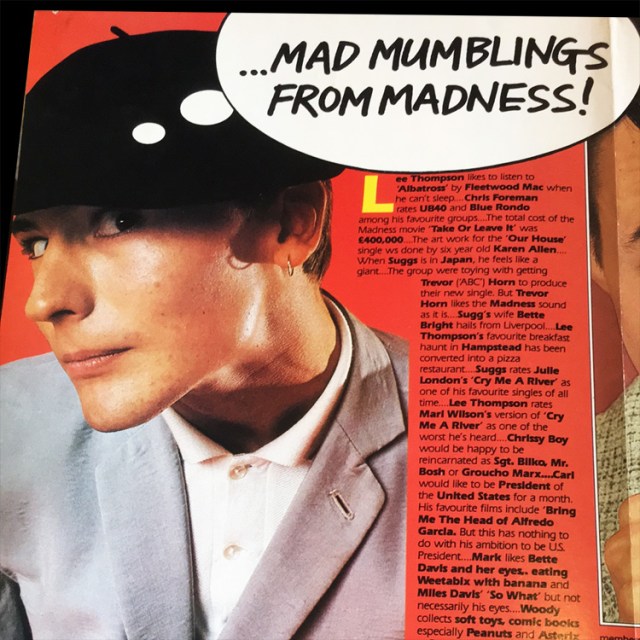
MAD MUMBLINGS FROM MADNESS!
Lee Thompson likes to listen to “Albatross” by Fleetwood Mac when he can’t sleep.
Chris Foreman rates UB40 and Blue Rondo among his favourite groups.
The total cost of the Madness movie Take It or Leave It was £400,000.
The art work for the “Our House” single was done by six year old Karen Allen.
When Suggs is in Japan, he feels like a giant.
The group were toying with getting Trevor (ABC) Horn to produce their new single. But Trevor Horn likes the Madness sound as it is.
Suggs’ wife Bette Bright hails from Liverpool.
Lee Thompson’s favourite breakfast haunt in Hampstead has been converted into a pizza restaurant.
Chrissy Boy would be happy to be reincarnated as Sgt. Bilko, Mr. Bosh or Groucho Marx.
Carl would like to be President of the United States for a month.
His favourite films include Bring Me the Head of Alfredo Garcia. But this has nothing to do with his ambition to be U.S. President.
Mark likes Bette Davis and her eyes, eating Weetabix with banana and Miles Davis’ “So What,” but not necessarily his eyes.
Woody collects soft toys, comic books especially Peanuts and Asterix.
Suggs’ mum was a singer when she was young. At twenty she could have sung in a Paris nightspot but Suggs’ grandad wouldn’t let her go.
Chrissy Boy bought his first guitar with a £20 tax rebate.
Early Madness rehearsals took place in Barson’s bedroom. Now when Barson tours he brings his dog.
In their early days the group also rehearsed In a room above a shoe shop.
In the early days Madness hated having to contend with National Front members at gigs. Now they hate having to contend with glue sniffers.
“The one good thing about being on the dole,” Lee Thompson reckons, “is that it gave me six hours a day to learn to play the sax properly.”
When Madness visited America in 1980 most Americans they met knew nothing about ska and bluebeat.
Chrissy Boy reckons one of the things that inspires him to make music is when hears a terrible record on the radio.
Mark Bedford loved working on Robert Wyatt’s “Shipbuilding” single.
When Madness toured, they spent time in the bus watching videos of everything from Minder to Snow White.
Woody remembers watching Madness perform back in the early days when they were still called The Invaders.
Just as JoBoxers, who supported Madness on their spring tour, are reminiscent of early Madness, so too are early Madness reminiscent of Ian Dury’s first group, Kilburn and the High Roads.
Lee knocked out two of Carl’s teeth by accident when he failed to bounce off of his trampoline correctly.
The seven men of Madness have an office that employs eight people to take care of their business.
Carl dreams of having a recording studio so that the group can help launch younger groups.
Among Suggsy’s favourite reading is the Guinness Book of Hit Records.
Lee’s favourite footwear includes pink Dr. Martens.
Chris’ favourite food is a big fry up.
Carl’s favourite actors include Jack Nicholson and Al Pacino.
Woody’s favourite artists include Salvador Dali and Norman Rockwell.
Mark’s favourite songs include “Make It Funky” by James Brown.
Mike’s favourite hobby is caravaning.
Bette Bright (Mrs. McPherson to you) loves old ’30s movies which may explain why their daughter is named Scarlett (after Gone with the Wind).
The Yanks made up a car bumper sticker that says “Honk If You Like Madness” and have a chain of coffee shops called Chock Full of Nuts.
There are sixteen tracks on the Complete Madness album.
Madness have made an ad for motorcycles in Japan and crisps in Britain.
Madness are fans of Bad Manners.
Among the things they used to do but can’t anymore — roller skating up at Alexandra Palace, speeding on the motorways, announce where they used to live, eat in peace outside of Camden, live with mum, walk by a bunch of schoolkids.
When Madness made their film Take It or Leave It they wanted cinemas to remove the first ten rows of seats so the fans could dance. They later admitted this idea was a bit impractical.
The latest Madness single, “Wings of a Dove,” was held up because Mike Barson was on holiday in Yugoslavia and was not near a telephone.
Suggs is not a big fan of glossy groups like Duran Duran.
Woody is a vegetarian. He calls people who eat meat “cannibals.”
Days after they got married, Jane spent six weeks on tour in America, returning on the same day that Woody set off for a European tour.
Keep an ear open for Bonzai Forest, a new Camden group that several members of the band have taken an interest in.
Can Madness last for ten years more? Chas says yes. “We’ve got a lot in front of us…”
Originally published by SB Publishing & Promotions Ltd. in England, 1983. Acknowledgement to writer Robin Katz.
I was a Madness fan for a full year before I got to hear them play live. By that, I don’t mean live in person for the first time. Heavens, no – that took another 25 years, which is a story for a whole other blog post. I mean, it took a year before I got to hear any audiovisual media transmission of Madness properly performing live. And this first listen also happened to be literally live. From New York. It’s Saturday Night!
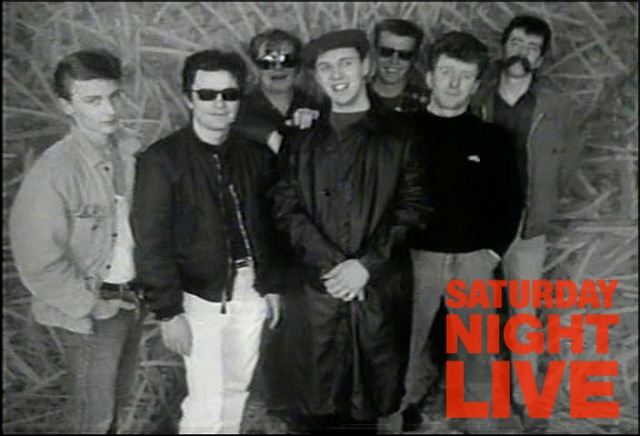
Madness made their historic appearance on Saturday Night Live on April 14, 1984. Before this, I had seem them on American TV shows like Solid Gold and American Bandstand, but they were always miming to the recorded tracks, same as they had to do on Top of the Pops. It is possible that I’d been exposed to quick clips of Madness playing live on some MTV profile or on USA Network’s Night Flight. The producers of that show were clearly partial to Madness and British ska, airing obscure stuff like the “One Step Beyond” video a lot. But footage of Madness live on stage was seemingly on embargo in this country.
In these dark ages, there were no Madness live albums for me to buy, no black market of Madness bootlegs at my disposal, no concert films on VHS, and definitely no access to the Madness U.S. tour dates of 1983-84 that may as well have been on the moon. So here Madness was, crowned as my new favorite band, even though I had no idea what they sounded like on stage.
It’s quite remarkable, when you consider how Madness earned their rapid rise to notoriety in the UK on the strength of their live show. Blowing the roofs off The Dublin Castle and The Hope and Anchor garnered their first London fans through sweat-soaked, boot-stomping word of mouth. Then the 2 Tone Tour and their first headlining tours got the rest of the country jumping on the nutty train. The hit singles and Top of the Pops secured their success, obviously, but their explosive energy on stage was what made Madness. It was quite the opposite scenario in the States, where we embraced the catchy “Our House” pop tune with zero conception of how this unassuming troupe of ragamuffins could rock the ever-loving shit out of a live audience.
So that’s why this Saturday Night Live gig was really a big deal. Even if it had been a whole year since their big hit in America, this was our chance to finally see and hear what Madness was capable of live, on U.S. pop culture’s most high-profile live stage. The band had played a few California dates and visited Dick Clark in February-March 1984, an eventful swing that saw Lee marry his wife Debbie in Los Angeles. Madness flew back from Paris to New York for Saturday Night Live in April.
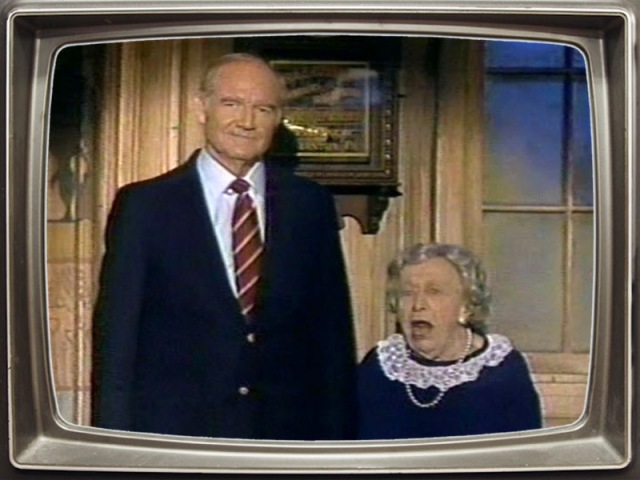
The host for their week was no Steve Martin or George Carlin – it was 1972 Democratic Presidential nominee George McGovern, who ran against Nixon and lost. He was still relevant in 1984 since he’d been running for the Democratic nomination again, but had just dropped out in March. For some reason Dick Ebersol thought a failure-ridden politician with no discernible personality would be comedy gold. Spoiler alert: he wasn’t.
Infinitely more in tune with the 1984 zeitgeist was SNL’s other special guest that night, none other than Clara Peller. For the benefit of the youngsters, the 81-year-old Mrs. Peller was the famed “Where’s the beef?” lady from the Wendy’s ad campaign that debuted at the start of that year. America was in the grips of “Where’s the beef?” fever when this show aired, and in fact Senator McGovern was fresh from participating in the Democratic primary debate where Walter Mondale borrowed Clara’s catchphrase as a zinger against Gary Hart. Good times.
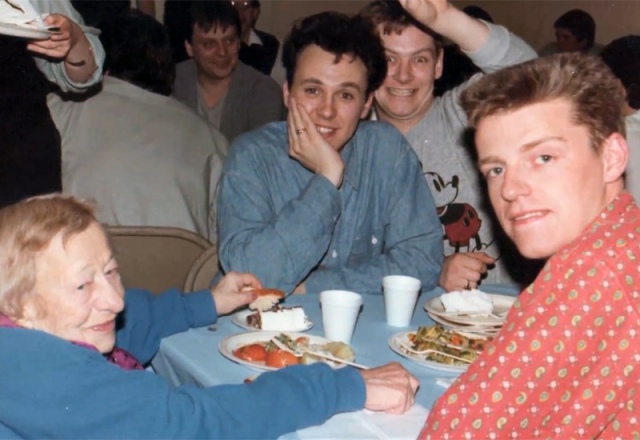
Clara got to meet Madness before their joint Saturday Night Live broadcast and even had dinner with the band. Presumably adequate cow meat was offered on the bill of fare. Believe it or not, a 2015 biographical musical called Clara and the Beef chronicled herstardom in song, with one number devoted to her SNL exploits. “Saturday Night In New York” is very much a pastiche of “Our House,” with a faux-nutty rhythm bounding along to stupefying lyrics like “I will wear my new mink, please please don’t blink, I can be so special it’s a rare treat, and quite a feat – you need to let me go, on with the show!”
On that big SNL show, Clara’s main bit was a cameo at the end of a blah sketch about unappetizing TV dinners for impoverished Reaganomics victims. “Where’s the beef? Where’s the beef?” she repeatedly inquired, to roars of adulation. Later Clara stepped out with George McGovern to co-introduce the musical guest.
“Where’s the band?” demanded the marketing icon, squinting all around the studio. As raucous applause subsided, McGovern helpfully pointed out, “Clara, they’re right over there, and they’re called Madness.”
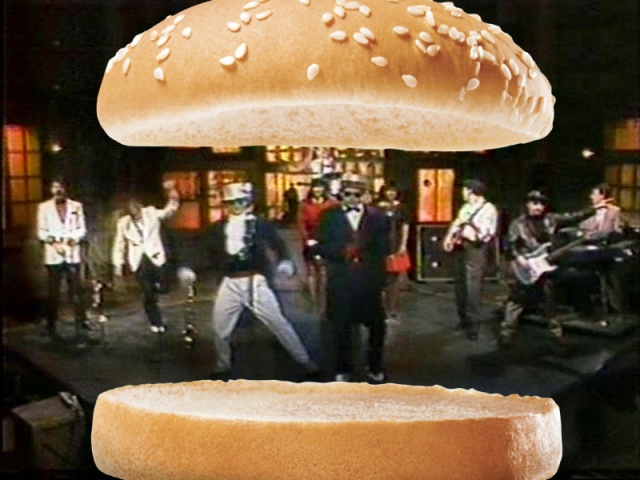
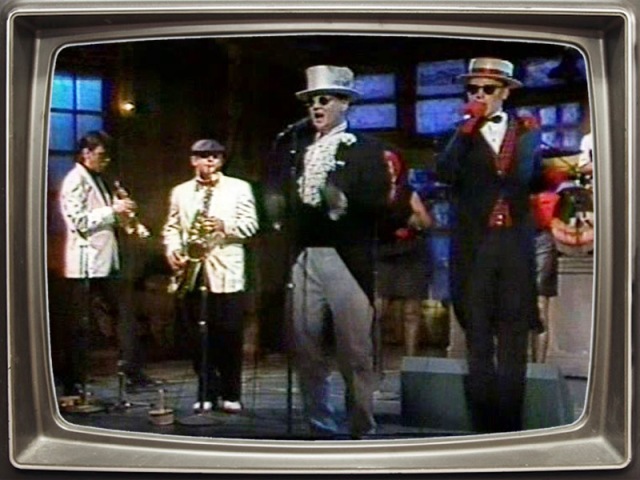
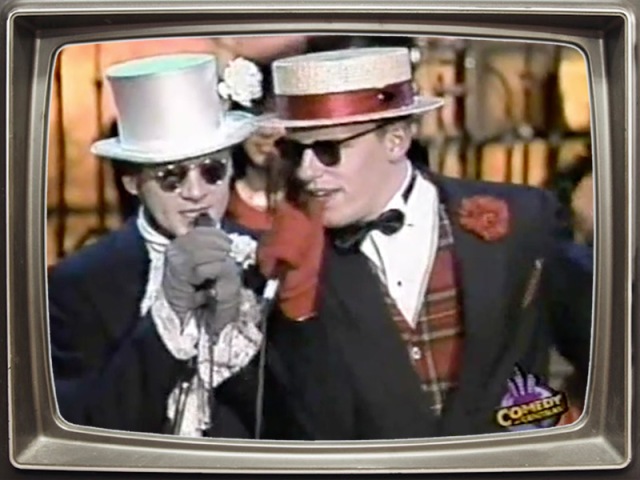
And now at last, the boys took the stage live in front of America. They dressed well for the occasion, with Woody in a middle-management necktie and short sleeves, Mark and Chris looking snazzy in their flat caps, Lee and trumpet sideman Dick Cuthell coordinated in white dinner jackets, and the gaudy duo of Suggs and Carl sporting Victorian tailcoats, lapel carnations and vintage costume hats. Suggs’s dark outfit was accented in red, while Carl opted for a monochromatic look complete with silvertone facepaint, making him look transplanted from a black and white film. The band was fleshed out with James Mackie manning Barso’s abandoned post and a trio of ladies on backing vocals.
The first Madness tune of the evening was, of course, “Our House.” Even though it had grown old and gray by this point and they had new music to promote, they knew well enough to give the Yanks what we wanted. Indeed, the studio audience showered them with a warm reception, even working up enthusiasm for the dreaded new song, the title track from the spanking new Keep Moving – which maybe two people in that crowd had heard, along with the loyal fans tuning in like me. By now, you’re thinking I must have been pretty stoked, right?
To be honest, I wasn’t that impressed. I came away from the SNL show with the disappointed assessment that Madness wasn’t that great of a live band.
Shocking, I know! Let me hasten to add, the performance wasn’t that bad. Unfortunately there are no clips readily available online, since NBC Universal guards their copyrights with an iron fist, so I can’t let you judge for yourself. I do have private recordings, though. Watching them now, I can say the band was rather solid instrumentally. Mackie is no Mike Barson on the keys, but of course no one is. What soured the Saturday Night Live spotlight for me was our vocalists.
Suggs let me down because he didn’t seem to be into it. His charming expressiveness in the band’s music videos had made him my fast favorite member of the band, but live from New York, his affect struck me as flat and disinterested. Not much passion or dynamic range in his voice, compared to Madness recordings. Toward the end of “Our House,” Suggs went into “was our castle and our keep” one bar too soon. Perhaps a few too many beverages or other SNL vices before the show?
And Carl pissed me off, too. At this point in time, I regarded Chas Smash as just a backup vocalist who sang lead on a few songs. To me Suggs was THE singer of Madness. I didn’t much like seeing Carl showboating up front when it wasn’t one of his songs, like he was trying to crowd out Suggs as the frontman. With Suggs playing it so low-key, Carl’s voice was totally dominant at times. I wished Carl was hanging out back there with Lee and the backup girls instead. Speaking of whom, those ladies weren’t helping things. The one spot where they fit in was “Sister’s sighing in her sleep, ah-ah-ah ahhh.” Otherwise their chirps just cluttered up the vocal shambles even more.
Like dear Clara Peller, I asked myself, “Where’s the band?”
Since I didn’t own a VCR until Christmas 1984, I had no record of that SNL show to play back. In my memories, this live Madness exhibition degenerated into a Rashomon grotesque of musical ineptitude. I recollected the whole band as sounding terrible, when that wasn’t at all true. This perceived blunder didn’t tarnish my opinion of Madness, though. I still loved them, I just decided they were a great studio band and not so hot on stage. No harm, no foul. I wasn’t disabused of this faulty notion for a couple of years – I believe it was finding the Dance Craze LP (yet another tale for a future blog) that demonstrated how Madness was without question an extraordinary live act.
In my defense, I can offer the court three pleas for why Madness on Saturday Night Live hit me the wrong way. First off, I was just a kid. And mighty clueless in oh so many ways. At age 14, I hadn’t even been to a single rock or pop concert, just country music shows with my mom. My yardstick for grading live music was how closely it sounded like the record, lacking mature appreciation for nuances of rawness and spontaneity.
Secondly, there was a bit of sour grapes involved. With the prospects of me seeing a Madness concert seeming astronomically remote, I suppose some recess of my subconscious was glad to find fault with Madness on stage. Convincing myself that they maybe kinda sucked at playing live was a coping mechanism against teenage FOMO.
Most importantly, this is a case of what statisticians might call error from insufficient data sampling. When you’ve seen a performing artist a thousand times, you can readily identify and forgive a misstep here and there. But when making a critical evaluation based on one showing, you can jump to all sorts of false conclusions. So Suggs wasn’t on top form that night. So I was ignorant of Carl’s evolved stage dynamics. So the backup singers weren’t the best. It sure doesn’t mean Madness can’t play live, but I was working from the best evidence at hand. As a kid still learning about the wide world, I was prone to making sweeping generalizations based on my narrow personal frame of reference. Hell, I’m guilty of doing that nowadays, but hopefully not as often. Or as stupidly.
Looking back, it’s ironic that one of the first Madness songs I heard live (on TV) happened to be “Keep Moving.” Some thirty years later, when I went to the 2015 House of Fun Weekender, the first tune in the Friday night fan-service setlist was “Keep Moving.” A song I never, ever, EVER dreamed I would see Madness play live (in person). As I pumped my fist in Minehead and screamed mine head off, any foolish misgivings about this band’s live musicianship were forgotten like a silly old nightmare.
Don’t hide from past folly. Hold it high with a smile. Speak out loud with the mind of a child. If you’re lucky.
(Or, How I Learned to Stop Worrying and Love Madness)
After cranking out hit after hit in the UK for about four years, Madness finally cracked the fickle American market in 1983 with “Our House.” That classic track took the band into the U.S. Top 10 and served as the primary entry point for their American fans, myself included. But I have to admit, I wasn’t convinced to jump aboard the nutty train right away.
I can recall with great clarity when I first heard ”Our House,” as a wee lad of 13. At the time my favorite band was Men at Work, and as a younger kid I was into Kiss and The B-52s. I was home alone after school, sitting at the kitchen table doing homework with the radio on. This very peculiar song came blasting out, a torrent of pounding piano and bombastic brass and swirling strings. No arena rock guitar riffs or electronic synth beats to be found. What we had here was something foreign, in more ways than one.
At first I thought it must be an advertisement. Some kind of real estate insurance jingle? An Olde-England flavored ditty for Merry Maids? A public service announcement on quality family time from the Church of Jesus Christ of Latter-Day Saints? But no, this jaunty little tune kept rollicking on and on past the :30 mark. It was no commercial… it was an actual music-song-type song, of some hitherto unknown variety.
I put my pencil down and stuck my head into the radio speaker to try and figure out what the heck I was listening to. So it’s this British guy urgently waxing poetic about his family unit and the daily routine activities transpiring in their domicile. How weird is that? I distinctly remember being confused about the chorus, which to me sounded like “Ah, house.” I reasoned that the nostalgia-ridden singer was wistfully addressing his old childhood home by name: “Ah, house. Ah, room. Ah, cow jumping over the moon.” In the middle of “Ah” street?
This moment left an impression on me, obviously. But I was not an instant fan. It was more like I’d been struck by a hit-and-run ice cream truck that went speeding away lickety-split with its jolly chime echoing in the distance. What in the world was that? The music was kinda catchy, but the vocal style and general cutesiness put me off a bit. My American Bandstand hot take: it’s got a good beat and you can dance to it, but it sounds like children’s music. I’d just become a teenager, after all, at that age when you’re out to prove you’re not a kid anymore. To those ears, “Ah, House” sounded childish next to the likes of The Police and Duran Duran, with their PG-rated songs of sex and obsession and adulting.
It wasn’t long after this first exposure that I gave the daft alien melody another round of scrutiny. And this time my judgment was far more charitable, thanks to the visionary genius of one Mr. Dave Robinson. Yes, it was the music video that won me over.
MTV doesn’t get the credit, because our backwater North Carolina cable provider didn’t add the channel until a year or so later. For music videos I depended on Night Tracks on SuperStation TBS, Night Flight on USA, and Friday Night Videos on NBC. It would have been on one of these beloved programs that I first saw the video for that oddball British song. By virtue of the credit captions, I learned that the name of the band was Madness, and of course they weren’t singing “Ah, House” at all. “Our” did make a lot more sense, didn’t it?
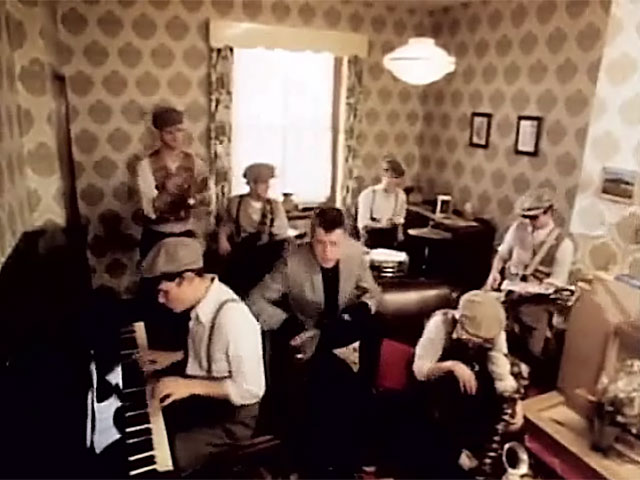
More to the point, the entire song made a lot more sense, given context by that completely brilliant video. Putting faces to the odd noises coming out of the radio, I suddenly got a better sense of who these guys were. And man, they were so cool! They were silly and clowning around, sure, but Madness no longer seemed juvenile once you got a look at ’em. Nor were they preening fancy lads like A Flock of Seagulls or Kajagoogoo. There was a grubby and working-class edge to their bouncy sound. Their humor shared points of reference with Monty Python, per the hirsute sax player in drag playing the pepperpot housewife, and the lot of them lounging in a hot tub with knotted Gumby handkerchiefs on their heads. And that lead singer! Flattop haircut, fingerless black gloves, snazzy gray suit jacket, all those frantic gestures and rubbery facial expressions. He was kind of ugly, but kind of handsome at the same time. Right away he was my favorite member of the group.
The sequence with the guitar solo most clearly crystalized the song’s meaning, moving from boyhood air guitar to Elvis phase to Beatles obsession to new wave rocker in the space of 15 seconds. It’s a song about growing up, and remembering all those things you miss in lots of ways.
Soon I bought my first Madness “album,” Geffen’s self-titled 1983 U.S. compilation with the billiards cover. Which, as best as I knew, was the band’s debut album, featuring their first hit song. But even that purchase was a complicated decision, because avid music video consumption had got me interested in both Madness and Eurythmics. Finances were limited back then, and I couldn’t just go out and buy two albums (cassette tapes, actually) at the same time like a Rockefeller. After much deliberation I decided Madness was the one for me to risk my allowance on. And yeah, you can probably guess where this is going. It wasn’t love at first listen.
Even though I was sold on how awesome “Our House” was, the other 11 tracks didn’t thrill me. Too much repetition of annoying little phrases (“Close your eyes and count to three… 1-2-3!” “Three cheers, hip hip hip!” “Welcome to the house of fun!”), too many annoying little sound effects (carnival noises, a thumping heartbeat, a foghorn). Again I found myself back in that initial radio-listener position of thinking Madness sounded immature and cringey. Drat it all, how I wished I had spent my precious dollars on Sweet Dreams (Are Made of This) instead!
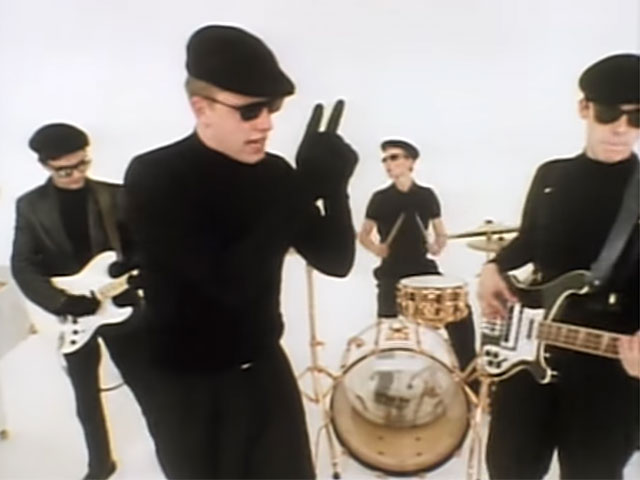
And once again, it was the music video that made the difference. As I recall, within the same week that I bought the disappointing Madness tape, I saw the video for “It Must Be Love.” Boom. The scales dropped from my eyes and the cotton unplugged from my ears. “It Must Be Love” no longer sounded so syrupy sweet, leavened by jogging undertakers, people in bird and bee costumes, and the guitarist and sax player playing their instruments underwater (swimming “with” a killer whale, for some reason). The lead singer, whose name I learned from the cassette liner notes was G. Suggs McPherson, was even cooler and more charismatic than in the “Our House” video. I’d never felt a real urge to “be” a given pop star before, but I wanted to be Suggs. In this particular case The Buggles were wrong: Video saved the radio star.
I went back to my Madness tape with renewed interest, incrementally calibrating my sense of this band’s identity and what their music meant. The idiosyncrasies in their sound ceased to seem childish or annoying. There was much to learn about Madness, and I was now an eager student.
When Madness pierced the veil of American pop culture in 1983, the rupture opened only a tiny pinhole for us to gaze through. The view was foggy, distorted and incomplete. I formed false first impressions, and most of my countrymen barely registered any at all prior to that ephemeral pinhole sealing back up. But I heard something and felt something on the other side of that trans-Atlantic barrier, so I clawed open my own damn pinhole with my bare hands. I worked at it, I kept listening, I scoured music magazines for scant precious information, I tracked down their past recordings, I became a loyally devoted fan, and I stretched that pinhole wide enough to climb though and tumble headlong into the realm of Madness. I put in the time and effort, digging to excavate the gold I knew was there beneath the surface.
Suffice to say, I found it. In the middle of “Ah” street.





 Stateside Madness